
Will A 3500 Watt Generator Run 2 Refrigerators
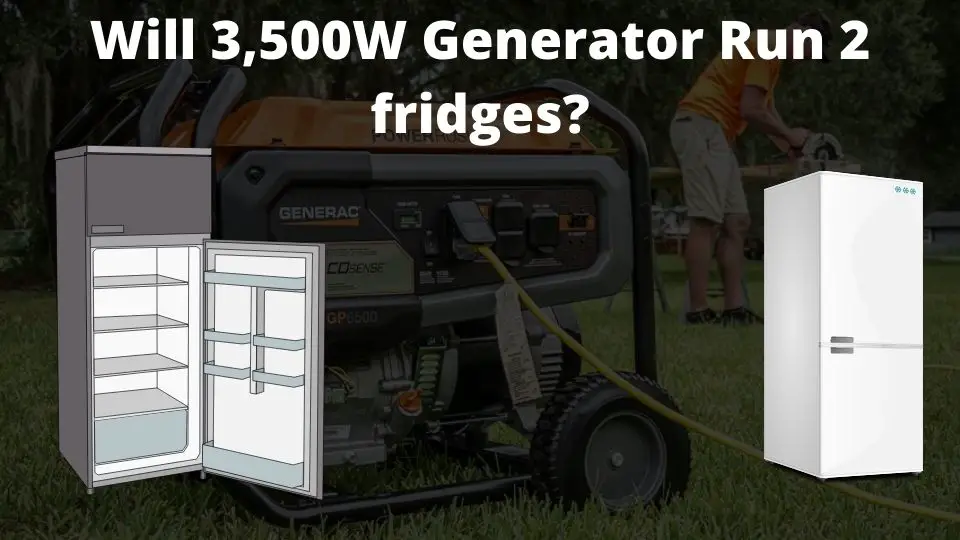
Hey there, friend! Ever wondered if your trusty 3500-watt generator can handle the Herculean task of powering two refrigerators? You're not alone! It's a question that pops up more often than unexpected relatives at Thanksgiving. Let's dive in, shall we?
Decoding the Wattage Puzzle
First things first: we need to understand the wattage needs of our icy companions. Now, refrigerators aren't exactly known for their transparency. They don't usually wear little tags proudly announcing their power hunger. But fear not! You can usually find the wattage information on a sticker somewhere on the fridge itself – often near the compressor or inside the door.
Generally, a standard refrigerator needs anywhere from 150 to 400 watts to run. That sounds reasonable, right? But here's the sneaky part: the startup wattage. This is the power surge the fridge needs to kick its compressor into gear, and it can be significantly higher – often three times the running wattage, or even more! We're talking potentially 450 to 1200 watts just for that initial "oomph."
Must Read
Imagine your fridge is a sluggish teenager needing a serious jolt of caffeine to get moving. That's startup wattage in a nutshell.
Crunching the Numbers: Will it Work?
Okay, let's get down to the nitty-gritty. You've got a 3500-watt generator. The big question: can it handle the startup surge of two fridges? Let's consider a worst-case scenario:

- Fridge #1: Startup wattage: 1200 watts, Running wattage: 300 watts
- Fridge #2: Startup wattage: 1200 watts, Running wattage: 300 watts
If both fridges try to start simultaneously (and Murphy's Law dictates they probably will), you're looking at a whopping 2400 watts just for the initial surge! Add in the running wattage of anything else you're powering (lights, a fan, your phone charger addiction), and you could easily overload your generator. Not ideal!
Think of it like trying to fit two sumo wrestlers into a Mini Cooper. It might work... but it's going to be tight, and something might break. (Hopefully not the Mini Cooper... or your generator!)

The Startup Stagger Strategy
However, there's a clever workaround! It's called the startup stagger. The idea is to avoid both fridges starting up at the exact same moment. This dramatically reduces the load on your generator.
How do you achieve this mystical staggering? Well, you can't exactly schedule when your refrigerator decides to kick in. But you can try unplugging one fridge, letting the other one stabilize (run for a few minutes), and then plugging the second fridge back in. This gives your generator a chance to breathe between those initial power surges.
It's like giving your generator a little pep talk: "Okay, buddy, one fridge at a time! You got this!"
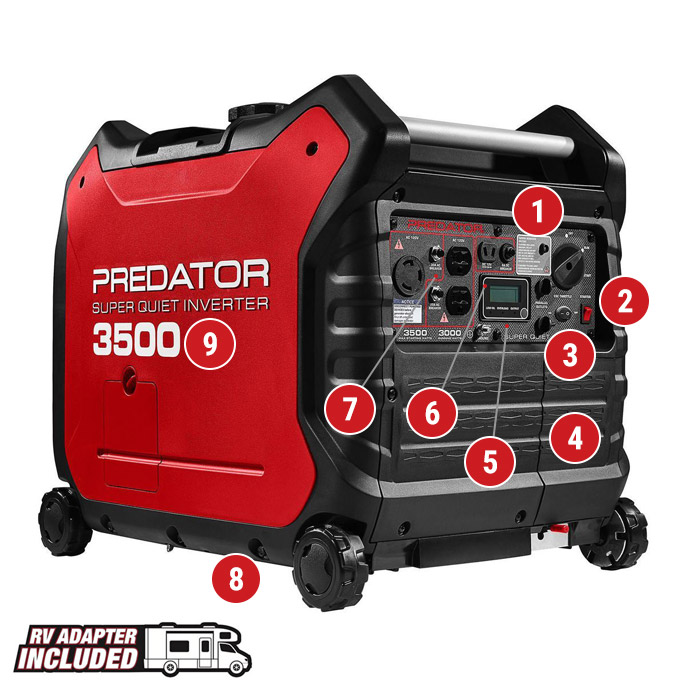
Beyond Refrigerators: Consider Everything Else!
Remember, your generator likely powers other essential items besides those chilly boxes. Lights, fans, maybe even a small TV to keep you entertained during a power outage. All these things add to the overall wattage demand. Make sure you factor them in when calculating your generator's load.
It's like packing for a trip. You think you only need a few things, but then suddenly you're wrestling with an overstuffed suitcase. Same principle applies to your generator!

The Bottom Line (and a Chilled Beverage)
So, can a 3500-watt generator run two refrigerators? The answer is a slightly unsatisfying "maybe." It depends on the individual fridge wattage, the startup stagger strategy, and what else you're trying to power.
However, with a little planning, careful monitoring, and maybe a dash of good luck, it's definitely possible! Just be mindful of the load, consider staggering the startup, and don't push your generator beyond its limits.
And remember, even if you can't power both fridges at once, having a generator at all is a huge win! You can keep your food from spoiling and enjoy a refreshing cold drink, which is pretty darn awesome in itself. Stay cool!