
Why Is Nuclear Energy Considered Non Renewable
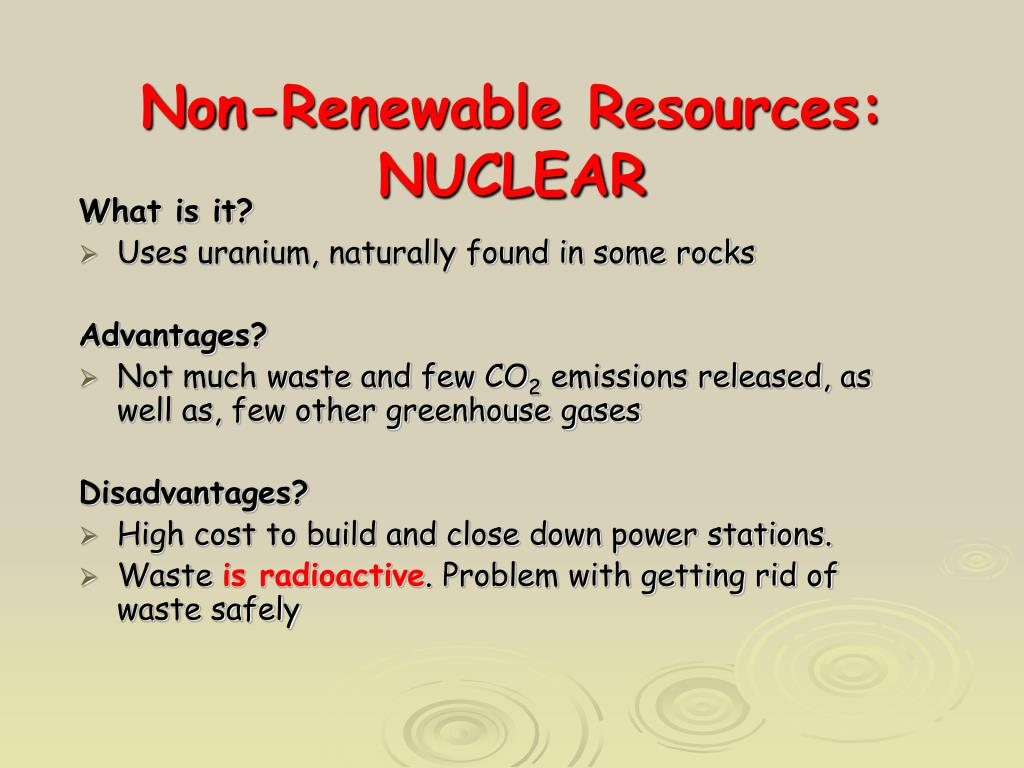
Hey there, energy enthusiast! Ever wondered why nuclear power gets lumped in with fossil fuels like coal and oil? I mean, it's not exactly the same, right? Let's dive into why nuclear energy is considered non-renewable. Get ready for some atomic awesomeness!
Okay, so here's the deal. It all boils down to the fuel: uranium. Specifically, uranium-235 (U-235). Think of U-235 as the rockstar of the nuclear world. It’s super unstable. And that’s a good thing!
Why unstable? Because when you bombard it with a neutron, BAM! It splits! This is called nuclear fission. And it releases… you guessed it… energy! Lots and lots of energy. Enough to boil water, create steam, and spin turbines to generate electricity. Pretty cool, huh?
Must Read
But here's the kicker: U-235 is a finite resource. It's not like the sun, which will (probably) keep shining for billions of years. We dig U-235 out of the ground. We don't make it (at least, not practically on a large scale).
Think of it like this: imagine you have a giant cookie jar filled with your favorite cookies. Those cookies are U-235. You can eat one cookie (fission!), and it gives you a burst of energy! But eventually, the cookie jar will be empty. No more cookies! Sad face. The same goes for uranium. We're using a finite supply.
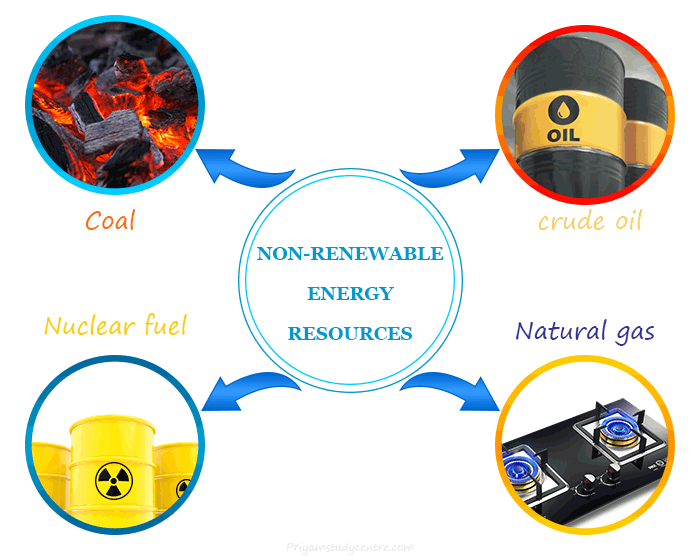
So, why not just find more uranium?
Good question! We are finding more uranium all the time. Uranium exists in various concentrations in rocks all over the world. Australia, Kazakhstan, and Canada are major uranium producers. But even with new discoveries, the total amount of uranium on Earth is… well… total! It's a limited resource.
Another funny fact: Uranium mining can be a bit… intense. Think about the risks involved in digging up radioactive materials! It's not quite the same as digging up potatoes, is it?
But What About Recycling?!
Now, some folks get excited about "recycling" nuclear fuel. Technically, some of the spent nuclear fuel can be reprocessed. This means extracting usable materials from the waste and using them to make new fuel.

But here's the thing: It’s complicated and expensive. And it doesn't extract all the usable stuff. Plus, it still leaves behind radioactive waste that needs to be stored for… a very, very long time. Think thousands of years! Talk about a legacy!
Quirky side note: Figuring out where to store nuclear waste is a global headache. No one really wants a nuclear waste dump in their backyard. Can't say I blame them!
Breeder Reactors: A Glimmer of Hope?
Okay, there's one other important thing to mention: breeder reactors. These are fancy nuclear reactors that can actually create more nuclear fuel than they consume! Sounds like magic, right?

Breeder reactors use a different type of uranium (uranium-238) or thorium. They convert these materials into plutonium, which can be used as nuclear fuel. It's like turning lead into gold… except with radioactive elements!
Theoretically, breeder reactors could significantly extend the lifespan of our nuclear fuel supply. But... there are challenges. They’re complex, expensive, and raise concerns about nuclear proliferation (the spread of nuclear weapons). Uh oh!
Fun (but slightly terrifying) fact: Plutonium is extremely toxic. Just a tiny speck can be deadly if inhaled. Handle with extreme care! (Or, you know, let the experts handle it.)

The Verdict: Non-Renewable, But…
So, ultimately, nuclear energy is considered non-renewable because it relies on finite resources like uranium. Even with reprocessing and breeder reactors, we're still dealing with a limited supply. We are limited in how long we can sustain current levels of nuclear power production based on what is known to be recoverable at today's prices and using today's technologies. When uranium prices increase as it becomes more difficult to recover, the economics may drive innovation in alternative technologies or new extraction technologies.
But! It's not quite as bad as burning fossil fuels. Nuclear power doesn't directly release greenhouse gases into the atmosphere, which is a major plus in the fight against climate change. And new reactor designs might make it safer and more efficient in the future. Always something to consider, right?
So there you have it! The not-so-simple explanation of why nuclear energy is non-renewable. Hopefully, you learned something new and didn't get too scared by all the talk of radioactivity! Now, go forth and impress your friends with your nuclear knowledge!