Why Is My Ac Not Cooling Down To Set Temperature
Ah, the sweet relief of stepping into an air-conditioned space on a sweltering day! We rely on our AC units to be our personal oases, banishing the heat and humidity to the outside world. But what happens when that promised land of cool air feels more like a slightly-less-hot purgatory? You set the thermostat to a refreshing 72 degrees, yet the temperature stubbornly hovers around 78. Why is your AC not cooling down to the set temperature? Don't despair! Before you call in the professionals, let's explore some common culprits and easy fixes.
Understanding why your AC is struggling offers several benefits. For the budget-conscious homeowner, it can save you money on unnecessary service calls. For the DIY enthusiast, it provides a chance to learn about your home's systems. And for everyone, it empowers you to take control of your comfort and create a more pleasant living environment. Think of it as a mini-investigation, where you're the detective solving the mystery of the lukewarm air!
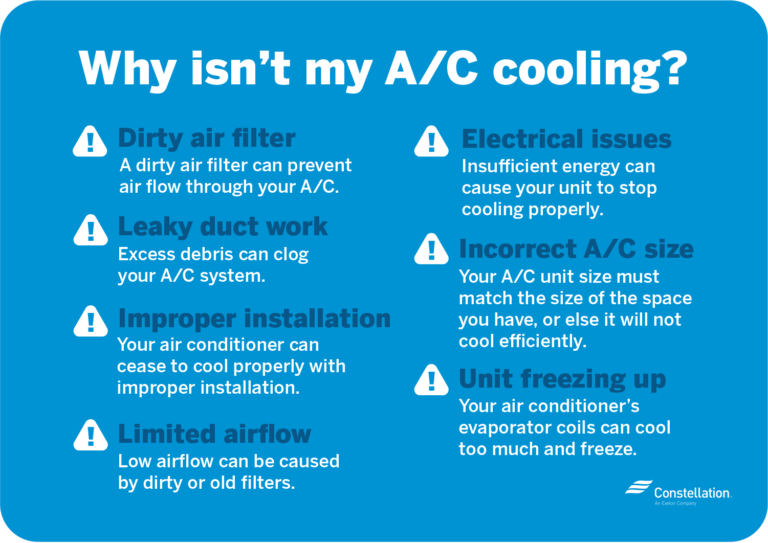
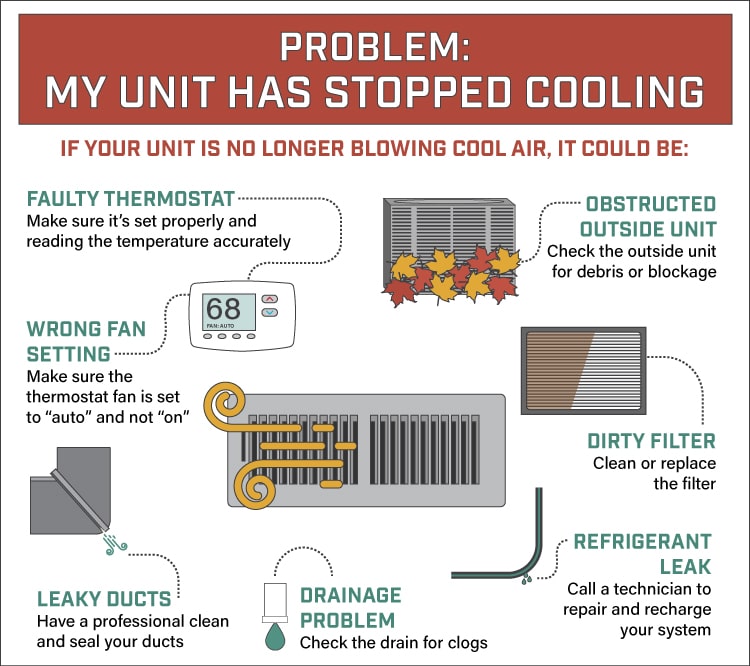
There are several possible explanations for this frustrating situation. Let's start with the simplest: a dirty air filter. This is the most common offender. A clogged filter restricts airflow, forcing your AC unit to work harder and less efficiently. Imagine trying to breathe through a thick scarf – your AC is experiencing something similar! Another potential cause is blocked outdoor unit. Obstructions like overgrown bushes, debris, or even just dirt accumulation can prevent the condenser from releasing heat properly. Refrigerant leaks are another possibility. While less common, a leak can significantly reduce the cooling capacity of your AC. Similarly, ductwork issues, such as leaks or poor insulation, can allow cool air to escape before it ever reaches your living space. Finally, consider the size of your AC unit. If it's too small for your home, it will struggle to keep up, especially during peak heat.
Must Read
Now for the good news – many of these issues are easy to address at home! Start by checking and replacing your air filter. This should be done every 1-3 months, depending on usage. Next, inspect your outdoor unit. Clear away any obstructions within a two-foot radius, and gently clean the fins with a brush or hose. Inspect your ductwork for visible leaks. Sealing these with duct tape can make a noticeable difference. Adjust your thermostat settings. Make sure it's set to "cool" and that the fan is set to "auto" for optimal efficiency. You can also try running your AC during the cooler parts of the day to give it a break.
Trying to diagnose and fix your AC problem can be a surprisingly satisfying experience. It's a chance to learn about the inner workings of your home, practice your problem-solving skills, and ultimately, regain control of your indoor climate. And let's be honest, there's a certain smug satisfaction in knowing you avoided a costly service call by simply changing a filter or clearing some bushes. The best part? When you finally feel that rush of cool, refreshing air, you'll know you earned it. So, put on your detective hat and start investigating! Your cool and comfortable future awaits.