Why Is It So Hot Upstairs But Cold Downstairs
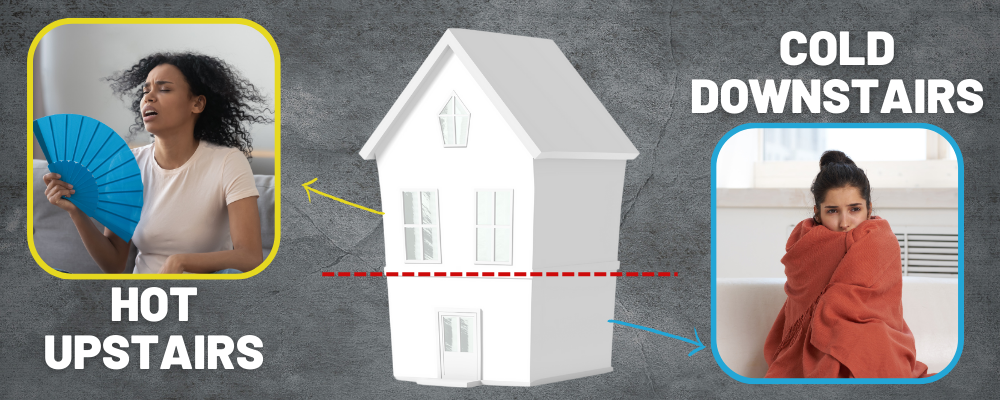
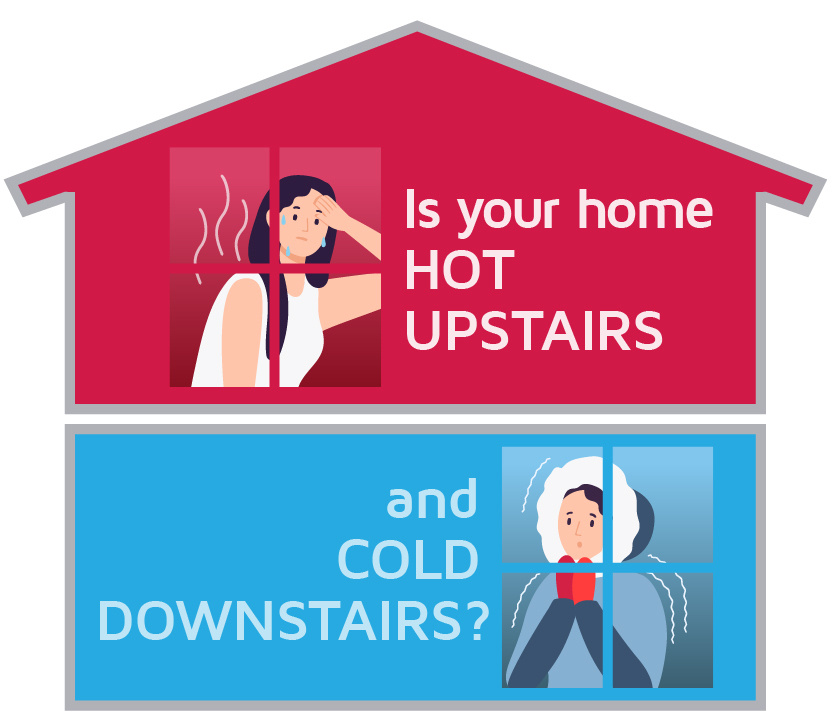
Ever find yourself bundled in a blanket downstairs while your upstairs neighbors are practically melting? Or maybe you're the one sweating bullets on the second floor while your family below is complaining about the chill? This classic upstairs-hot, downstairs-cold phenomenon is a common household headache, and understanding why it happens is not only interesting, but can also save you money on your energy bills! Think of it as unlocking the secrets to a perfectly balanced home climate – who wouldn't want that?
The primary culprit behind this temperature disparity is a simple force of nature: heat rises. It's not just a saying; it's basic physics! Warm air is less dense than cool air, so it naturally floats upwards. Imagine your home as a layered cake. The warmest layer, the air heated by your furnace or even just sunlight streaming through the windows, drifts to the top floor, leaving the cooler air to settle below. This effect is amplified by leaky windows, poorly insulated attics, and even the way your home is designed.
But the purpose of understanding this isn't just to ace your next trivia night. Knowing why this happens allows you to take proactive steps to correct it! Think of the benefits: a more comfortable living space for everyone, reduced energy waste, and lower utility bills. Nobody wants to pay extra to heat or cool a house unevenly. A balanced temperature also reduces wear and tear on your HVAC system, prolonging its lifespan.
Must Read
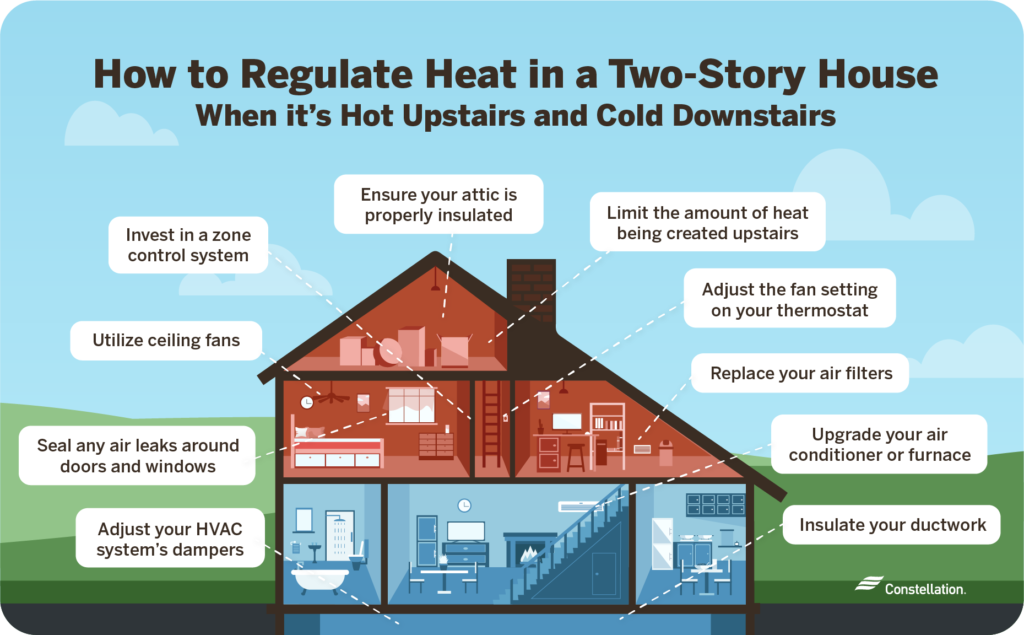
So, what can you do? Several solutions can help even out the temperature in your home. First, check your insulation. A poorly insulated attic is a major contributor to heat loss in the winter and heat gain in the summer. Adding insulation acts like a cozy blanket, trapping heat in the winter and keeping it out in the summer. Consider upgrading your windows to energy-efficient models to prevent drafts.
Next, think about your HVAC system. Make sure your vents are properly adjusted. In the winter, close some of the vents downstairs and open those upstairs to encourage warm air circulation. In the summer, reverse the process. A programmable thermostat can also be a game-changer. Set it to lower the temperature when you're away or asleep, and raise it only when you're actively using the space. Ceiling fans are another excellent tool. In the winter, set them to rotate clockwise at a low speed to push warm air down from the ceiling. In the summer, switch the direction to counter-clockwise to create a cooling breeze.
Finally, don't underestimate the power of air sealing. Seal any cracks or gaps around windows, doors, and pipes where air can leak in or out. Even small gaps can add up to significant energy loss over time. You can use caulk or weather stripping to seal these areas.
Addressing the upstairs-hot, downstairs-cold problem is a journey, not a destination. Experiment with different solutions and find what works best for your home. By understanding the science behind the temperature difference and taking simple steps to improve your home's insulation, ventilation, and air sealing, you can create a more comfortable and energy-efficient living space for everyone. And that's something worth sweating (or chilling!) about!