
Why Is It Cloudy In The Winter
Hey there, cloud gazer! Grab a mug, settle in. We need to talk about winter. Specifically, those days when you wake up, peer out the window, and think, "Seriously? Again?" I'm talking about the perpetual gray blanket, the sky that looks like it just can't be bothered to show off any blue. What's the deal, right? Why is it always so darn cloudy in the winter?
It's like the sky decided to wear its grayest sweatpants all season. And honestly, it’s not just you. There are some super cool (pun intended!) reasons why our winter skies often look a bit, well, moody.
The Cold, Hard Truth About Air
Okay, first up, let's get a little science-y, but in a totally chill, no-test-at-the-end kind of way. You know how when it’s super hot and humid in the summer, the air feels thick and sticky? That’s because warm air is like a big, thirsty sponge. It can hold a
Must Read
But when winter rolls around, and the air gets cold? Poof! That sponge shrinks. Cold air is like a tiny, already-saturated sponge. It can’t hold much water vapor before it gets "full." So, what happens when that little bit of moisture in the cold air hits an even colder patch? You guessed it! It condenses. It turns into those tiny water droplets or ice crystals that make up clouds. Even a little bit of moisture in very cold air can make a big cloudy fuss!
Think of your breath on a really chilly morning. You can see it, right? That’s exactly what’s happening, just on a much bigger scale. Our breath contains moisture, and when it hits the cold air, it condenses into a tiny cloud. The same principle applies to the sky. Boom! Clouds!
The Great "Lid" Effect: Temperature Inversions
Now, this one's a bit of a sneaky culprit. Sometimes in winter, something called a temperature inversion happens. Usually, air gets colder the higher you go, right? But with an inversion, a layer of warmer air actually settles on top of colder air closer to the ground. It’s like putting a lid on a pot.
What does this lid do? Well, it traps everything underneath it! All that cold, moist air, along with any pollutants (yep, those too!), gets stuck close to the surface. It can’t rise and disperse. So, if there's any moisture down there trying to escape into the wider atmosphere, it just hits that warm air lid and says, "Nope, nowhere to go but here!" Result? A thick, persistent layer of clouds that just hangs around, sometimes for days. It's like the atmosphere's own personal blanket fort.
The Sun's Winter Nap
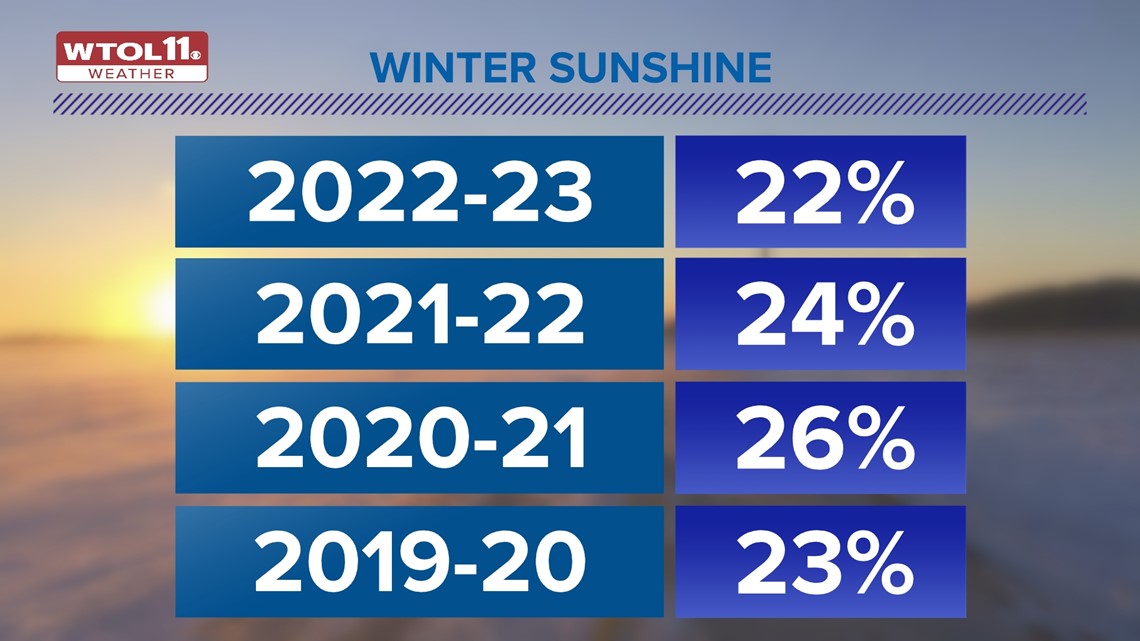
Let's be real, the winter sun isn't exactly pulling its weight, is it? It’s lower in the sky, its rays are weaker, and it doesn't stick around as long. In summer, strong sunlight can often "burn off" clouds, evaporating those tiny water droplets back into invisible vapor. It's like the sun is a giant hairdryer, drying out the sky.

But in winter? That low, weak sun just doesn't have the oomph to clear things out. It's more like a barely-there nightlight. The clouds are like, "Nah, we're cozy here, thanks." So they linger. And linger. And linger. Until you start wondering if you'll ever see your shadow again. (Spoiler: you will, eventually!)
Weather Fronts: The Cloud Bringers
And let's not forget about weather fronts! These are like the atmospheric equivalent of two different gangs of air meeting up. In winter, when a warmer, moist air mass tries to push into an area of colder air, what happens? The warmer, lighter air is forced to rise over the denser, colder air. And guess what happens when warm, moist air rises?
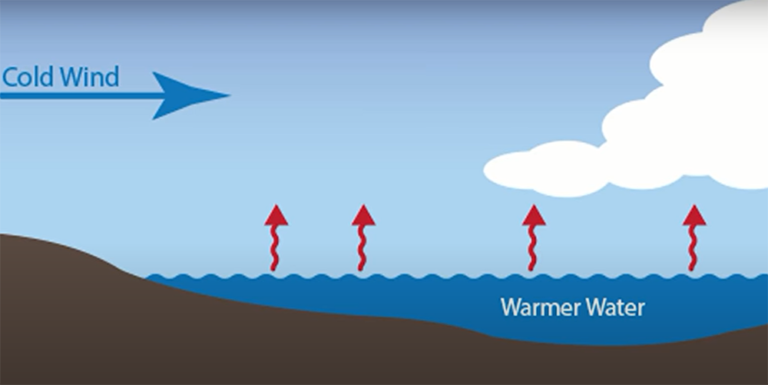
It cools! It expands! And you know the drill by now: when moist air cools, the water vapor condenses, forming… you got it! Clouds! These frontal systems can be huge, stretching for hundreds of miles, bringing with them days of overcast skies, drizzle, or even snow. It’s basically a cloud-making factory on the move.
So, What's the Takeaway?
It's not just one thing making your winter a perpetual gray-fest. It's usually a charming cocktail of all these factors: the cold air's limited moisture capacity, those pesky temperature inversions acting like a lid, the weak winter sun struggling to make an impact, and those cloud-generating weather fronts. Each plays its part in making the sky look like it's perpetually pondering something deep and philosophical.
So, next time you’re sipping your coffee and staring at a slate-gray sky, you’ll know why. It’s not just the universe personally denying you sunshine. It's a fascinating, albeit sometimes a little dreary, dance of atmospheric physics. And hey, at least now you have something smart to say about it, right? You're practically a meteorologist! Now, who's up for another mug?
