
Why Is Dc More Dangerous Than Ac

Okay, so picture this: You’re a curious kid (or maybe you just remember being one), and you’ve got a little 9-volt battery. You touch it to your tongue (don’t lie, we all did it!), and you get that weird, fizzy, metallic taste. A bit of a jolt, maybe, but nothing truly alarming. Fast forward a bit, and you’re told, in no uncertain terms, to never stick anything into a wall socket. That’s where the real electricity lives, the stuff that’ll give you a nasty shock, right? So, naturally, we grow up thinking that household wall power – the AC stuff – is the big bad wolf of the electrical world, and batteries – the DC stuff – are just… cute, little sheep. But what if I told you that our intuition, in this particular case, is actually a bit upside down?
Yeah, I know. Mind blown, right? Because despite what years of parental warnings and the general availability of AC outlets in every home might suggest, in many crucial ways, Direct Current (DC) can actually be more dangerous than Alternating Current (AC). Crazy, I know! Let's dive into this counter-intuitive puzzle, shall we?
The AC Wiggle Room: A Brief Respite
Let's start with AC. You know, the stuff that powers your toaster and charges your phone. AC stands for Alternating Current, which means the direction of the current flow is constantly reversing. In most parts of the world, it does this 50 or 60 times a second. Think of it like a rapid back-and-forth wiggle. Now, here's the crucial bit: during each cycle, the voltage actually drops to zero. Not once, but twice!
Must Read
This tiny, fleeting moment of "zero" current, believe it or not, can be your body's saving grace. If you happen to grab an AC wire, that momentary drop to zero voltage gives your muscles a split-second chance to relax. This means your muscles might have an opportunity to let go of the wire. It's not a guarantee, mind you, and a severe AC shock is absolutely devastating, but that pulsing nature offers a slim window for escape. Think of it as a rapidly blinking light – there are brief moments of darkness.
DC's Relentless Grip: No Breaks, No Mercy
Now, let's talk about DC, or Direct Current. This is the power from your batteries – the steady, unwavering flow that powers your phone, your laptop, and increasingly, electric vehicles and massive data centers. Unlike AC, DC maintains a constant voltage and current in one direction. There's no back-and-forth wiggling, no momentary drops to zero. It's just a continuous, persistent push.

And that, my friends, is where the danger truly ramps up. Imagine you're holding onto a live DC wire. Because there are no "zero crossings," your muscles don't get those tiny breaks. The current just keeps flowing, causing your muscles to contract continuously. This often leads to the terrifying "no-let-go" phenomenon. Your muscles clench, you can't open your hand, and you're stuck, effectively becoming part of the circuit. It's like a relentless, unseen hand just holding on to you.
More Than Just a "No-Let-Go" Factor
The "no-let-go" grip is certainly a huge part of why DC is so scary, but there’s more to it:
Ventricular Fibrillation:
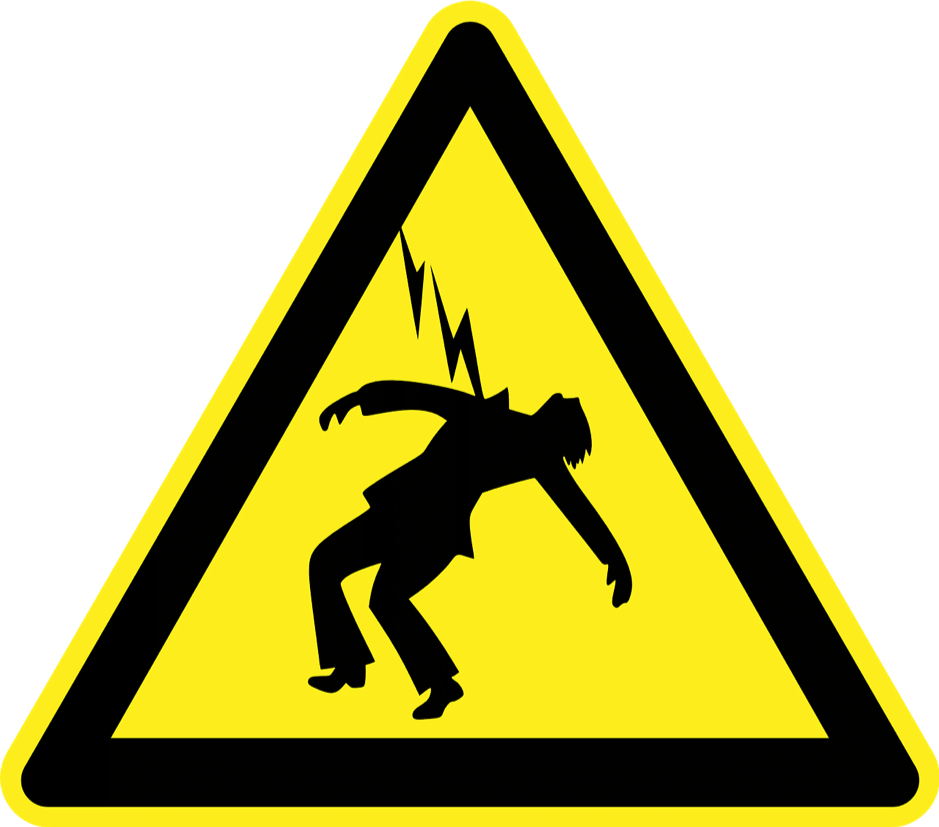
Both AC and DC can disrupt your heart's rhythm, leading to ventricular fibrillation (VFib), where your heart just quivers uselessly instead of pumping blood. But because DC is constant, if it hits your heart at a vulnerable point in its cycle, it has a higher chance of sustaining that fibrillation. AC, with its oscillating nature, might have a slightly better chance of not locking your heart into a sustained, fatal arrhythmia.
Arc Flashes and Burns:

When you have a short circuit, electricity can jump through the air, creating what’s called an "arc flash." These flashes are incredibly hot and can cause severe burns. And guess what? DC arcs are notoriously harder to extinguish than AC arcs. Because DC doesn't cross zero, the arc doesn't have those natural extinguishing points. It just keeps burning and getting hotter, posing a significant fire and burn hazard in industrial and high-power DC systems.
So, What's the Takeaway?
It’s important to remember that both AC and DC are incredibly dangerous if not handled properly. This isn't an invitation to go poking around with either! The point is to challenge our preconceived notions. The historical "War of the Currents" between Edison (pro-DC) and Tesla (pro-AC) actually saw Edison trying to brand AC as more dangerous to win public favor. The irony, as we now understand, is quite rich.
So, the next time you think about electricity, remember that while AC might feel like the obvious villain because it's everywhere, DC has a sneaky, persistent danger that can make it arguably more lethal in certain situations. It's a fascinating quirk of physics, isn't it? Stay curious, stay safe, and maybe just admire electricity from a distance. Or, you know, through a properly insulated device.
