
Why Does Warm Water Make Hurricanes Stronger
Ever felt that muggy, heavy air right before a summer thunderstorm? Imagine that feeling amplified a thousandfold, swirling and intensifying, and you're starting to get a sense of the sheer power behind a hurricane. But what fuels these behemoths of nature? The answer, in part, lies beneath the waves, in the deceptively simple ingredient: warm water.
So, why does warm water act like a super-charged energy drink for hurricanes? Let's dive in (pun intended!).
The Hurricane Engine: Fueled by Heat
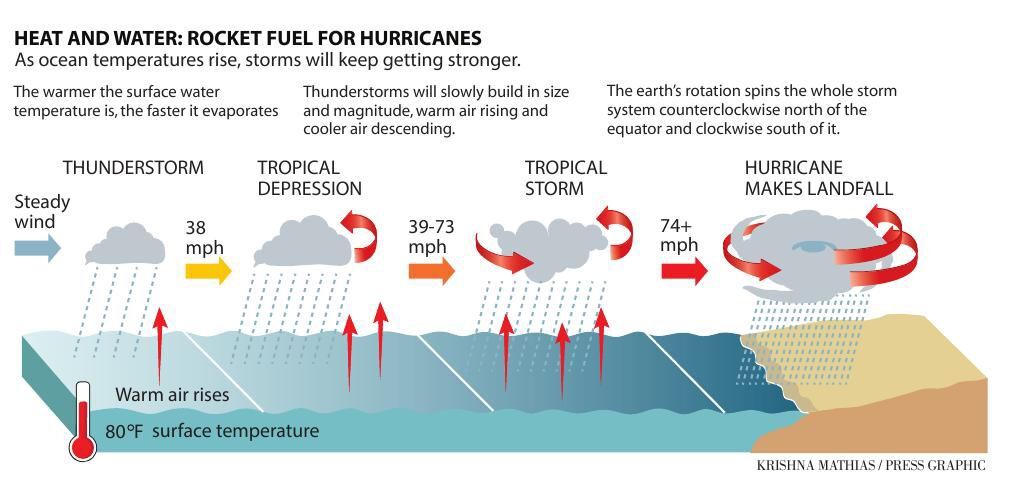
Hurricanes are essentially giant heat engines, similar in principle to the engine in your car, but on a vastly larger and more complex scale. They need fuel to operate, and in this case, that fuel is heat and moisture from the ocean.
Must Read
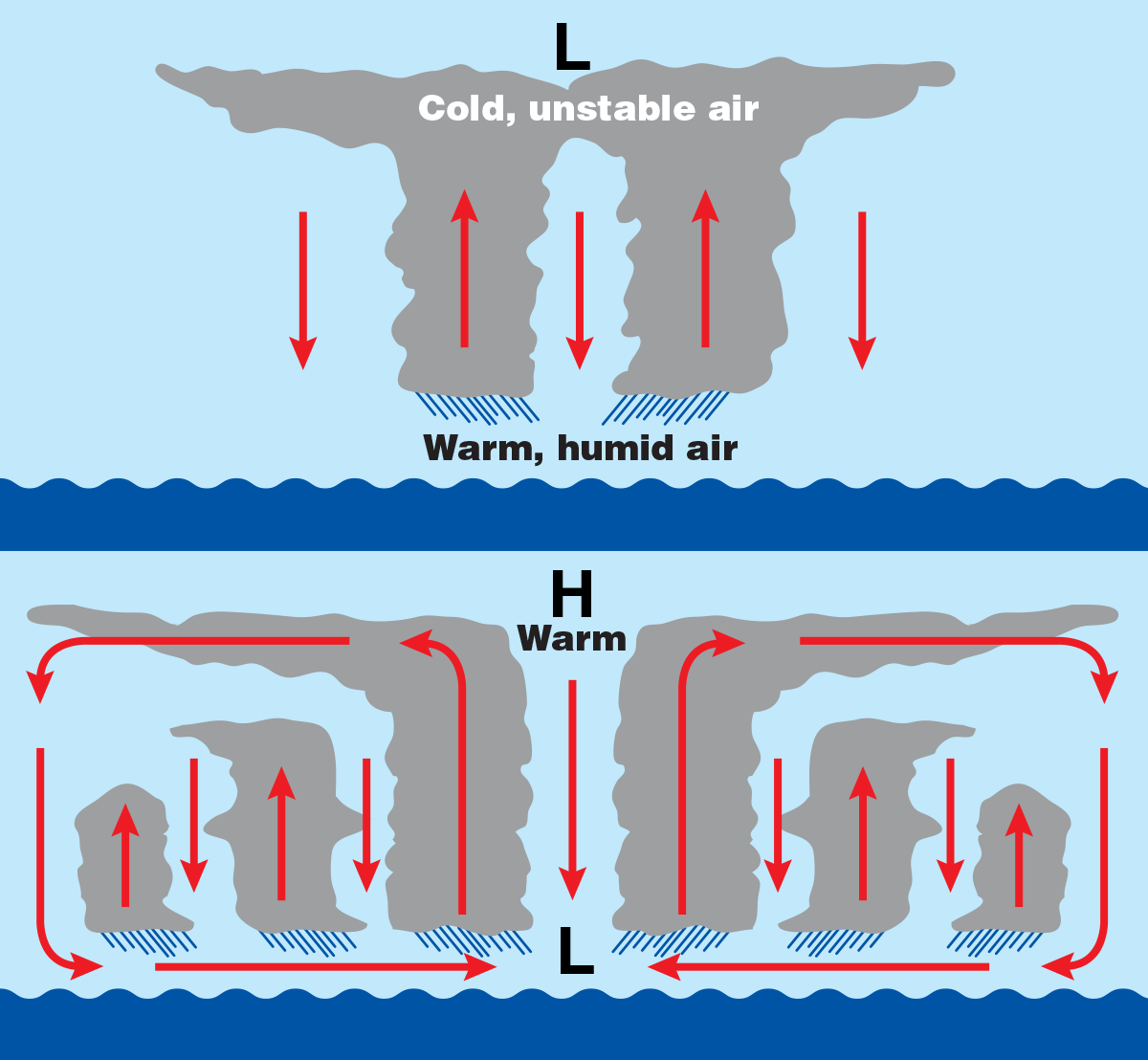
Think of it this way: the warm ocean water evaporates, turning into water vapor. This warm, moist air rises. As it rises, it cools and condenses, forming clouds and releasing latent heat. This released heat warms the surrounding air, causing it to rise even faster and draw in more warm, moist air from the ocean surface. It's a positive feedback loop – the warmer the water, the more evaporation, the more heat released, and the stronger the storm becomes. It's like the plot of an action movie where everything just keeps escalating!
Fun Fact: Hurricane season typically aligns with the warmest months of the year, when ocean temperatures are at their peak.
The Temperature Threshold: A Game of Degrees
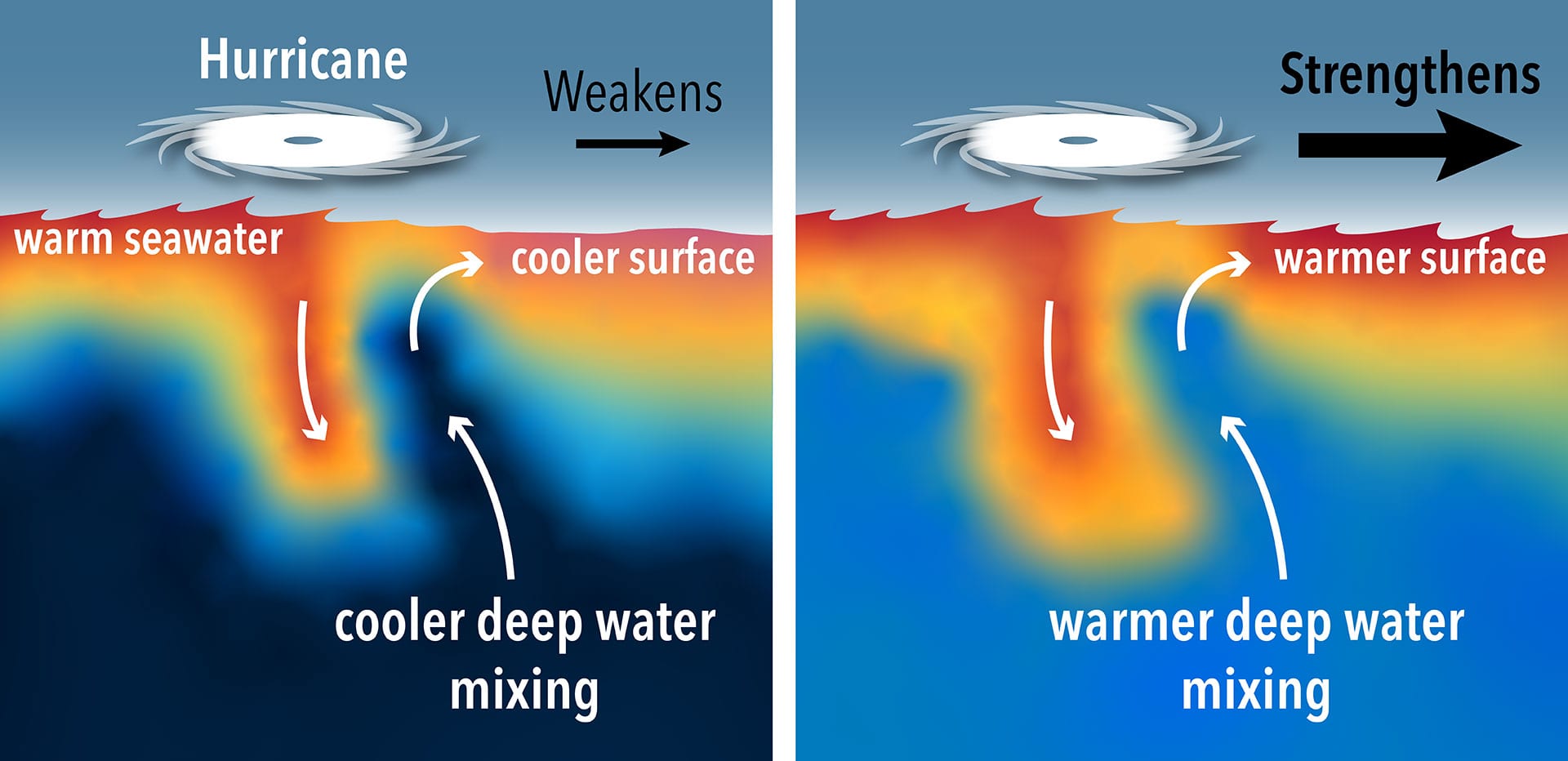
There's a crucial temperature threshold for hurricane development. Ocean water generally needs to be at least 80°F (26.5°C) to sustain a hurricane. That's bathwater warm! This temperature provides the necessary heat and moisture to kickstart and maintain the storm's engine.

When a hurricane moves over cooler water, it loses its fuel source. The evaporation rate decreases, the storm weakens, and eventually, it dissipates. It's like a marathon runner suddenly running out of energy gel – they just can't keep going at the same pace.
Practical Tip: Pay attention to sea surface temperature (SST) maps during hurricane season. These maps can provide clues about potential storm intensification or weakening.
Climate Change and Warmer Waters: A Troubling Trend
Here's where things get a little more serious. With climate change, ocean temperatures are generally increasing. This means that the area of ocean capable of supporting hurricane development is expanding, and storms that do form have the potential to become more intense.
A warmer ocean doesn't necessarily mean more hurricanes, but it strongly suggests that the hurricanes we do get could be more powerful, with higher wind speeds and heavier rainfall. This is what scientists are most concerned about.
Cultural Reference: Remember the movie "The Day After Tomorrow?" While dramatically exaggerated, it touches on the potential consequences of climate change, including extreme weather events.
Beyond Temperature: Other Factors at Play
While warm water is a crucial ingredient, it's not the only factor that determines a hurricane's strength. Wind shear (changes in wind speed or direction with altitude) can disrupt a hurricane's structure, preventing it from intensifying. The presence of a pre-existing disturbance, like a tropical wave, is often necessary for a hurricane to even form in the first place. Atmospheric conditions, like pressure systems, also play a role.
Fun Fact: The Saffir-Simpson Hurricane Wind Scale classifies hurricanes based on their sustained wind speeds, providing an estimate of potential damage.
Bold text is important for highlighting the Key Points!
What It Means For You
The connection between warm water and hurricane intensity might seem like a purely scientific topic, but it has real-world implications for all of us. Understanding this link helps us to appreciate the potential impacts of climate change and the importance of taking proactive measures to mitigate its effects.
Even seemingly small actions, like reducing our carbon footprint and supporting sustainable practices, can contribute to a larger effort to protect our planet and ourselves from the increasing risks of extreme weather. Every little bit helps.
Staying informed about hurricane forecasts and heeding warnings from local authorities is also crucial. Preparation is key to minimizing the impact of these powerful storms on our lives and communities. It's a good idea to build yourself a simple emergency kit, it's important to be prepared.
So, the next time you're enjoying a warm bath, remember the power lurking beneath the surface of our oceans. While a relaxing bath is beneficial, dangerously warm oceans are not.