Why Does The Power Keep Going Out In My Area
Ah, the dreaded power outage. It's a bit like that surprise plot twist in your favorite show – completely unexpected and often leaves you scrambling. But instead of captivating drama, you're fumbling for candles and wondering if the ice cream in the freezer is already melting. If you're finding that the lights are flickering off more often than you'd like in your neighborhood, you're definitely not alone. What's going on?
Understanding why you're regularly plunged into darkness can be frustrating, but knowledge is power (pun intended!). So, what are some common culprits?
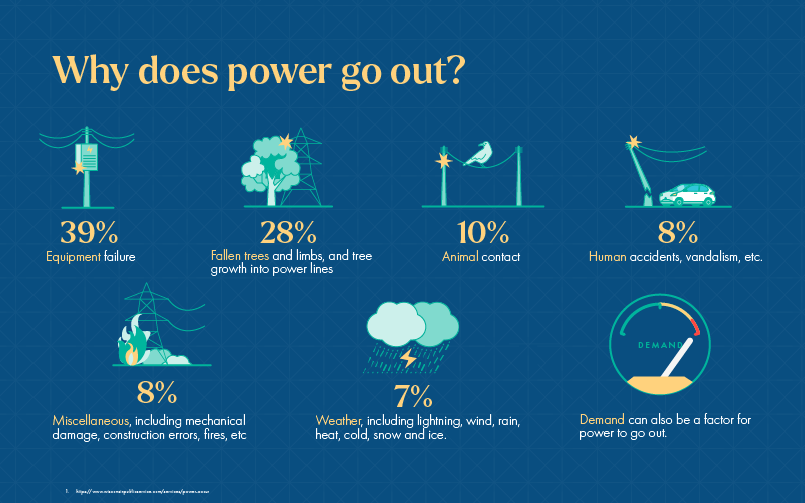
One of the biggest reasons is the aging infrastructure. Power grids, especially in older areas, are often struggling to keep up with the growing demand. Think of it like an old pipe – eventually, it's going to leak, crack, or even burst under pressure. These aging lines and substations are more prone to failures, leading to outages. The weather also plays a huge role. Severe storms, heavy snow, and even extreme heat can overload the system, bringing down power lines or damaging equipment. It's not just big storms, though. Even a small branch falling on a power line can cause a temporary blackout.
Must Read
Another factor is increased demand. We're using more electricity than ever before, from our smart devices and home appliances to our electric vehicles. This puts a strain on the grid, especially during peak hours, making it more susceptible to outages. And sometimes, the reason is simply good ol' maintenance. Utility companies need to perform regular maintenance to keep the grid running smoothly. While this might cause temporary outages, it's essential for preventing more significant problems down the line. Finally, consider the trees around your neighborhood. Overgrown branches can interfere with power lines, causing outages, especially during windy conditions. Regular tree trimming is vital for preventing these types of incidents.
So, what can you do about it? While you can't single-handedly rebuild the power grid, there are steps you can take. First, contact your local utility company. They can provide information about planned outages and report any recurring issues. Second, consider investing in a backup power source, such as a generator or a battery backup system. This can be a lifesaver during extended outages. Third, conserve energy. Reducing your electricity consumption can help alleviate the strain on the grid. Switch to energy-efficient appliances, unplug electronics when not in use, and adjust your thermostat. Fourth, report downed power lines or overgrown trees near power lines to your utility company. Prompt reporting can help prevent outages and ensure public safety.

Knowing the common causes and taking proactive steps can help you better prepare for and cope with those inconvenient power outages. While it might not make them completely disappear, understanding the "why" can at least make the "what now?" a little less stressful.
Ultimately, dealing with power outages is part of modern life. While frustrating, recognizing the reasons behind them and taking steps to mitigate their impact can empower you (again, with that pun!) to navigate these moments with a little more ease and a lot less stress.