
Why Does My Power Keep Surging

Ever been chilling at home, maybe watching your favorite show or deep into a game, when suddenly... BAM! The lights flicker, the TV blinks, or your computer makes that ominous "unplugged" sound? You might think, "Ugh, not again! Why does my power keep surging?!"
It's a common, slightly annoying, and often confusing experience. But instead of just shrugging it off, let's pull back the curtain a bit, shall we? Because the world of electricity, even when it's misbehaving, is actually pretty cool and endlessly fascinating.
So, What Exactly Is a Power Surge?
Think of electricity like water flowing through a pipe. Usually, it's a nice, steady stream, just enough pressure to keep everything going smoothly. A power surge is like a sudden, unexpected burst of water pressure – a super-fast, super-intense spike in voltage. It's too much, too fast, for a fleeting moment, but that fleeting moment can be a real headache for your sensitive electronics.
Must Read
Our homes are designed for a specific voltage, usually around 120 volts here in North America. When a surge hits, that voltage can jump to hundreds, even thousands, of volts in just milliseconds. It's like your gentle garden hose suddenly trying to mimic a firehose! Your devices are built to handle the garden hose, not the firehose, and they can get a little overwhelmed.
The Usual Suspects: Internal Shenanigans
Sometimes, the culprit is lurking right inside your own home. Crazy, right?
The biggest internal cause? Heavy-duty appliances. We're talking about your refrigerator, air conditioner, washing machine, or even that powerful vacuum cleaner. When their large motors kick on or off, they can create a brief but noticeable dip or spike in the electrical demand of your home. It’s like a big kid jumping into a swimming pool – there's a momentary splash and ripple that affects everyone else in the water.
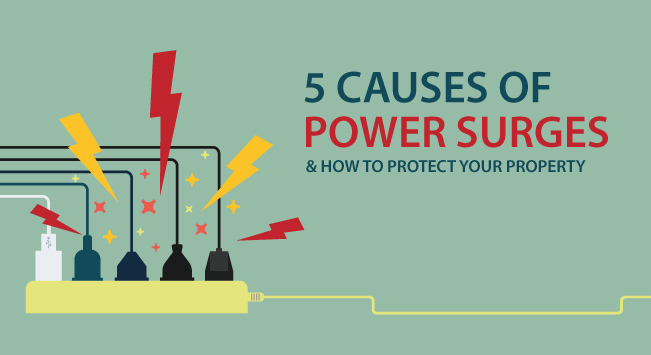
Each time your fridge's compressor starts up, it draws a significant amount of power. When it cycles off, that demand lessens. These tiny fluctuations can ripple through your home's electrical system, manifesting as a subtle surge that makes your lights dim or your electronics hiccup. It's usually harmless, but if it's happening a lot, it might be a sign of something else.
Less commonly, but still worth mentioning, is faulty or aging wiring. If your home's electrical system is a bit ancient or has some loose connections, it can contribute to these internal voltage spikes. It's like having a leaky, rickety old plumbing system – sometimes the pressure just isn't stable.
The Big Baddies: External Forces at Play
Now, let's talk about the more dramatic, and often more damaging, causes of power surges – the ones that come from outside your cozy abode.
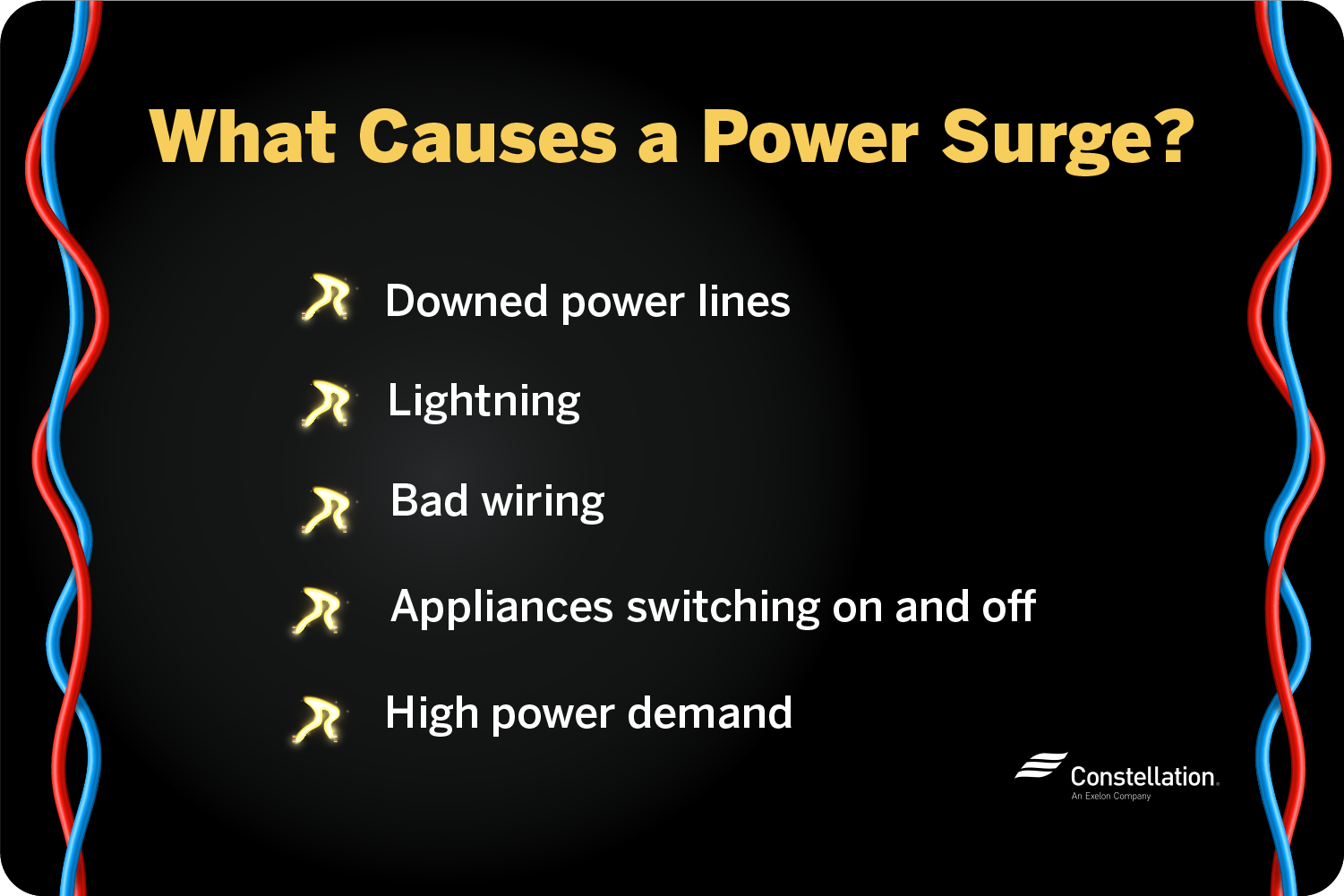
Lightning strikes! This is probably the first thing that comes to mind, and for good reason. A lightning strike, whether it hits your house, a power line nearby, or even the ground a short distance away, unleashes an incredible amount of electrical energy. This massive surge can travel through your electrical system, causing serious havoc. It's the ultimate "too much, too fast" scenario, like a giant, angry dragon breathing fire at your power grid.
But lightning isn't the only external bad guy. Ever heard of utility company issues? These are surprisingly common. Sometimes, when the power company switches equipment on or off at a local substation, or if there's an issue with a transformer down the street, it can cause a temporary fluctuation in voltage that results in a surge throughout the neighborhood. Think of it as the power grid equivalent of someone accidentally tripping over a major cable and then quickly plugging it back in.
What about downed power lines? An accidental car crash into a utility pole, a tree falling on a line during a storm, or even an industrious (and unfortunate) squirrel can disrupt the power flow. When lines come into contact or short out, it can create a surge as the system tries to re-regulate itself.
Yes, squirrels! Those fluffy-tailed little critters are notorious for causing power outages and surges by scampering across transformers or chewing on wires. They're unknowingly playing a dangerous game of electrical roulette, and sometimes, our electronics pay the price.
Why Should We Care?
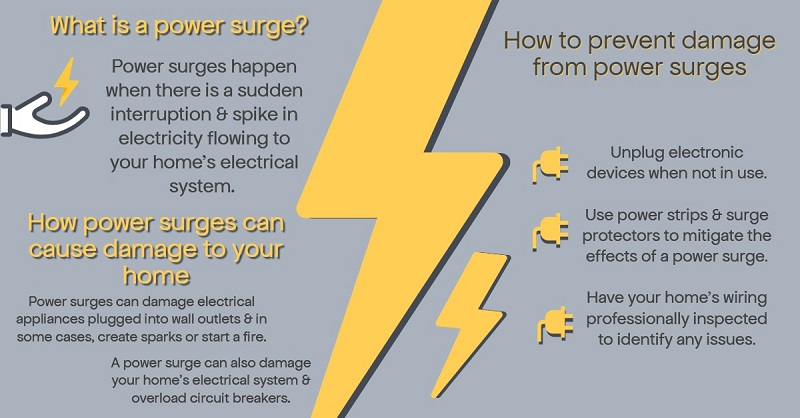
Okay, so it's not just an annoying flicker. Frequent or large power surges can be seriously detrimental to your electronics. They can degrade the internal components over time, shortening the lifespan of your devices, or in a big surge, they can fry them instantly, turning your beloved gadget into a very expensive paperweight. Imagine tiny electrical components being hit by a sledgehammer – that's what a big surge can feel like to them.
What Can a Curious Homeowner Do?
Don't just stand there watching your devices blink nervously! There are ways to protect your precious tech:
The most common defense is a surge protector. These aren't just fancy power strips; they're designed to act as a kind of electrical bouncer. When they detect a voltage spike, they divert the excess electricity away from your devices and safely absorb it, or in some cases, sacrifice themselves to protect your gear. It's like having a dedicated goalie for your electrical current, blocking those sudden shots of high voltage.

For even more robust protection, you can consider a whole-home surge protector. These are installed at your main electrical panel and protect all the outlets and devices in your house, offering a much broader shield against external surges.
During a severe thunderstorm, if you're really worried, you can always unplug sensitive electronics. It's the ultimate physical disconnect, guaranteeing no surge will reach them. Just remember to plug them back in when the storm passes!
If you're experiencing frequent surges, especially the more dramatic kind, and you suspect an internal issue, it's always a good idea to consult a qualified electrician. They can inspect your home's wiring and electrical panel to identify and fix any underlying problems.
A Little Electrical Appreciation
So, the next time your lights flicker, take a moment to appreciate the invisible ballet of electrons happening all around you. Power surges, while sometimes a nuisance, are a curious peek into the powerful and dynamic world of electricity that keeps our modern lives humming. Understanding why they happen can help us appreciate the delicate balance of our electrical grid and take steps to protect our cherished gadgets from those unexpected electrical fireworks.