Why Are Non Renewable Resources Considered Finite

Hey there, eco-chic reader! Let's dive into a topic that's super important, yet sometimes feels a bit... abstract. We're talking about non-renewable resources and why they're considered finite. Think of it as understanding why your favorite vintage tee is so valuable – there's only so much of it to go around!
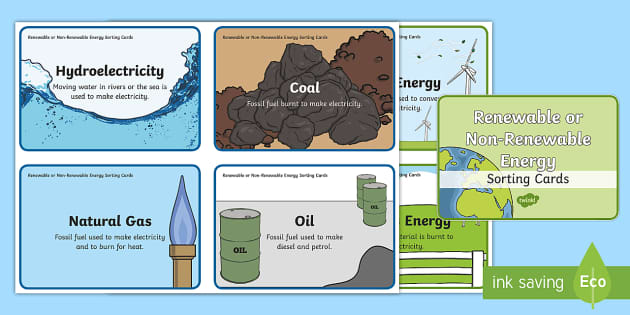
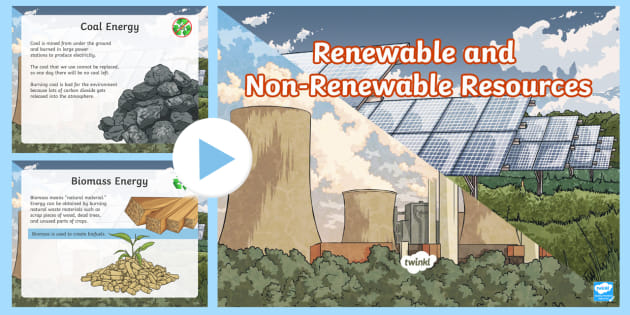
So, what exactly makes a resource non-renewable? It boils down to speed, or rather, the lack thereof. These resources, like fossil fuels (coal, oil, and natural gas) and certain minerals, take millions of years to form. We're talking geological timescales here, not just a quick trip to the shops.
The Deep Time Drama
Imagine the Earth as a giant slow cooker. Fossil fuels are the result of ancient organic matter (think prehistoric plants and animals) being subjected to intense heat and pressure deep beneath the Earth's surface. It's a process that takes eons. We’re consuming them at a rate that's astronomically faster than they can be replenished.
Must Read
Think of it like this: if creating oil was like brewing coffee, we're chugging it down faster than the beans can even grow!
A Finite Supply: The Numbers Don't Lie
Here's the kicker: because these resources take so long to create, the amount available on Earth is limited. That's why we call them "finite." While scientists are constantly exploring new reserves and developing extraction techniques, the basic principle remains: we're using a fixed amount, and eventually, it will run out.
It’s not necessarily about literally hitting zero. The cost of extracting the remaining resources can become prohibitively expensive, making them economically unviable long before we completely exhaust them. Imagine trying to squeeze the last drop of toothpaste out of the tube – at some point, it's just not worth the effort!
Beyond Fossil Fuels: Minerals in the Mix
The concept of finite resources extends beyond just fossil fuels. Certain minerals, crucial for everything from smartphones to wind turbines, are also non-renewable. Things like copper, lithium, and rare earth elements are essential for modern technology, but their deposits are unevenly distributed and can be depleted.

Fun fact: The elements that make up your smartphone screen came from somewhere! And sourcing them often involves complex geopolitical and environmental considerations. That new phone might look sleek, but behind the screen lies a web of resource extraction.
Practical Tips for a Finite World
Okay, so what can we do about it? It's not about living in a cave, but about making conscious choices that respect our planet's resources.
- Reduce, Reuse, Recycle: This is the golden trio! Less consumption means less demand on resource extraction. Think before you buy, repair instead of replace, and recycle everything you can.
- Embrace Energy Efficiency: Switch to LED lightbulbs, insulate your home, and be mindful of your energy consumption. Small changes can make a big difference.
- Support Renewable Energy: Advocate for policies that promote solar, wind, and other renewable energy sources. Your voice matters!
- Choose Sustainable Products: Opt for products made with recycled materials, or those that are designed to last. Vote with your wallet!
- Consider Your Transportation: Walk, bike, or use public transport whenever possible. If you need a car, consider an electric or hybrid vehicle.
A Moment of Reflection
Understanding that non-renewable resources are finite can be a little daunting, but it's also empowering. It encourages us to be more mindful of our consumption habits and to embrace a more sustainable lifestyle. We're all part of the same ecosystem, and our choices have a ripple effect. So, next time you're reaching for that plastic bottle or considering an upgrade to the latest gadget, remember that vintage tee – its value lies in its limited supply, just like the resources that sustain our modern world. Let's cherish them!
![renewable energy vs finite energy [1] | Download Scientific Diagram](https://www.researchgate.net/publication/372907324/figure/fig1/AS:11431281179204864@1691161617712/1-renewable-energy-vs-finite-energy-1.png)