
Who Do I Call For Gas Service

Alright, settle in, grab your metaphorical (or actual!) coffee, because we're about to dive into one of life's truly perplexing mysteries: who exactly do you call when your gas service decides to go rogue? It's a question that can send even the calmest among us into a mild panic, right up there with "Where did I put my keys?" or "Is that noise from my car or just the wind?"
Picture this: You wake up on a chilly morning, ready for that glorious hot shower, only to be greeted by an icy blast. Or maybe your furnace decides to stage a dramatic protest, leaving your home feeling like a walk-in freezer. Your first thought, after a theatrical swoon, is probably, "Gas! It must be the gas!" And then, the brain scramble begins: "Do I call a plumber? The electric company? Ghostbusters?" (Spoiler: probably not Ghostbusters, unless your gas issues are spectral in nature.)
First Things First: Do You Smell Gas?
Before we get into the nitty-gritty of who fixes what, let's address the absolute, non-negotiable, NUMBER ONE RULE:
Must Read
If you smell natural gas – that distinct rotten egg odor – you need to treat it like a five-alarm emergency. Seriously, this isn't the time for charming anecdotes or trying to "figure it out." Natural gas is naturally odorless, by the way. That funky smell? It's mercaptan, a harmless chemical added specifically so you can detect leaks! Clever, right?
What to do if you smell gas:
1. Get out. Immediately. Don't dally. Don't grab your phone. Don't turn on lights or appliances. Don't even think about plugging in that charger. Any spark could be disastrous.
2. From a safe distance, call for help. Once you're well away from the building, call your local emergency number (911 in the US and Canada) and your gas utility company's emergency line. They are the superheroes of gas leaks.
They'll send someone out lickety-split to investigate. This isn't a "maybe it's nothing" situation. Always err on the side of caution. Your life, and potentially your house, depends on it!
Okay, So It's Not a Gas Leak (Phew!). Now What?
Alright, crisis averted. You just have a grumpy water heater or a furnace that's decided to take an unscheduled vacation. This is where the confusion really kicks in. Let's break down the two main players in the gas game:

Player 1: Your Gas Utility Company (The Supply Chain Manager)
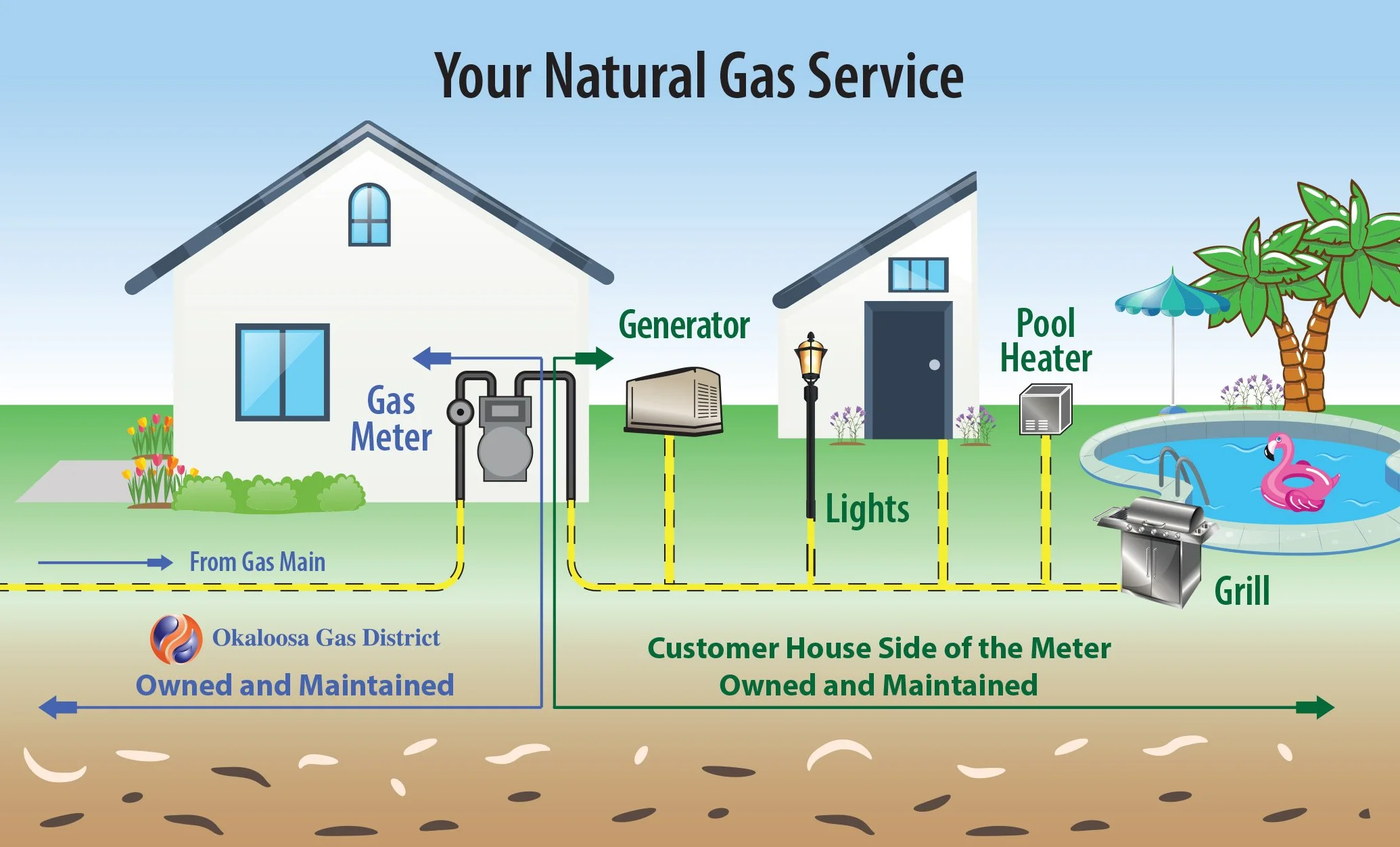
Think of your gas utility company as the grand poobah of gas delivery. They're like the Amazon Prime for natural gas, ensuring it gets from the source, through miles of pipelines, and right up to your doorstep (or, more accurately, your gas meter). They own and maintain everything up to and including the gas meter outside your house.
When to call your gas utility company:
- If you smell gas (see above – this is their top priority!).
- If your entire house has no gas (i.e., multiple gas appliances aren't working). This usually points to an issue with the main supply or your meter.
- If you notice damage to your gas meter or the main gas line leading to it.
- If you're digging in your yard and accidentally hit a gas line (stop digging immediately and call them!).
- For new service connection, disconnection, or questions about your gas bill.
How to find them: Look at a recent gas bill. Their name and emergency number will be plastered all over it. A quick online search for "natural gas company [your city/state]" will also usually do the trick.
These folks are the guardians of the gas grid. They make sure the gas flows safely from the distribution network into your property.

Player 2: A Licensed HVAC Technician or Plumber (The Appliance Doctor)
Now, once the gas passes through that meter and enters your home, it's generally considered "your gas." And any issues with the gas lines inside your house or, more commonly, with the actual gas-powered appliances themselves, fall under the purview of a qualified professional. Think of them as the appliance doctors, the specialists who deal with the inner workings of your furnace, water heater, stove, or dryer.
When to call a licensed HVAC technician or plumber (certified for gas work):
- If only one gas appliance isn't working (e.g., your furnace is out, but your gas stove works fine). This suggests a problem with that specific appliance.
- For routine maintenance, repairs, or installation of gas appliances (furnace, water heater, gas range, gas dryer, gas fireplace).
- If you suspect an issue with the gas lines inside your home, leading from the meter to your appliances.
- If you're renovating and need to move or add new gas lines within your property.
Why licensed? Because gas work is serious business! You don't want your cousin Barry, who "watches a lot of YouTube," messing with your gas lines. Always ensure they are licensed, insured, and specifically certified for gas line work.

The Tricky Bit: When It's a Gray Area
Sometimes, it's not immediately obvious. What if your water heater isn't working, but you also think the stove might be a bit sluggish? This is where a little investigative work helps. If you're truly stumped, and there's no immediate smell of gas, it's often safer to call the gas utility company first. They can often tell you if gas is flowing correctly to your meter. If it is, they'll usually advise you to call a licensed technician for your appliances.
Remember, the utility company's primary concern is the safe delivery of gas to your home. The technician's concern is the safe operation of the appliances in your home. They're two sides of the same very important coin.
A Final Chuckle (and a Reminder)
So, the next time your hot water decides to take a sabbatical, don't just stand there staring blankly at your gas bill like it's an ancient hieroglyphic tablet. Remember the golden rule: safety first (smell gas = evacuate and call 911/utility!). If it's an appliance issue, call the pros who specialize in making those fiery boxes purr again. And if you're ever in doubt, a quick, polite call to your gas utility can clarify who needs to be summoned.
Think of it as having two different kinds of doctors: your general practitioner (the utility, checking your overall gas health) and your specialist (the technician, fixing your specific furnace ailment). You wouldn't ask your GP to perform open-heart surgery, would you? (Unless they're really multi-talented.) Stay safe, stay warm, and may your gas lines ever be flowing smoothly!