
Who Came Up With Solar Energy
Ever gazed up at a rooftop covered in those sleek, dark panels and wondered, "Who even came up with that brilliant idea?" Solar energy feels like magic, right? One moment it’s a bright, sunny day, the next, your house is quietly powering itself from pure sunshine. It’s pretty mind-blowing when you think about it.
But here’s the thing: trying to pinpoint one single person who “invented” solar energy is a bit like trying to find the one person who invented the concept of a "story" or "walking." It’s less about a singular "eureka!" moment and more about a long, winding, and utterly fascinating journey powered by countless curious minds over centuries. It's a whole relay race of brilliant ideas!
Sun Worshippers and Ancient Ingenuity
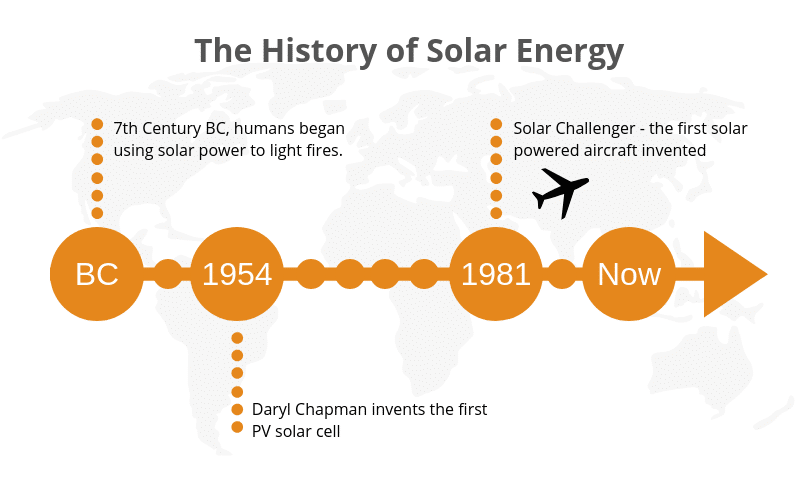
Long before anyone dreamed of silicon cells, people were already tapping into the sun's power. Think ancient civilizations – the Greeks, Romans, and Chinese. They weren't building power plants, but they were incredibly clever about passive solar design. They'd orient buildings to catch maximum winter sun and provide shade in summer. Essentially, they were optimizing their comfort using the sun, just without the wires and panels!
Must Read
Ever heard of Archimedes? Legend has it he used giant mirrors to focus sunlight and set enemy ships on fire. While that might be more myth than fact, it certainly highlights humanity's early understanding that the sun packed a serious punch if you knew how to concentrate it. Pretty cool, huh?
The Scientific Spark: Becquerel's Big "Oops!" (or rather, "Aha!")
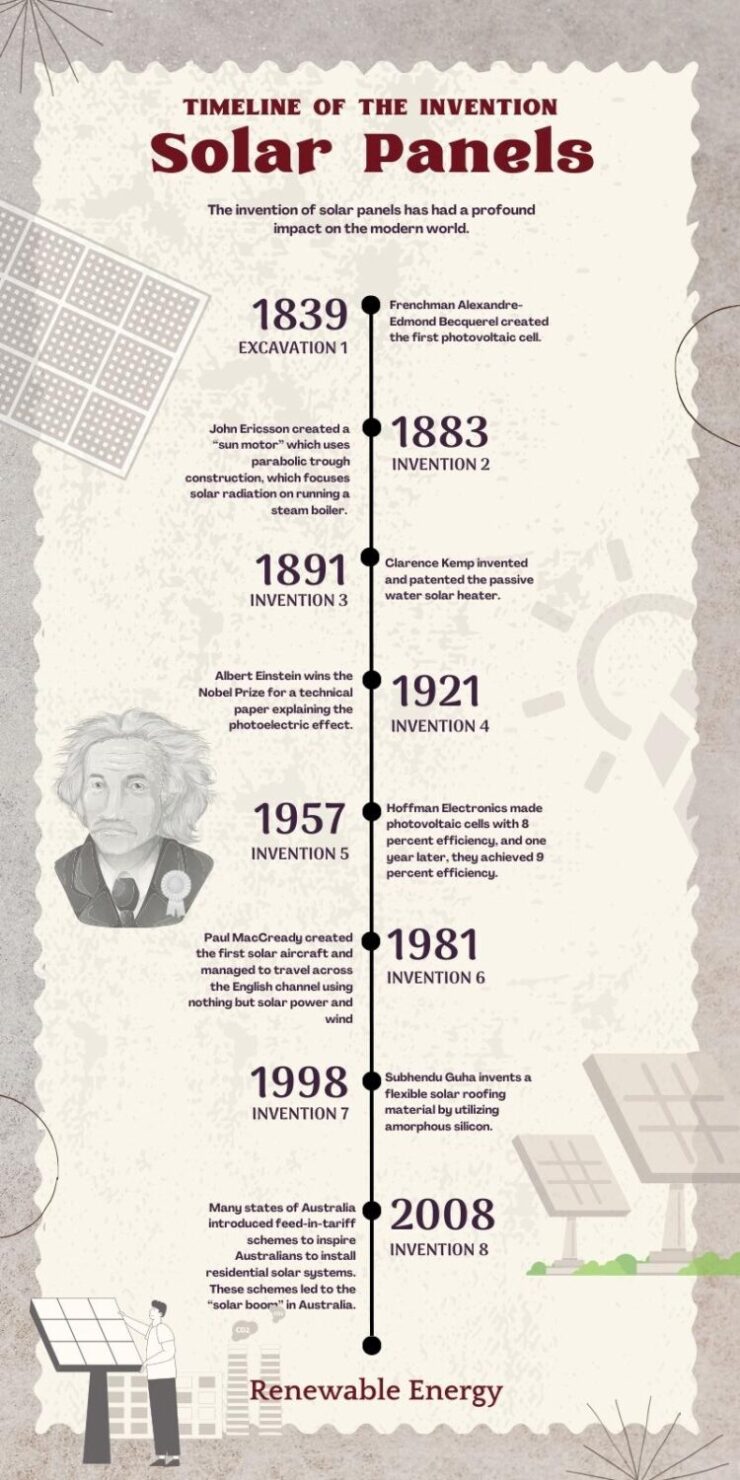
Fast forward to the 19th century, specifically 1839. This is where things start getting electrifying! A young French physicist named Alexandre-Edmond Becquerel was messing around with an electrochemical cell – basically a simple battery in a solution. He noticed something peculiar: when he shined light on one of the electrodes, the current increased. He had, quite accidentally, discovered the photovoltaic effect.

Think about it: light, just ordinary sunlight, was making electricity! It was a tiny effect, barely a whisper, but it was the first scientific observation that light could be directly converted into an electrical current. It was like finding a secret, invisible button that, when pressed by light, made a tiny spark. Absolutely revolutionary, even if nobody quite knew what to do with it yet.
The First "Cells": Selenium Steps Up
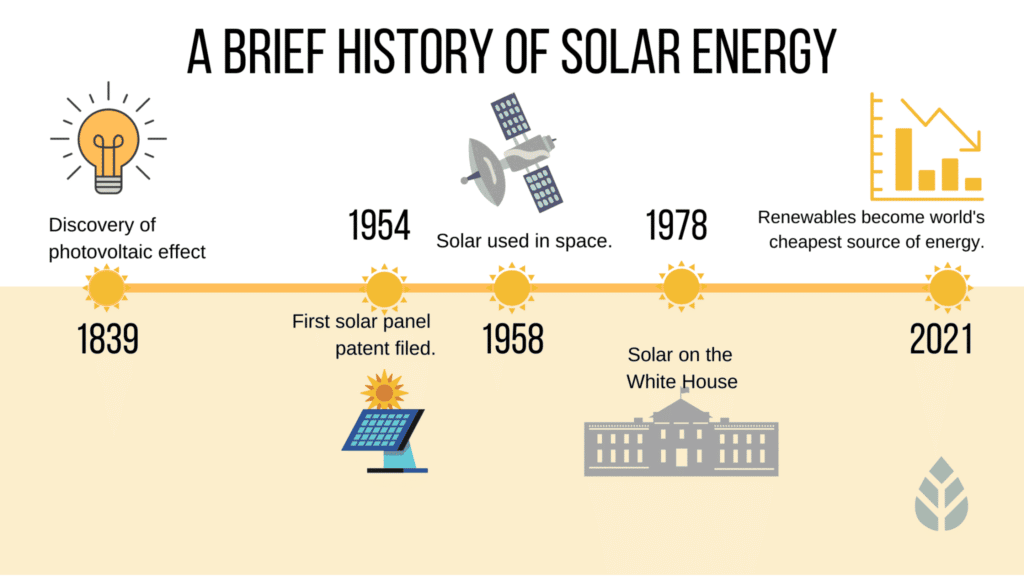
Decades later, in the 1870s, two other brilliant minds, Willoughby Smith and then Charles Fritts, started experimenting with a material called selenium. They discovered that when light hit selenium, it could generate electricity without any liquids involved. Fritts even built what’s considered the first functional solar cell in 1883, coating selenium with a thin layer of gold. It was only about 1-2% efficient, meaning it converted a tiny fraction of sunlight into electricity, but it worked! It was the technological equivalent of a baby taking its first wobbly steps.
Imagine trying to power anything significant with that! It was more of a scientific curiosity than a practical tool. But the seed was planted: solid materials could turn light into power.
Einstein's Unsung Solar Heroics
Here’s a twist: one of the most famous scientists in history played a crucial role in understanding how solar energy actually works. No, not because he built a solar panel, but because he explained the underlying physics. In 1905, in his "miracle year," Albert Einstein published a paper explaining the photoelectric effect. This is the very phenomenon Becquerel observed and Fritts utilized.
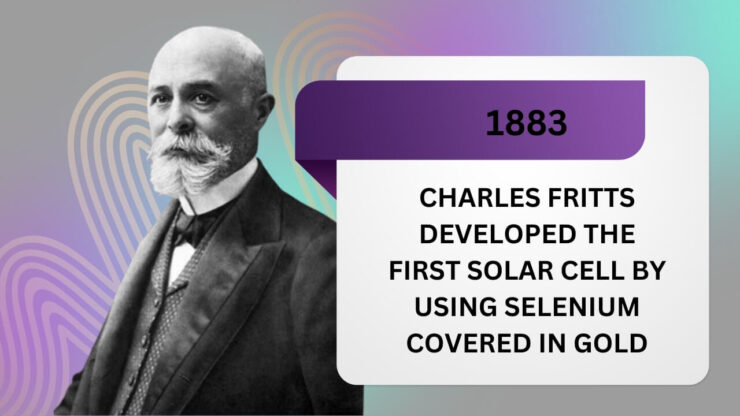
Einstein proposed that light isn't just a wave but also comes in tiny packets of energy called photons. When these photons hit certain materials, they can knock electrons loose, creating an electric current. He won the Nobel Prize for this! So, while he didn't invent the solar cell, he gave us the instruction manual for how the sun's energy actually does its magic. Pretty big deal, right?
The Modern Era: Bell Labs and the Silicon Revolution
Fast forward again to the mid-20th century. The 1950s saw the real breakthrough for practical solar power. In 1954, at Bell Labs (a hotbed of innovation at the time), a team of scientists – Daryl Chapin, Calvin Fuller, and Gerald Pearson – developed the first silicon solar cell that could actually convert a significant amount of the sun's energy into electricity. We're talking 6% efficiency, which was a huge leap!
This was it! This was the moment solar power went from scientific curiosity to a genuine power source. These early cells were initially used to power things like satellites in space – talk about out-of-this-world technology! Soon after, they started making their way down to Earth, first for niche applications and then, as costs came down and efficiency went up, onto our rooftops.
A Collective Masterpiece
So, who came up with solar energy? It wasn't one person in a lab coat shouting "Eureka!" It was a long line of brilliant minds – philosophers, physicists, engineers, and tinkerers – each building on the discoveries and insights of those who came before them. From ancient builders appreciating the sun's warmth to 21st-century scientists pushing the boundaries of material science, solar energy is a testament to human curiosity and perseverance.
It’s a story about observation, accidental discoveries, deep theoretical understanding, and relentless engineering. And that, we think, is far cooler than a single inventor. It's a collective masterpiece, continuously evolving, and still powering our world one photon at a time. What an incredible journey!