
Which Way To Turn A Ceiling Fan In The Summer
Summer. The season of sunshine, lemonade, and... existential ceiling fan crises? Okay, maybe not existential. But let's be honest, have you ever stared up at your ceiling fan, questioning its current direction, wondering if it's actually doing anything to combat the heat? You're not alone.
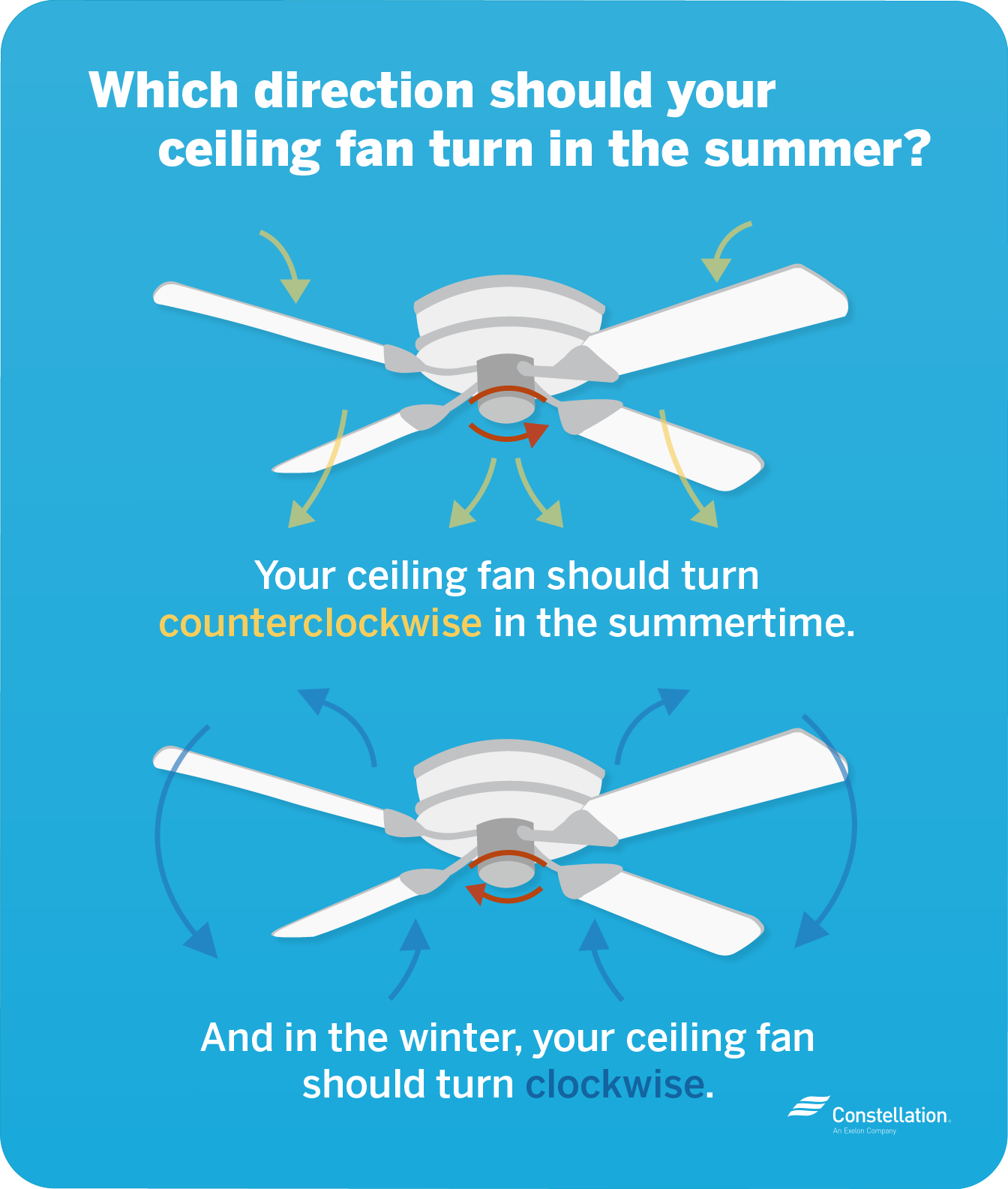
The answer, thankfully, isn't complicated. It all boils down to airflow and a simple principle: creating a downdraft in the summer makes you feel cooler.
The Summer Setting: Counter-Clockwise is King (or Queen!)
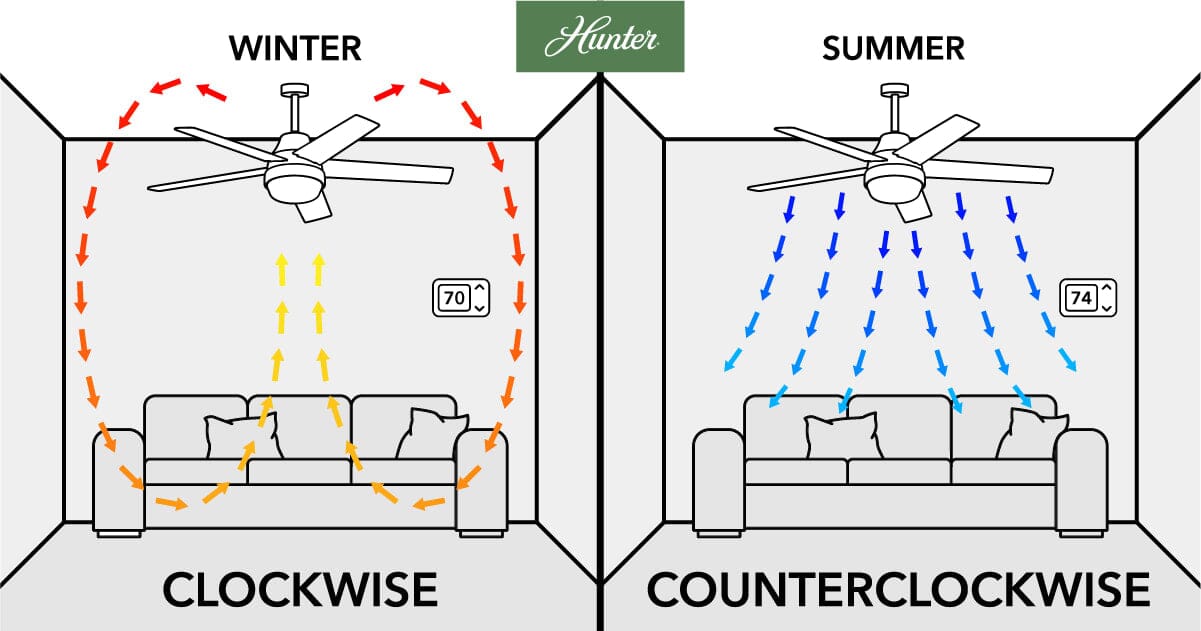
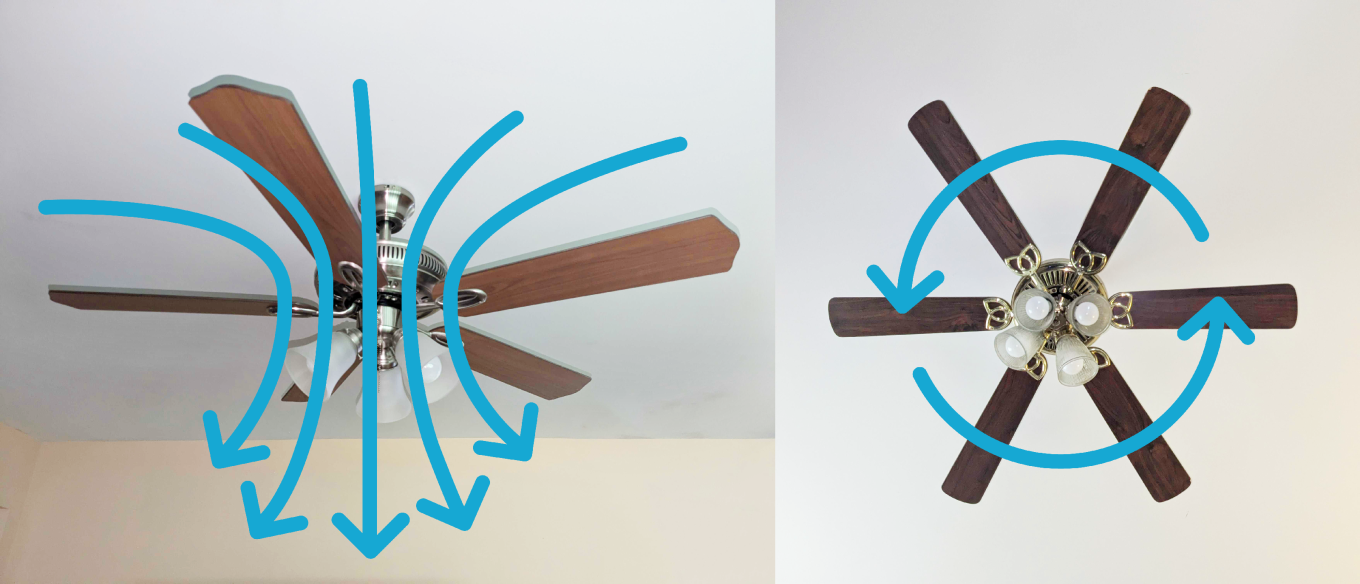
In the summer months, you want your ceiling fan to rotate in a counter-clockwise direction when you're looking up at it. This pushes air down, creating a gentle breeze that evaporates perspiration on your skin. Think of it like a mini personal air conditioner, mimicking the feeling of a cool ocean breeze on a hot day.
Must Read
Why does this work? It's all about the physics of convection. Moving air accelerates evaporation, and evaporation cools things down. It's the same reason a wet t-shirt feels so refreshing on a scorching afternoon (although we wouldn't recommend that as your primary cooling strategy!).
How to Check (and Change) Your Fan's Direction
Most ceiling fans have a small switch located on the motor housing. This switch controls the direction of the fan. Turn the fan off completely before attempting to flip the switch! Safety first, always.
Here's a quick and easy checklist:
- Turn off the fan. (Seriously, don't skip this.)
- Locate the direction switch on the motor housing.
- Flip the switch to the opposite position.
- Turn the fan back on.
- Observe the direction of the blades. Are they moving counter-clockwise (when viewed from below)? If so, you're golden! If not, repeat steps 1-4.
Pro Tip: If you're still unsure, stand directly beneath the fan. You should feel a noticeable breeze. If you don't, the fan is likely going the wrong way.

Beyond the Direction: Optimizing Your Fan's Performance
Simply switching the direction isn't the only way to maximize your ceiling fan's cooling power. Here are a few extra tips:
- Speed Matters: Experiment with different speeds. Higher speeds will create a stronger downdraft, but might also generate more noise.
- Combine with AC: Ceiling fans don't actually cool the air, but they do help circulate it. Use them in conjunction with your air conditioner to distribute cool air more effectively and potentially lower your thermostat setting (saving energy and money!).
- Cleanliness is Key: Dust buildup on fan blades can reduce their efficiency. Give them a good cleaning every few months. A microfiber cloth or even an old pillowcase works wonders.
- Consider Blade Pitch: The angle of the fan blades (the "pitch") also affects airflow. Fans with a steeper blade pitch generally move more air.
A Cultural Breeze: Fans in History
Ceiling fans aren't just modern conveniences; they have a surprisingly rich history. Early versions, known as punkahs, were used in India as early as 500 BC. These were large, swinging fans operated manually by servants. Talk about a workout!
The electric ceiling fan, as we know it today, emerged in the late 19th century and quickly became a symbol of comfort and luxury. They evoke a sense of classic elegance, think Humphrey Bogart in "Casablanca," or the lazy afternoons in "To Kill a Mockingbird."
Making it Personal: Your Comfort Zone
Ultimately, the best ceiling fan direction is the one that makes you feel most comfortable. Experiment with different settings and speeds to find what works best for you and your living space. There's no one-size-fits-all answer, so don't be afraid to tweak things until you're feeling perfectly cool and breezy. And who knows, maybe while you're up there, you'll also change that lightbulb that's been out for weeks. A productive summer indeed!
So, go forth and conquer the heat! With a simple switch and a little bit of knowledge, you can transform your ceiling fan into your best summer ally. Stay cool, stay comfortable, and enjoy the sunshine!
