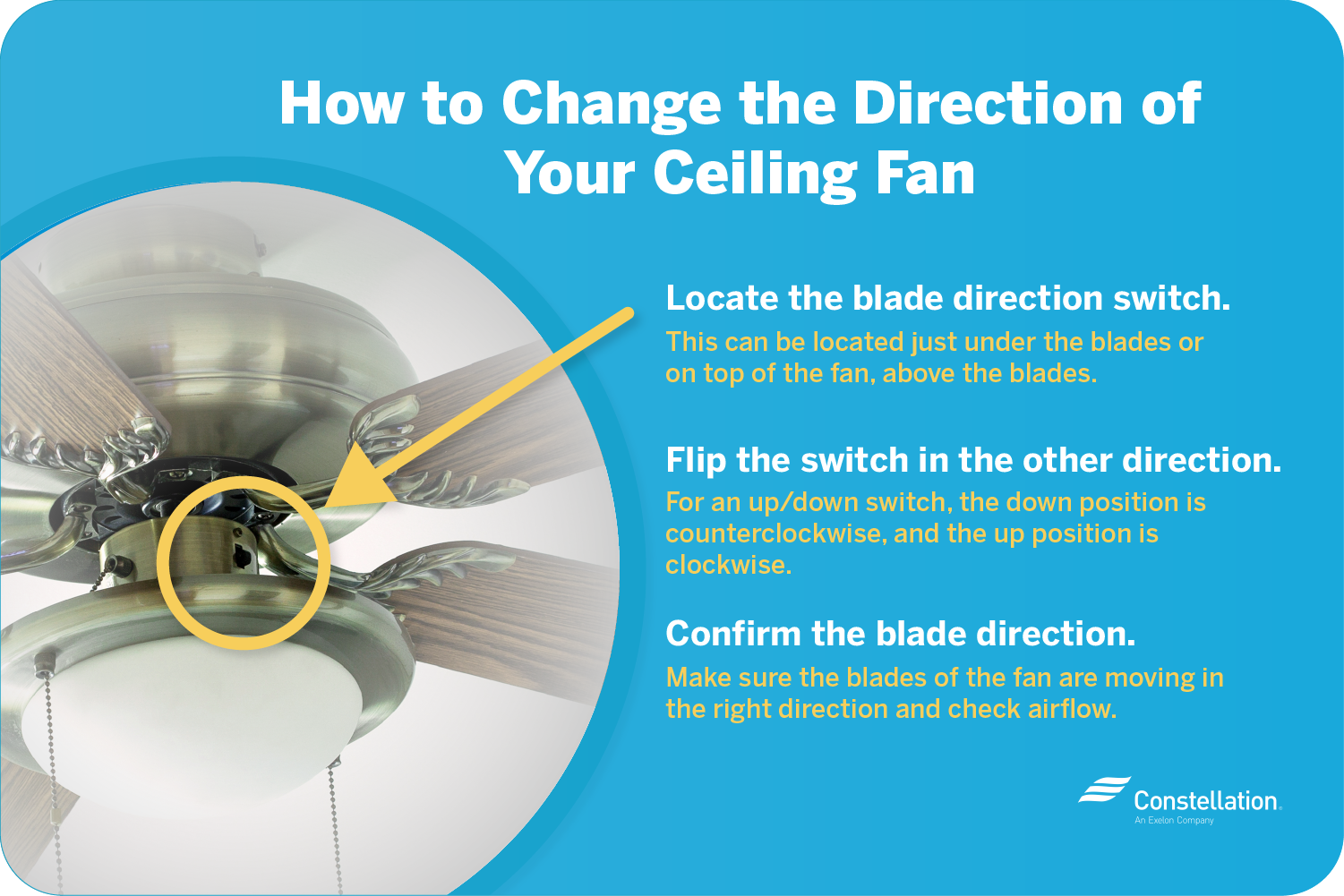
Which Way Should Your Fan Spin

Ever walked into a room and felt almost right, but not quite? Or noticed your ceiling fan is whirring away, yet you're still sweating in July or shivering in January? You're not alone! Many of us install ceiling fans for comfort, but few realize their true potential lies in a simple, often-overlooked setting: their direction of spin. This little-known trick is a fantastic, free way to boost your comfort, save energy, and make your home feel just right, all year round. It’s a small adjustment that can make a big difference, turning your fan from a simple air-mover into a smart climate helper!
Let's dive into the core purpose and benefits. The main goal here is to optimize air circulation for either cooling or warming. Understanding which way your fan blades should spin allows you to work with nature, not against it, creating a more efficient and comfortable environment. It’s about leveraging basic physics to get the most out of your home’s existing systems, be it your air conditioner or your heater. The benefits aren't just about feeling better; they also translate into tangible savings on your utility bills.
When the sun is blazing and you're dreaming of a cool breeze, you want your fan to be in summer mode. For this, your fan blades should be spinning counter-clockwise. Think about it: this motion pulls air upwards from the center and pushes it directly down towards the floor, creating a delightful downdraft. This direct breeze helps evaporate sweat from your skin, making you feel significantly cooler without necessarily lowering the thermostat. It’s a bit like creating a personal wind chill effect! Running your fan in this direction allows you to potentially set your air conditioning a few degrees higher – say, from 72°F to 76°F – and still feel just as comfortable. This simple shift can lead to noticeable savings on your electricity bill, making those sweltering days much more bearable.
Must Read
Conversely, when winter chills set in and you're bundling up indoors, your fan can still be your friend – but it needs to switch to winter mode. In colder months, you want your fan to spin clockwise, and crucially, on a low speed. This setting creates an updraft, gently pulling cooler air upwards towards the ceiling. Why is this good? Because warm air naturally rises and collects near the ceiling. The updraft gently pushes this accumulated warm air down along the walls and back into the living space, effectively recirculating the heat that would otherwise be trapped out of reach. The key is to keep the speed low so you don't feel a chilling breeze, just a gentle, even distribution of warmth. This clever trick helps to eliminate those pesky cold spots and makes your heating system more efficient, meaning you might not need to crank up the thermostat as high. Again, this translates to more comfort and lower heating costs!
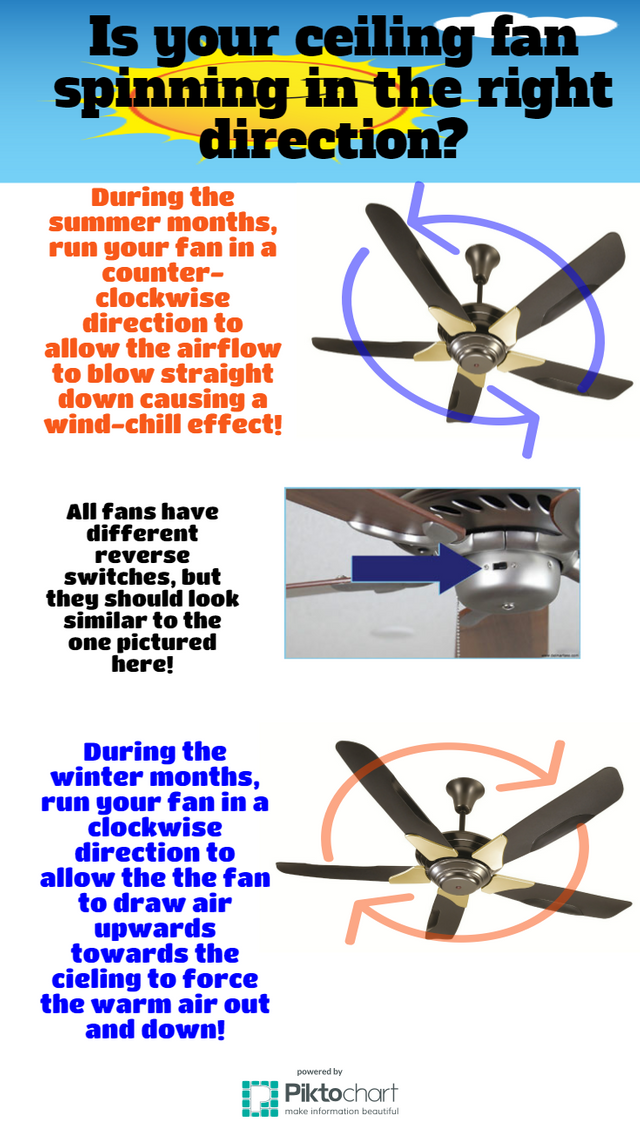
So, how do you actually make this magic happen? Most ceiling fans have a small switch on the motor housing – it's usually a tiny black or brass toggle. Before you touch anything, always turn off your fan first! Once the blades have completely stopped, find and flip the switch. To check the direction, simply stand directly under the fan and turn it back on. If you feel a strong, direct breeze hitting you, it's spinning counter-clockwise (summer mode). If you feel little to no direct breeze, but notice the air in the room feels more evenly tempered, it's likely spinning clockwise (winter mode). Some newer, smarter fans even let you change direction with a remote control or a smartphone app – how convenient is that?
It might seem like a trivial detail, but understanding which way your fan should spin is a fantastic, simple hack for year-round comfort. It's a testament to how minor adjustments can lead to significant improvements in how you experience your home. So go ahead, take a peek at your fan, try flipping that switch, and prepare to feel a little more comfortable, all while potentially saving a bit on those utility bills. Happy spinning!
:max_bytes(150000):strip_icc()/ceiling-fan-rotate-direction-1907533-v4-5ba94e6346e0fb002576cebf.png)