
Which Way Should Fan Blades Turn To Cool A Room

Okay, folks, let's talk about something we all have a complicated relationship with: the ceiling fan. We love it, we hate it (when it’s dusty, mostly), but do we really know how to use it? I'm talking about the great debate: Which way should those blades be turning to actually cool us down?
For years, I was a victim of the “whatever-the-builder-installed-it-as” school of thought. My ceiling fan was just…there. Spinning. Occasionally wobbling alarmingly. But efficient cooling? Debatable. Then, one sweltering summer, faced with an electricity bill that could rival a small nation's GDP, I decided to investigate. My quest for fan enlightenment began.
The Great Seasonal Fan Flip-Flop
It turns out, there's a method to this madness. The answer, my friends, is seasonal. Think of it like swapping out your wardrobe. You wouldn’t wear your parka in July, would you? (Okay, maybe some people would, but let's stay focused.)
Must Read
Summer is all about that downward breeze. You want your fan blades to rotate counter-clockwise. Imagine them scooping up the air and gently pushing it down on you. This creates a wind chill effect. It doesn’t actually lower the temperature of the room, but it feels like it does. It's like that little puff of air when you stick your head out of a car window – refreshing, invigorating, and makes you feel like you're starring in your own personal hair commercial (results may vary).
Why does this work? Well, it’s like nature’s little cheat code. That downward airflow helps evaporate sweat from your skin, making you feel cooler. This is why sitting directly under a ceiling fan on a hot day is such a delightful experience. It's the closest thing most of us will get to being personally fanned by a Roman emperor (minus the togas and grapes, sadly).
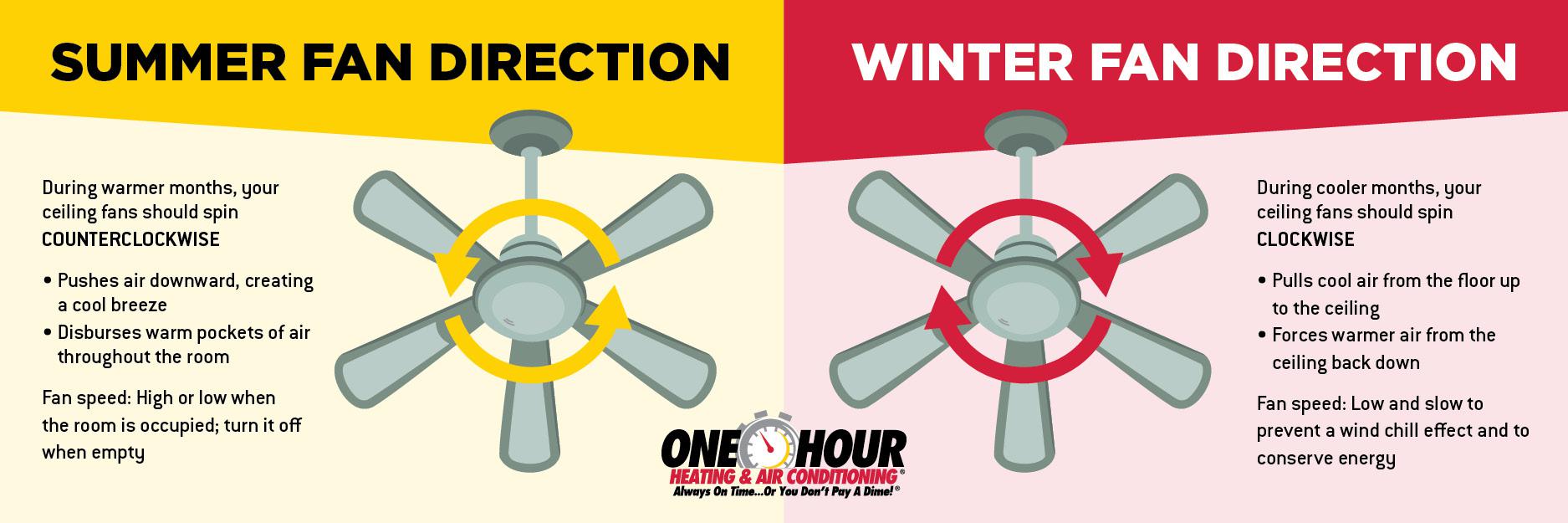
Winter, however, is a different story. Remember that parka? It's time to think about warmth. In the winter months, you want your fan blades to rotate clockwise, on a low setting. I know, it seems counterintuitive, but hear me out.
Think of it this way: warm air rises. Your heating system is working hard to make the air at the ceiling toasty and cozy. The problem is, that warm air stays up there, leaving your feet feeling like ice blocks. By switching your fan to clockwise, you’re gently pulling that warm air down from the ceiling and circulating it throughout the room. It’s like giving your warm air a helping hand to spread the love.

The Remote Control Revelation
Of course, discovering all this was only half the battle. Then came the actual act of changing the fan's direction. This usually involves a tiny little switch somewhere on the motor housing, accessible only with a step ladder and a healthy dose of bravery (especially if you're afraid of heights like I am). My first attempt involved a lot of wobbling, a near-death experience with a feather duster, and the distinct feeling that my neighbors were judging me. But perseverance paid off!
And then, the ultimate discovery: the remote control. Some fans, the lucky ducks, have a remote with a dedicated button for reversing the fan direction. Genius! It's like having a personal fan blade choreographer at your fingertips. This, I realized, was the pinnacle of fan-related luxury.
:max_bytes(150000):strip_icc()/ceiling-fan-rotate-direction-1907533-v4-5ba94e6346e0fb002576cebf.png)
The Moral of the Story
So, the next time you're sitting under your ceiling fan, contemplating life, the universe, and everything, take a moment to consider which way those blades are spinning. A simple flip of a switch (or a press of a button, if you're lucky) can make a surprisingly big difference in your comfort level and your energy bill. And who knows? Maybe, just maybe, you'll feel a little bit like a Roman emperor being personally fanned. Or at least, a little bit cooler.
Remember, the secret to a happy home is a well-ventilated one! Now, if you'll excuse me, I'm going to go adjust my fan and practice my "windblown hair" pose.
Pro-Tip: If you're not sure which way your fan is spinning, stand directly beneath it and watch carefully. You can also turn it off, give it a gentle push, and observe the direction of rotation. Safety first!
