
Which Way Should A Ceiling Fan Blow In The Summer
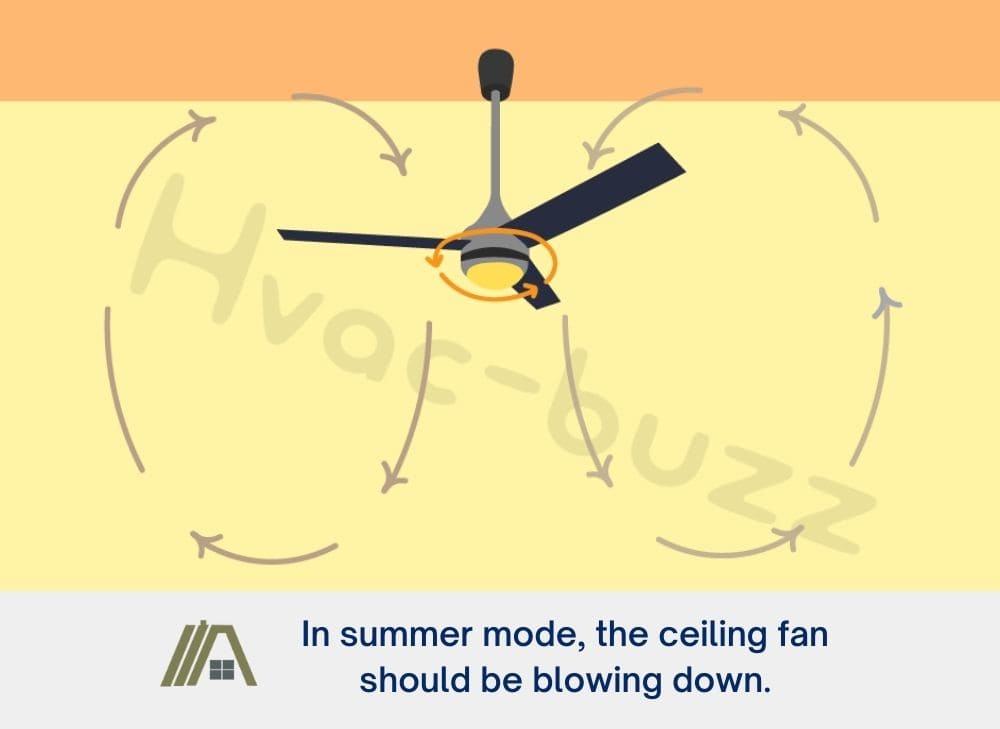
Alright, settle in, folks! Grab your iced latte, because we’re about to dive into a topic that’s both thrilling and… well, keeps you from melting into a puddle of despair during summer. Yes, I’m talking about the age-old question: which way should your ceiling fan be blowin’ when the mercury decides to audition for Dante’s Inferno?
Now, you might think, "Eh, it's a fan. It blows air. What's the big deal?" Oh, my sweet summer child, there's a whole science to this! Okay, maybe not a "whole" science. More like a small, easily digestible science nugget, but a science nugget nonetheless!
The Downward Draft: Your Summer Superhero
Think of your ceiling fan as a tiny, personal weather god. In the summer, you want it to summon the refreshing winds of… well, your living room. And how does it do that? By spinning counter-clockwise, creating a downward draft.
Must Read
I know, I know. It sounds counter-intuitive. Shouldn't it be blowing up the hot air? Nope! This downward draft is like a gentle, cooling hand pushing air straight down onto your skin. It's the difference between feeling like a sticky, sad swamp creature and feeling like you're vacationing in a mildly air-conditioned paradise.
The magic behind this is something called the wind-chill effect. The moving air helps evaporate moisture from your skin, which, in turn, cools you down. It's the same reason why a breeze feels so good on a hot day, even if the air itself is still warm. So, your fan isn't actually lowering the temperature of the room (unless you have some fancy, futuristic, temperature-altering fan I haven't heard about). It's just making you feel cooler. And in the sweltering heat, feeling is believing!
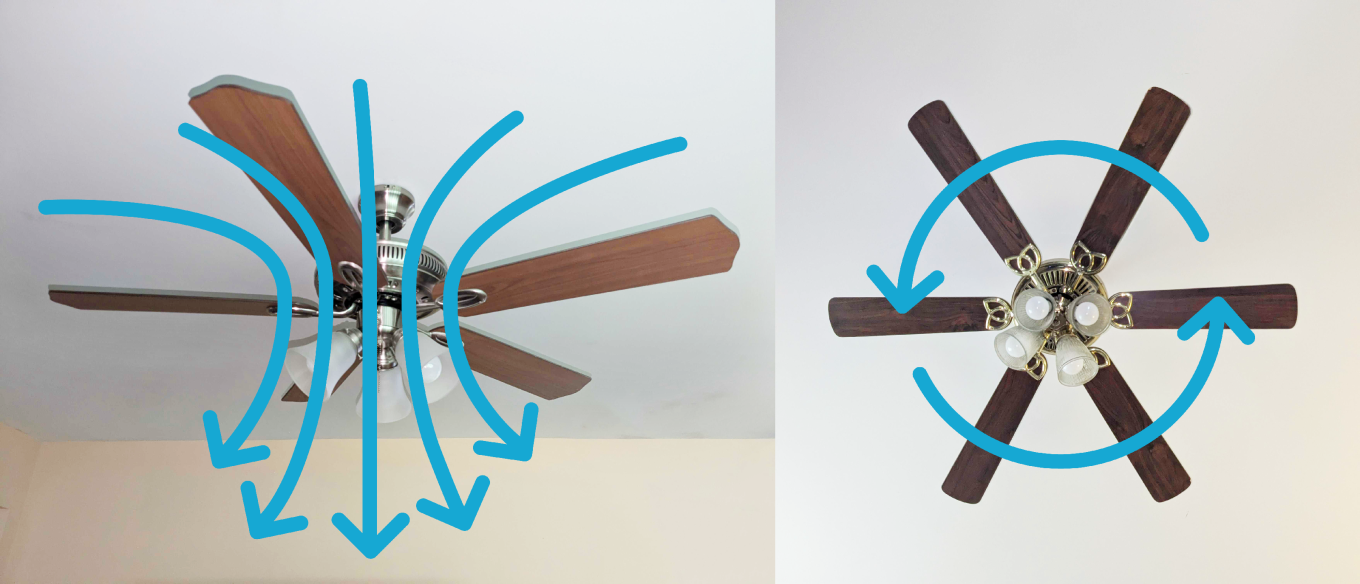
Important note: Make sure your fan blades are actually angled to scoop the air downwards. Some fancy-schmancy fans have reversible blades that can negate the whole "downward draft" thing. Check those blades! Your comfort depends on it.
The Great Fan Conspiracy (Just Kidding… Mostly)
Now, you might be wondering, "Why isn't this common knowledge? Why aren't there giant billboards telling me which way my fan should spin?" Well, conspiracy theorists might say it's the Big Fan Manufacturers trying to sell more fans by making you uncomfortable. But I wouldn't go that far… probably.
The truth is, a lot of people just don't think about it! They install a fan, turn it on, and hope for the best. And sometimes, if you're lucky, it blows in the right direction by accident. But why leave your comfort to chance? Take control of your climate! Be the master of your meteorological destiny! (Okay, maybe I’m getting carried away.)

Pro-Tip: If you're unsure which way your fan is spinning, stand directly underneath it. If you feel a breeze, congratulations! It's probably doing its job. If you don't feel anything, or worse, feel like you're standing in a stagnant swamp, then it's time to flip that switch!
The Switcheroo: Finding the Direction Changer
Speaking of switches, where is this mysterious "direction changer" I speak of? Usually, it's a small switch located on the motor housing of the fan. Sometimes it's a pull chain. Sometimes it's hidden behind a panel that requires a screwdriver and a prayer. Every fan is different, so consult your owner's manual (if you can find it) or, failing that, unleash your inner Indiana Jones and explore until you find it!

Word of warning: Make sure the fan is completely stopped before you flip the switch! Unless you want to experience the thrill of a runaway blade and become a viral video sensation (for all the wrong reasons), power down before you switch directions.
Beyond the Breeze: Maximizing Your Fan's Potential
Now that you know which way to spin your fan, let's talk about maximizing its cooling potential. First, consider the height of your fan. Ideally, your fan blades should be about 8-9 feet off the floor. Too high, and you won't feel the breeze. Too low, and you'll feel like you're in a helicopter simulator. (Not necessarily a bad thing, but not ideal for relaxation.)
Next, think about the size of your fan. A small fan in a large room is like a chihuahua guarding a mansion – cute, but ultimately ineffective. You need a fan that's appropriately sized for the space. There are plenty of online guides that can help you determine the right fan size for your room.

Finally, don't forget to turn off the fan when you leave the room! A ceiling fan cools people, not rooms. Running it in an empty room is just wasting energy. Think of it as turning off the lights, but with a slightly more satisfying breeze-related twist.
So, there you have it! Everything you need to know about ceiling fan direction in the summer. Now go forth, adjust your fans, and conquer the heat! And if all else fails, just embrace the swamp creature life. It has its own weird kind of charm.
Stay cool, folks! (Literally!)