
Which Way Is Fan Supposed To Spin In Summer
Ever found yourself staring up at your ceiling fan, wondering if it's actually doing anything to cool you down? It's a common question, and the answer, surprisingly, hinges on which way the darn thing is spinning! Understanding this simple trick can make your summer significantly more comfortable, and who doesn't want that?
At its core, a ceiling fan's purpose is to circulate air. But it's not just about moving air around randomly; it's about using that movement to affect how we perceive temperature. In the summer, the goal is to create a cooling breeze. This is achieved by having the fan blades push air downwards. This downward airflow creates a wind chill effect, which helps to evaporate sweat from your skin, making you feel cooler. Think of it like standing in front of a gentle breeze on a hot day – refreshing, right?
The benefit of using your ceiling fan correctly goes beyond just comfort. It's also about energy efficiency. By properly circulating the air, you can often raise your thermostat a few degrees without sacrificing comfort. This translates directly to lower energy bills, which is a win for both your wallet and the environment. It's a small change that can make a noticeable difference.
Must Read
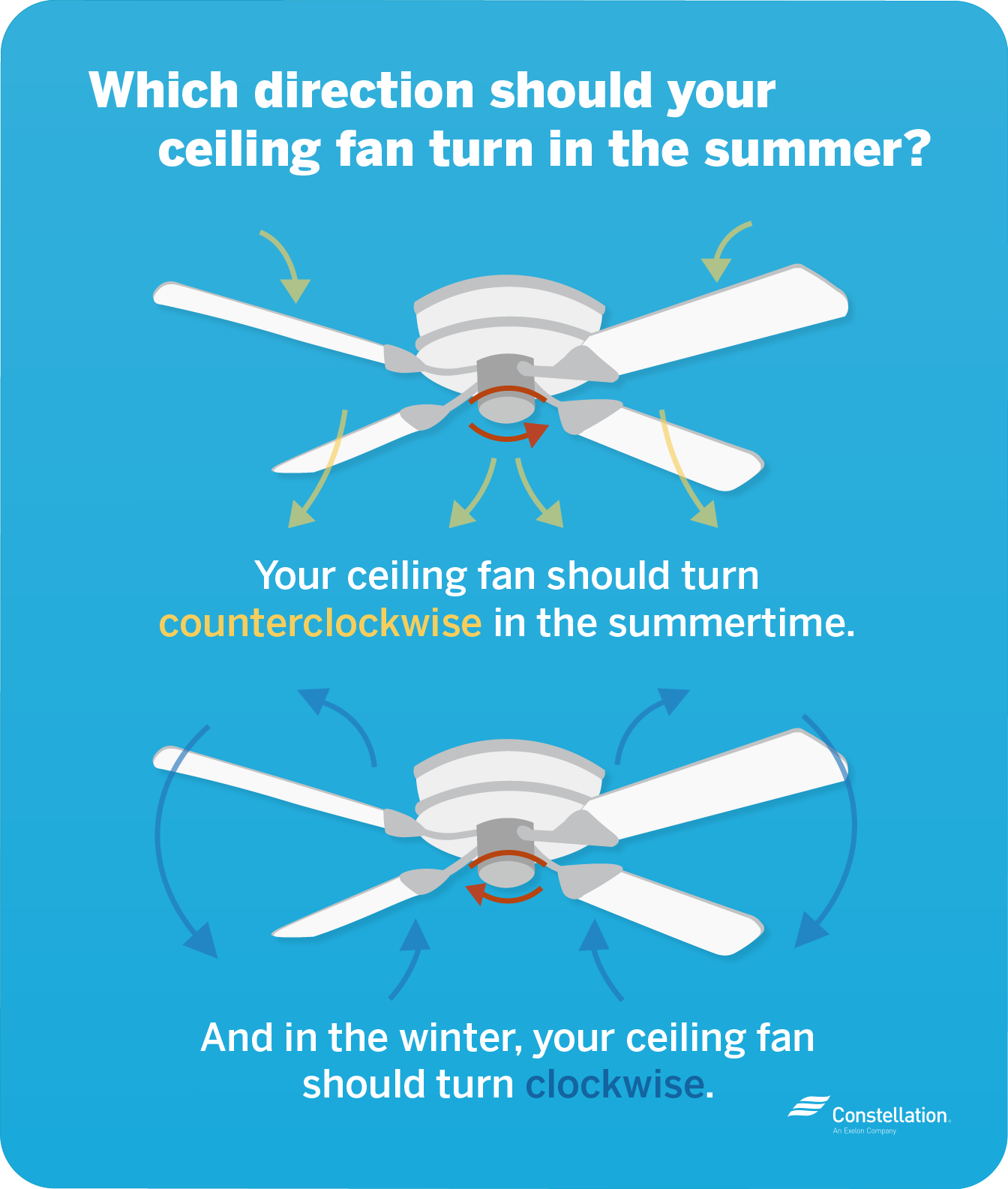
So, how do you figure out which way your fan should be spinning? Most ceiling fans have a small switch located on the motor housing. This switch controls the direction of the fan blades. In the summer, you want the blades to spin counter-clockwise when you're looking up at the fan. This will push the air downwards. In the winter, the goal is different – you want to pull the warm air that rises to the ceiling back down into the room. This is achieved by switching the fan direction to clockwise.

Think of it this way: learning about fan direction is like a mini-science lesson in your own home! You can even use it as a practical example when teaching kids about convection and air circulation. Discuss how warm air rises and cool air sinks, and how the fan helps to redistribute that air for optimal comfort. It's a great way to connect abstract scientific concepts to everyday life.
Want to explore this further? Here are a few simple tips: First, experiment! Try changing the direction of your fan and see what feels best to you. Pay attention to how the air feels on your skin. Second, use a small piece of paper or a light ribbon to observe the airflow. Hold it under the fan and see which way it's being pushed. This can help you visualize the air circulation and confirm that the fan is spinning in the correct direction. Finally, consult your fan's manual. It should provide specific instructions on how to change the fan direction and optimize its performance for different seasons. It's a small detail that can make a big difference in your comfort and your energy bill!
![Ceiling Fan Directions for Summer vs Winter [Infographic]](https://airflowacademy.com/wp-content/uploads/2021/06/Ceiling-fan-direction.jpg)

