
Which Way Is Counterclockwise On A Ceiling Fan
Okay, friends, let's tackle a question that has plagued humanity (or at least the part of humanity that owns a ceiling fan) for far too long: Which way is counterclockwise?
Specifically, we're talking about the swirling, whooshing blades above our heads. Are they spinning in the right direction for optimal comfort? Don't worry, this isn't rocket science. Or is it? Maybe a little bit of rocket science?
Let's banish the confusion once and for all. Get ready to become a counterclockwise connoisseur!
Must Read
Understanding the Clockwise Conundrum
First, let's get on the same page about clocks. You know, those round things with the hands that tick and tock? Picture one in your mind.
Now, imagine those hands are tiny, tireless sprinters racing around the clock face. They always run in the same direction, the same way you'd stir your tea (unless you're left-handed and deliberately trying to confuse everyone).
That direction, my friends, is clockwise. It's the default setting for the universe... or at least for clocks.
So, What's Counterclockwise, Then?
Well, it's the opposite of clockwise, naturally! It's the rebellious teenager of rotational directions. It's the handbrake turn of the circular world.
Imagine those clock hands suddenly deciding to stage a revolt and run backward. Or picture a hamster suddenly deciding to reverse its direction inside the wheel! That’s counterclockwise in action.
It’s basically everything clockwise isn't.
Ceiling Fans: A Counterclockwise Case Study
Now, let's bring this back to the real star of the show: the glorious, life-saving ceiling fan. The hero that keeps us cool in the summer and...well, sometimes slightly less cold in the winter (more on that later).
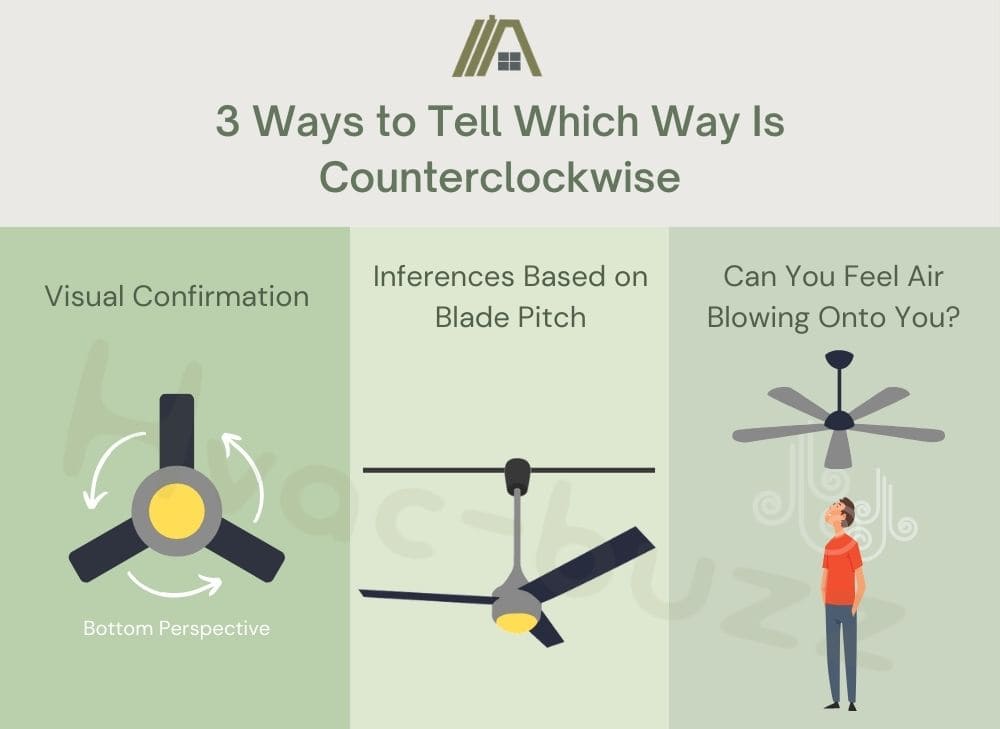
To figure out which way is counterclockwise on your fan, you need to stand directly beneath it. This is crucial. Perspective is everything!
Looking up, imagine that clock face superimposed on your fan. If the blades appear to be moving against the direction those clock hands would normally travel, then congratulations! Your fan is spinning counterclockwise!
A Super Easy Trick (Promise!)
Still confused? Here's a foolproof method: Stick your arm out straight in front of you. Now, rotate your arm in a circle, the way the hands of a clock move.
That's clockwise. Now do the opposite! Congratulations, that’s it, you're a counterclockwise ninja!
Now, compare that arm movement to the way your fan blades are turning. If they're moving in the opposite direction of your arm, boom! Counterclockwise confirmed!
Why Does It Even Matter? (The Big Reveal!)
Okay, so knowing which way is counterclockwise is great for impressing your friends at parties. But why does it actually matter for your ceiling fan?
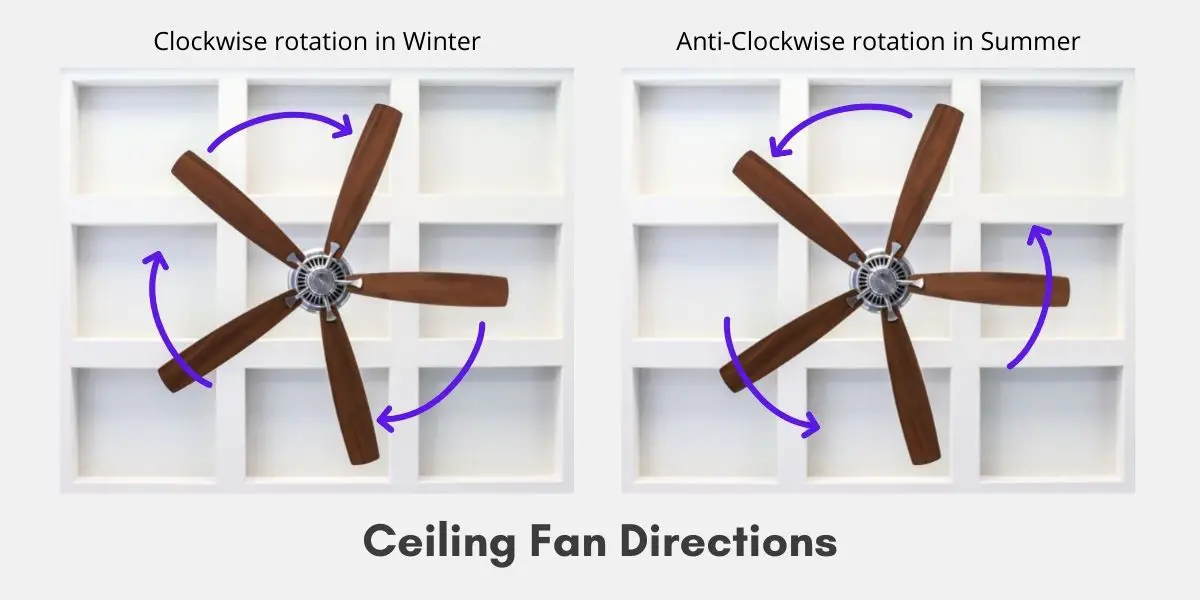
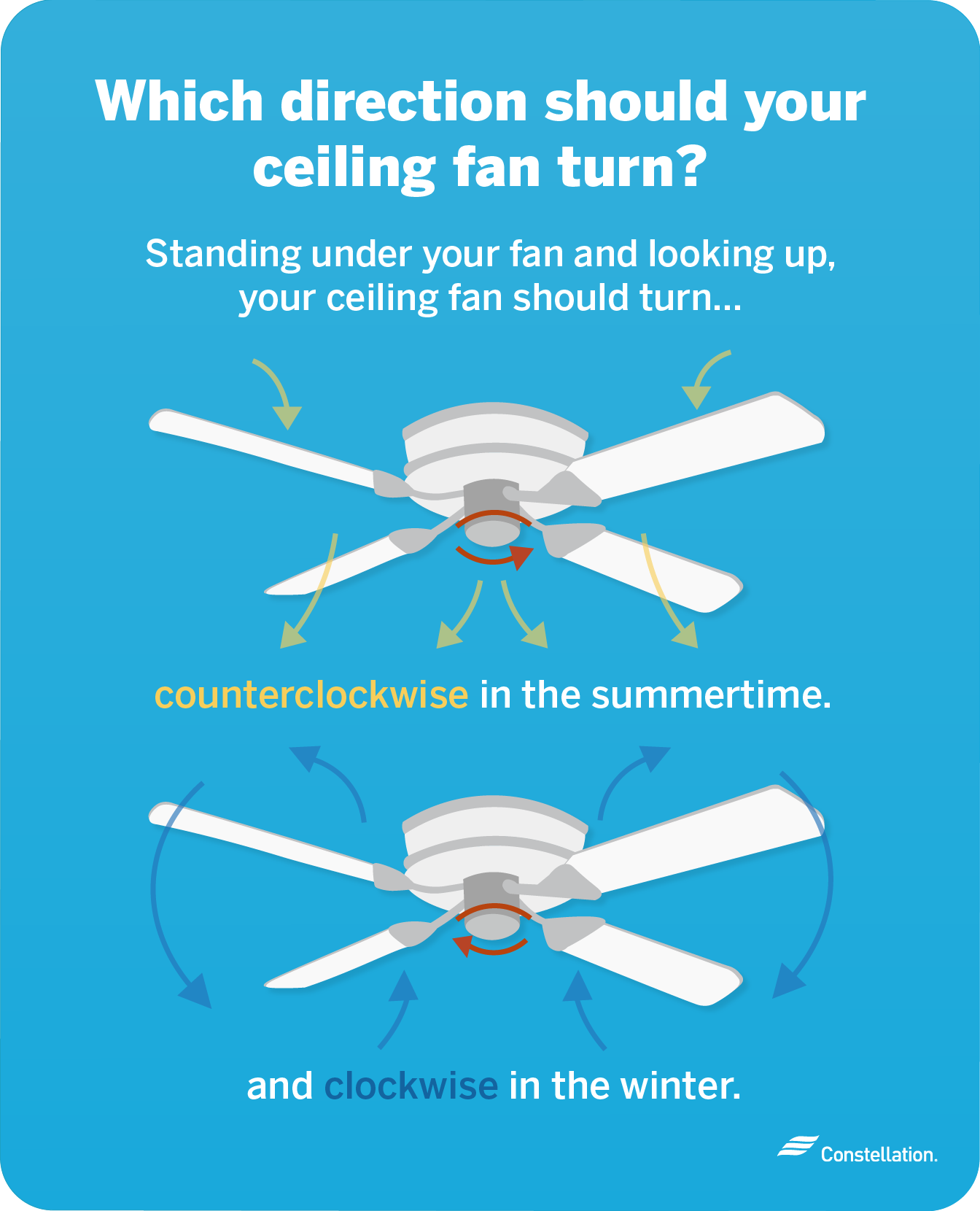
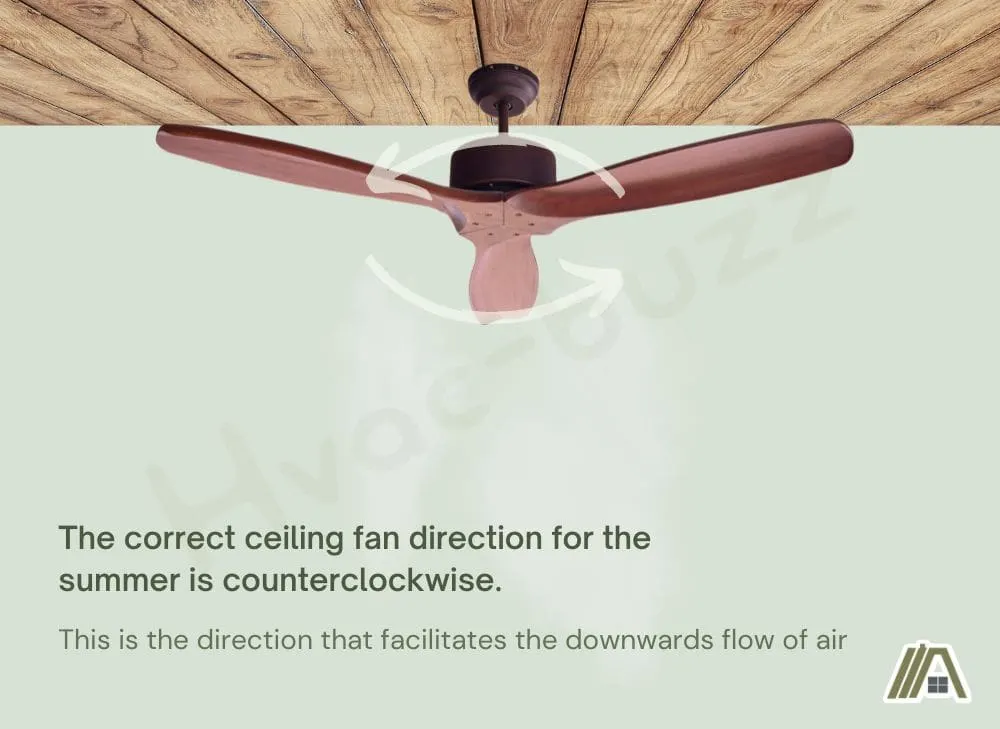
Well, in the summer, you generally want your fan to spin counterclockwise. This pushes air straight down, creating a refreshing breeze that makes you feel cooler. It’s like having your own personal wind god in your living room!
Think of it as the fan giving you a gentle, airy hug.
Winter is Coming (and So is Clockwise!)
Now, here's where things get interesting. In the winter, you actually want your fan to spin clockwise at a low speed. I know, I know, it's a twist!

This helps to gently pull warm air that rises to the ceiling back down into the room. It’s not about creating a breeze; it’s about circulating the air and making your heating system more efficient.
Think of it as your fan being a tiny, dedicated heat distributor!
Troubleshooting: My Fan Is Going the Wrong Way!
Don't panic! Most ceiling fans have a little switch located on the motor housing (the part in the middle where the blades are attached). This switch controls the direction of the fan's rotation.
Flip the switch, and voila! Your fan should now be spinning in the opposite direction. You're a fan-flipping master!
If you can't find the switch, consult your fan's instruction manual (assuming you haven't already used it to start a campfire). If you still can't figure it out, don't be afraid to call a qualified electrician. They're like fan whisperers; they know all the secrets!
Safety First, Always!
Before you start poking around with your ceiling fan, make sure to turn off the power at the breaker! Electricity and curiosity don't mix.
Also, avoid sticking your fingers into the spinning blades, no matter how tempting it may be. Trust me on this one.
Let’s leave blade catching to Spider-Man.
Counterclockwise Confidence: You Got This!
So, there you have it! Everything you ever wanted to know (and probably more) about counterclockwise motion and ceiling fans. You are now officially equipped to tackle any fan-related situation that comes your way.
Go forth and conquer those confusing breezes! Embrace the counterclockwise (and clockwise) power!
And remember, a properly spinning ceiling fan is a happy ceiling fan, and a happy ceiling fan makes for a happy you! Now go forth and optimize your airflow!