
Which Way Does My Fan Need To Spin In Summer

Okay, so you're sweating. Like, really sweating. Summer's here, and your ceiling fan is staring back at you. But wait! Is it even doing anything? Is it spinning the right way? Let's get this figured out, because comfort is key. And, let's be honest, a little bit of knowledge is just plain fun.
The Great Fan Debate: Clockwise or Counter-Clockwise?
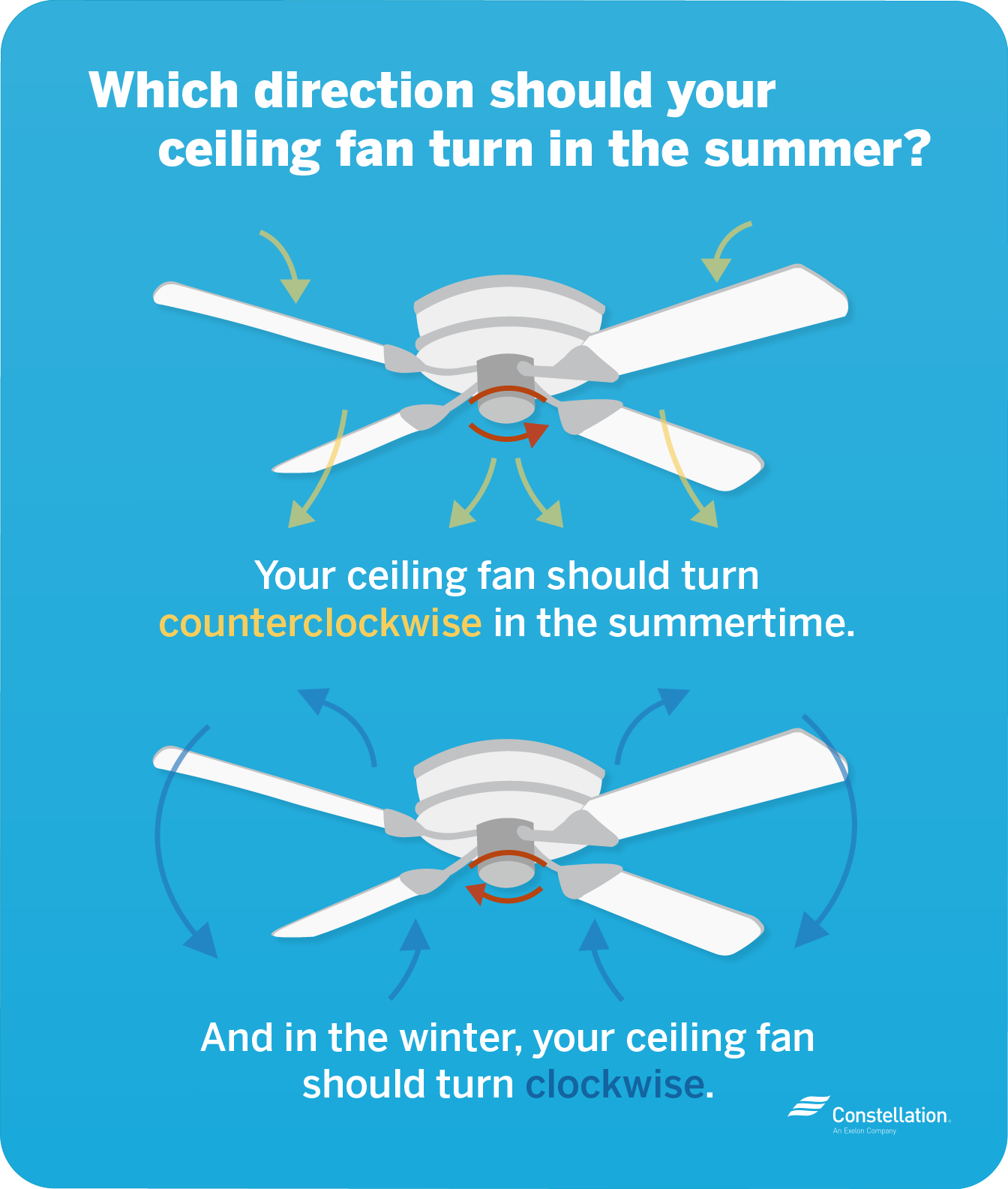
This is the burning question, isn't it? The one that keeps you up at night... okay, maybe not. But it is important for maximizing your fan's coolness. In the summer, you generally want your fan to spin counter-clockwise. Why? Let's dive in!
Think of it like this: you want the fan to create a downdraft. That's fancy talk for "push air down on you." This downdraft creates a wind-chill effect. Remember being a kid, sticking your head out the car window? Similar concept, minus the bugs.
Must Read
Counter-clockwise rotation forces the air downwards, making you feel cooler even though the temperature hasn't actually changed. It's all about perception, baby! Plus, it helps evaporate sweat, which is your body's natural air conditioning system kicking into high gear.
Quirky Fact: Did you know ceiling fans were initially marketed as a way to keep flies away? Before air conditioning, that downwash was actually used to discourage insect populations! So, your fan isn't just cooling you; it's potentially keeping those pesky summer bugs at bay too.
How To Tell Which Way Your Fan Is Spinning (Like a Pro)
Alright, you're ready to assess your fan's rotation. But how do you know which way it's spinning without getting dizzy? Here's the super-scientific (not really) method:

1. Stand back. Seriously. Don't get too close. We don't want any fan-blade incidents.
2. Observe. Just watch the fan for a few seconds. Which way are the blades moving? Is the leading edge moving to the right (clockwise) or to the left (counter-clockwise)?
3. If you're still not sure... turn the fan off! Let it come to a complete stop. Then, give it a gentle nudge in one direction. See if that's the direction it naturally wants to spin. This isn't foolproof, but it can help.

The Little Switch: Your Key to Fan Nirvana
Most ceiling fans have a little switch on the motor housing. This is the magic switch that changes the fan's direction. Find it. Embrace it. Become one with it.
Flip the switch. See what happens. Does the air now feel like it's blowing down on you, creating that blissful breeze? Awesome! You've got it. If not, flip it back.
Funny Detail: Some people swear that flipping the switch makes the fan run faster. This is usually just a perception thing. But hey, if it feels faster, who are we to argue?
Beyond the Basics: Fan Speed and Other Fun Facts
Okay, you've got the direction down. But fan speed also matters. In the summer, you typically want your fan on a higher setting. This maximizes the downdraft and keeps you cooler.
But wait, there's more! Ceiling fans can also help with energy efficiency. By circulating the air, they can reduce the strain on your air conditioner. This can save you money on your energy bill. Cha-ching!
Did You Know?: Using a ceiling fan can allow you to raise your thermostat by about 4 degrees without sacrificing comfort. That's a win-win!

Consider the height of your ceiling. Higher ceilings often benefit from longer fan blades. This helps to circulate air more effectively throughout the room.
Bonus Tip: Make sure your fan blades are clean. Dust and grime can reduce their efficiency. Nobody wants a sluggish fan!
Embrace the Breeze: Your Summer Cooling Companion
So, there you have it! The secrets to summer fan success. Remember, counter-clockwise is your friend, and that little switch is your superpower. Now go forth and conquer the heat! Enjoy that cool, refreshing breeze, knowing you've mastered the art of the ceiling fan.
And hey, if all else fails, you can always just stand directly under the fan and hope for the best. Just kidding (sort of). Now, go adjust that fan!