
Which Way Do You Turn Your Fan In The Summer

Let's be honest, summer is amazing... until it's not. When the heat becomes unbearable, we all reach for the same trusty tool: the fan! But did you know there's a right and a wrong way to use your fan depending on the season? It's not just about blasting air; it's about circulating it effectively to create a truly comfortable environment. So, let's dive into the great fan debate: Which way should it turn in the summer?
The Purpose: Cool Comfort
The whole point of using a fan in the summer is to feel cooler, right? But simply stirring up hot air isn't the solution. The key is understanding how your ceiling fan works. It's designed to push air downwards, creating a pleasant breeze that evaporates sweat from your skin. This evaporation is what actually cools you down. Think of it like a personal wind machine!
Must Read
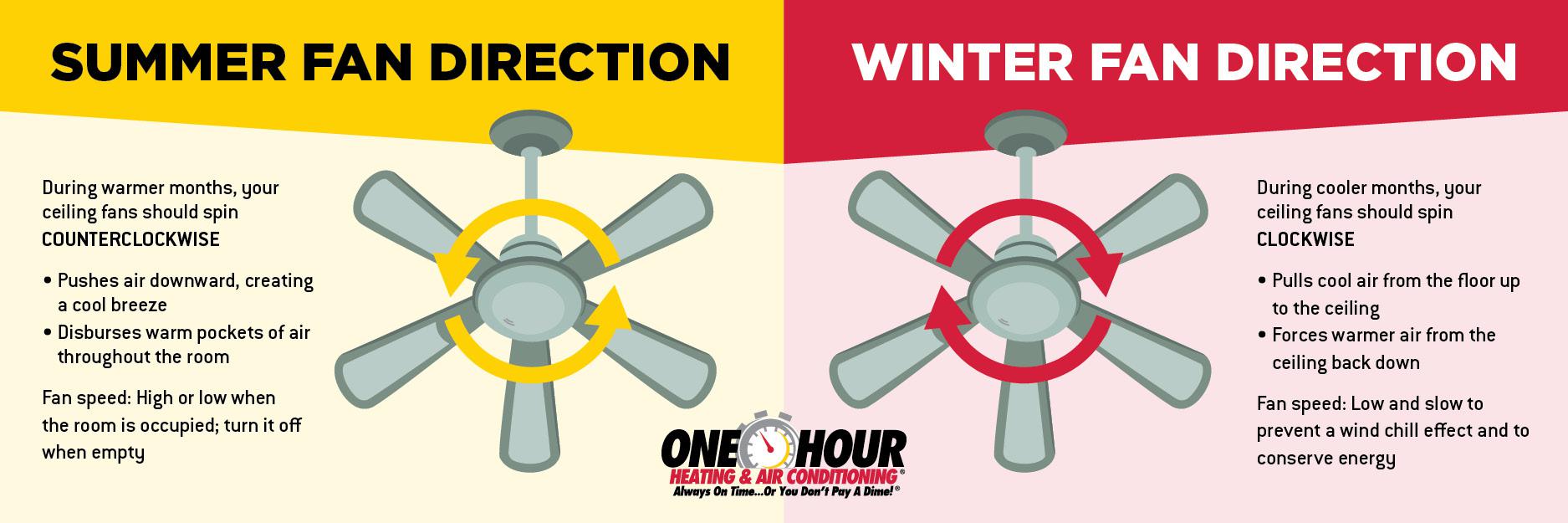
The Summer Setting: Counter-Clockwise is Key!
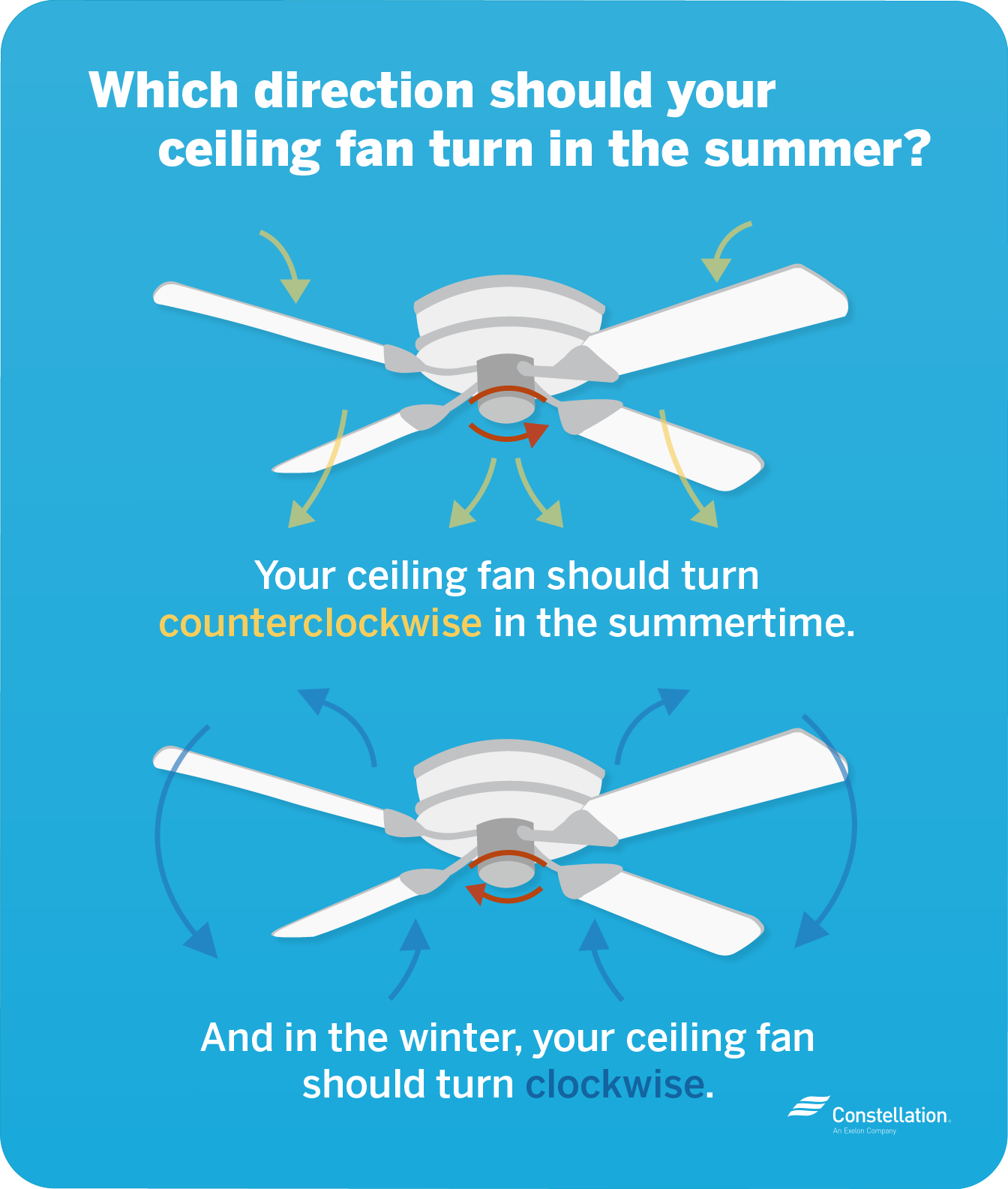
Here's the magic trick: In the summer, your ceiling fan should be rotating counter-clockwise when you look up at it. This pushes the air straight down, creating that refreshing downdraft we talked about. You should be able to feel a noticeable breeze when you stand directly underneath it.

Why Does This Work?
Imagine the fan blades as tiny paddles. When they rotate counter-clockwise, they scoop the air and force it downwards. This creates a localized high-pressure zone directly beneath the fan, which we perceive as a cooling breeze. No more sticky, uncomfortable heat!
Benefits Beyond Cooling: Energy Savings!
Using your fan correctly in the summer doesn't just make you feel better; it can also save you money! By creating a cooling effect, you can often raise your thermostat a few degrees and still feel comfortable. This reduces the workload on your air conditioner, leading to lower energy bills. It's a win-win! Consider it a simple, eco-friendly way to beat the heat and save a few bucks.

Checking Your Fan's Direction: A Quick Guide
Not sure which way your fan is currently rotating? No problem! Simply stand underneath it and observe the direction of the blades. If it's pushing air down, you're good to go! If it's pulling air upwards (or you can't feel a breeze), it's time to make a change. Most ceiling fans have a small switch located on the motor housing that allows you to reverse the direction. Consult your fan's manual for specific instructions.
Beyond Ceiling Fans: Other Fan Options
The principle of creating a breeze applies to other types of fans too! Box fans, tower fans, and even small desk fans can be strategically positioned to circulate air and create a cooling effect. Just remember the goal: to create airflow that promotes evaporation and makes you feel more comfortable.
So, there you have it! Knowing which way to turn your fan in the summer is a simple yet effective way to beat the heat, save energy, and stay comfortable all season long. Now go forth and conquer the summer heat with your newfound fan knowledge!