
Which Way Do You Turn The Ceiling Fan For Summer
Hey friend! Grab a seat, I just made a fresh pot. So, you wanna talk about something super important? Like, life-or-death-in-August kinda stuff? Yeah, I'm talking about ceiling fans.
Specifically: which way do you turn the darn thing for summer?! Because let's be honest, nobody wants to be that person, sweating buckets while their fan gently stirs the still, hot air above their head. Awkward.
We've all been there, right? Staring up at the fan, pondering the mysteries of physics. Is it clockwise? Counter-clockwise? Did I accidentally invent a new direction? (Spoiler: probably not.)
Must Read
The Downward Draft: Your Summer BFF
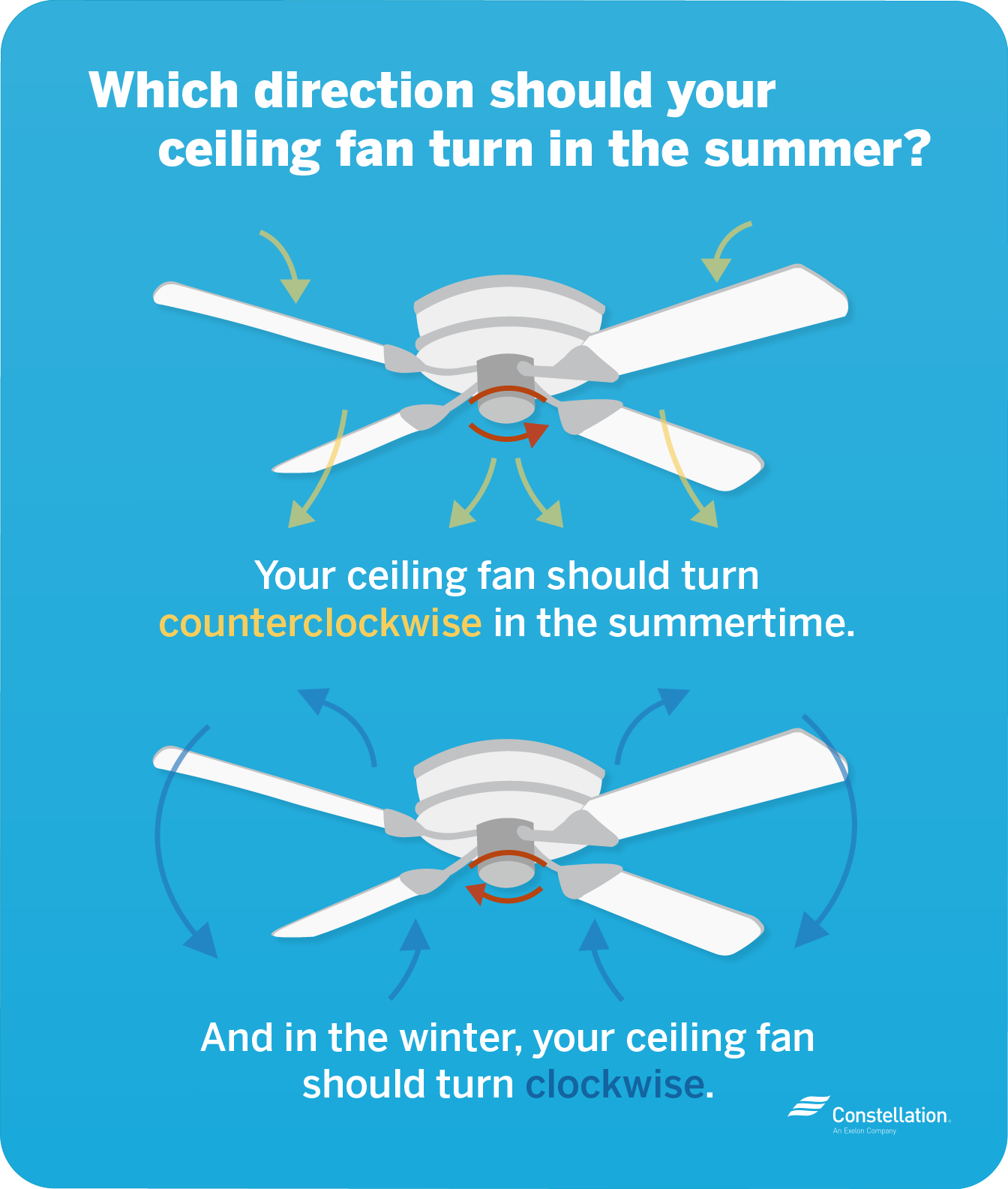
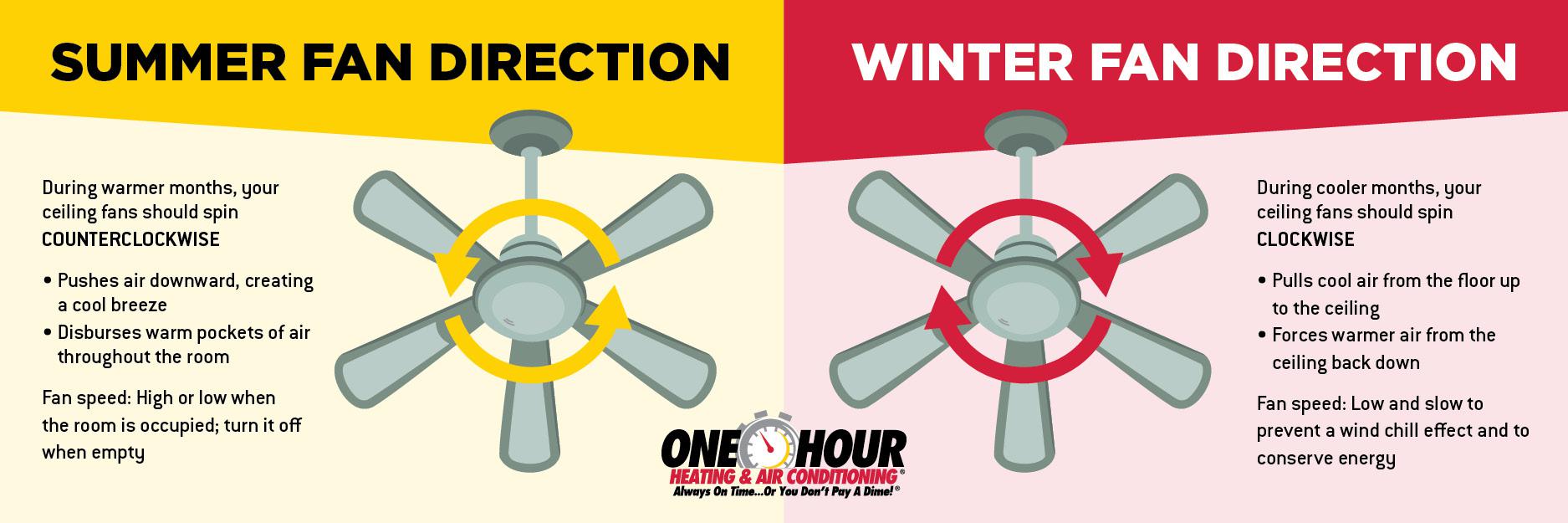
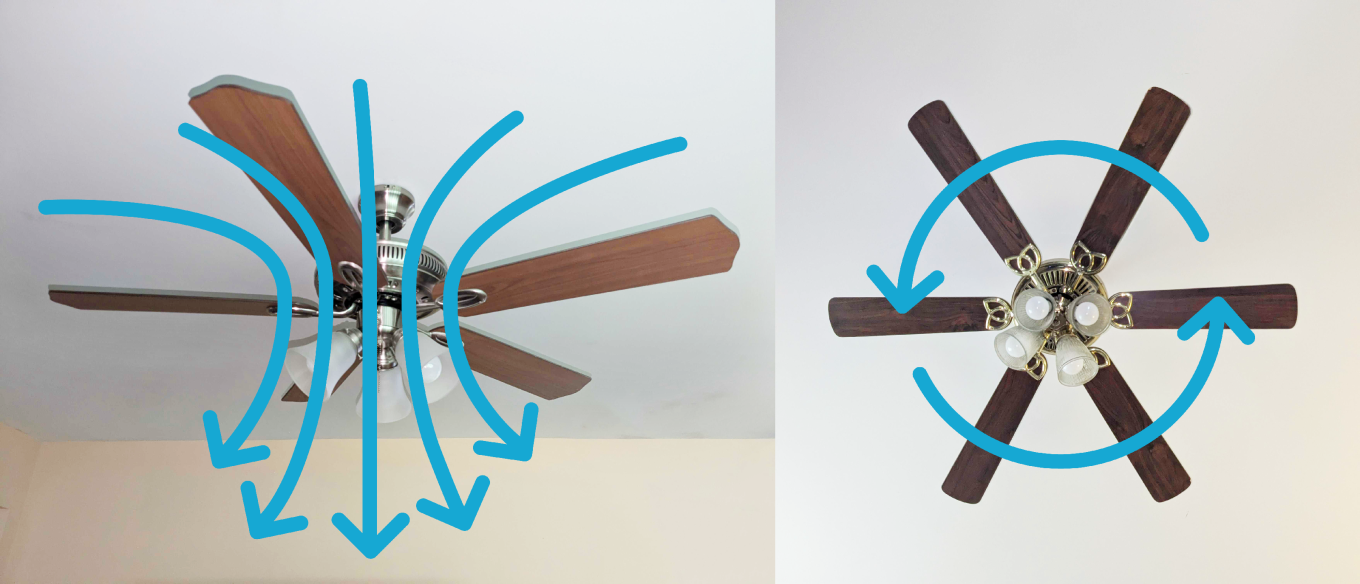
Okay, so here's the deal. For summer, you want your ceiling fan to turn counter-clockwise. Seriously. It's the hero we need, but don't deserve.
Why? Well, when it's spinning counter-clockwise, the fan blades push the air down, creating a lovely little breeze. Think of it as a gentle hug from a cool cloud. Ahhhh.
This downward airflow actually makes you feel cooler. It's not actually lowering the temperature of the room (sorry, science nerds!), but it’s helping to evaporate sweat from your skin. And that, my friend, is what summer is all about.

Imagine this: you're chilling on the couch, iced tea in hand, the ceiling fan gently caressing your face with a cool breeze. Pure bliss, am I right?
But wait! There's more! (I always wanted to say that.) The downward draft also helps to circulate the air in the room, preventing those annoying pockets of hot, stagnant air that like to lurk in corners.
Think of it as a tiny air traffic controller, directing the cool air traffic and banishing the hot air gremlins. You’re welcome.
How Do I Know Which Way It's Turning?!
Great question! Now, before you go all Inspector Gadget on your ceiling fan, there’s usually a little switch located on the motor housing. It's often tiny, sometimes hidden, and occasionally requires the dexterity of a brain surgeon to operate.
But fear not! With a little patience (and maybe a flashlight), you'll find it. Flip the switch, and voila! You’re now a master of airflow.
Pro Tip: Stand underneath the fan and watch it for a few seconds. If you feel a nice, gentle breeze, you're good to go! If you feel nothing…well, flip that switch again! Experimentation is key!
And hey, if all else fails, consult the owner's manual. I know, I know, reading instructions is the worst. But trust me, it's better than accidentally turning your fan into a personal hot air generator. Nobody wants that.
Why Does It Even Matter?
Okay, so maybe you're thinking, "Meh, what's the big deal? It's just a fan." And you know what? You're kind of right. It is just a fan. But that little bit of counter-clockwise magic can make a surprisingly big difference in your comfort level.
Plus, using your ceiling fan effectively can actually save you money on your energy bill. By circulating the cool air, you might be able to turn up the thermostat a few degrees, reducing your reliance on the AC. Cha-ching!

Think of it as a win-win situation: you stay cool, your wallet stays happy, and you get to impress your friends with your newfound ceiling fan expertise. What's not to love?
So there you have it! The secret to summer comfort, revealed! Now go forth and conquer the heat, my friend. And remember, when in doubt, turn it counter-clockwise!
Oh, and one last thing: don't forget to dust your fan blades. Nobody likes a dusty breeze. Just sayin'. Now, more coffee?