
Which Way Are Fans Supposed To Turn In Summer

Okay, let's talk ceiling fans. Specifically, which way they should be spinning in the summer. Sounds boring? Trust me, it's way more exciting than dusting them (which, let's be honest, we all neglect). It's about maximizing cool! Think of it as your personal summer survival guide, delivered via spinning blades.
Summer Spin: It's All About That Downward Draft
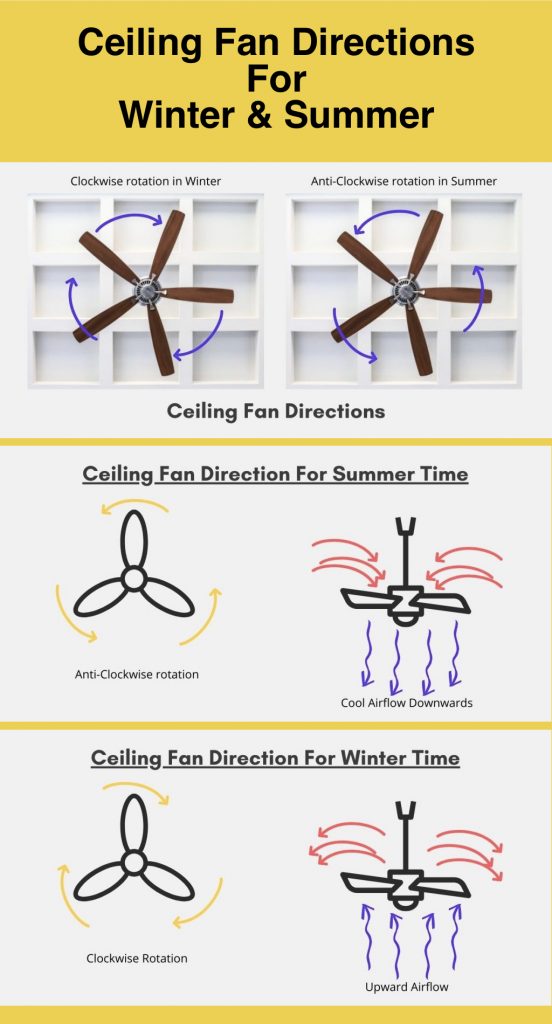
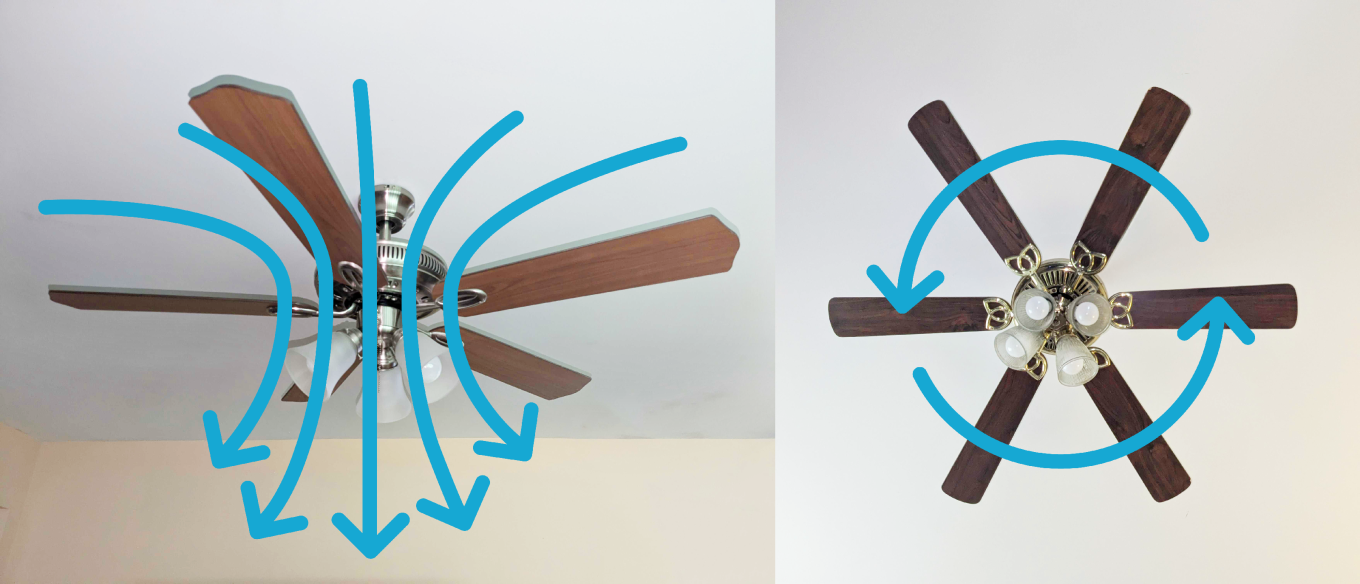
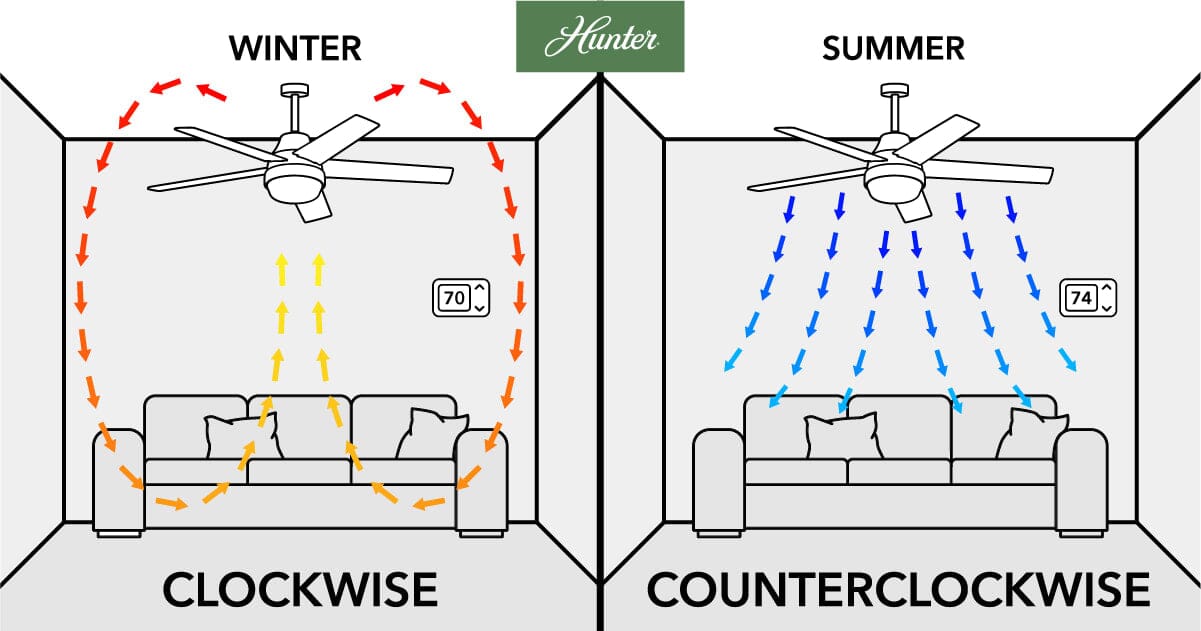
Here's the golden rule: In the summer, your ceiling fan should be turning counter-clockwise. Why? This creates a downward draft. Imagine a gentle breeze whispering sweet nothings (of cool air!) against your skin.
This downward airflow isn't just a pleasant sensation; it's actually making you feel cooler. It doesn't lower the room temperature, sadly, it just makes your sweat evaporate more efficiently. Which, let's face it, is the whole point, right?
Must Read
Think of it like a personal AC unit that doesn't cost a fortune to run! Okay, maybe that's a bit of an exaggeration. But seriously, it helps!
Fun fact: Did you know that ceiling fans don't actually cool the air? Mind. Blown. They just circulate it. It's all about that perceived temperature drop.
How to Check Your Fan's Rotation (Without Getting Dizzy)
Okay, so you're on board. But how do you figure out which way your fan is spinning? Don't just stare at it until you get motion sickness! There's a smarter way.
First, look at the switch. Most ceiling fans have a little switch on the motor housing. This switch controls the direction. Flip it! (Make sure the fan is off first, obviously. We're going for cool, not concussion.)
Stand under the fan and watch. If you feel a breeze, you're golden! If you feel nothing, or worse, an upward draft, flip that switch back! You're going the wrong way, my friend.
Pro tip: If you're still confused, grab a piece of lightweight paper. Hold it under the fan. If the paper blows down, you're good. If it blows up, switch it up!

Why Does Direction Matter Anyway?
So, why can't we just leave the fan spinning in one direction all year round? Because physics! (Don't worry, we won't get too sciency.)
In the winter, you want the opposite effect. A clockwise rotation gently pulls warm air that rises to the ceiling back down into the room. This helps even out the temperature and can save you money on heating bills. Think of it as a cozy hug from your ceiling fan.
Think of it this way: Summer is about pushing cool air down. Winter is about pulling warm air down.
It's all about strategically managing air circulation to maximize comfort and minimize energy costs. Who knew a ceiling fan could be so… philosophical?
The Sound of Summer: A Quiet Hum of Relief
Beyond the science, there's just something inherently satisfying about a ceiling fan humming on a hot summer day. It's the sound of cool relief, the promise of a slightly more bearable existence.
So, take a moment. Check your fan. Make sure it's spinning the right way. And then, sit back, relax, and enjoy the breeze. You've earned it!
Bonus points: Give your fan a good dusting while you're at it. Your sinuses will thank you.
Ceiling Fan Confessions: We've All Been There
Let's be honest, we've all forgotten to switch the fan direction at some point. You're sitting there, sweating, wondering why your fan isn't doing its job. Then, the realization hits you like a ton of bricks. It's spinning the wrong way! Don't be ashamed. It happens.
The important thing is that you caught it! Now you can bask in the glory of properly circulated air.
So go forth! Conquer the heat! Armed with your newfound ceiling fan knowledge, you are ready to face whatever summer throws your way. Just remember: counter-clockwise is your friend!