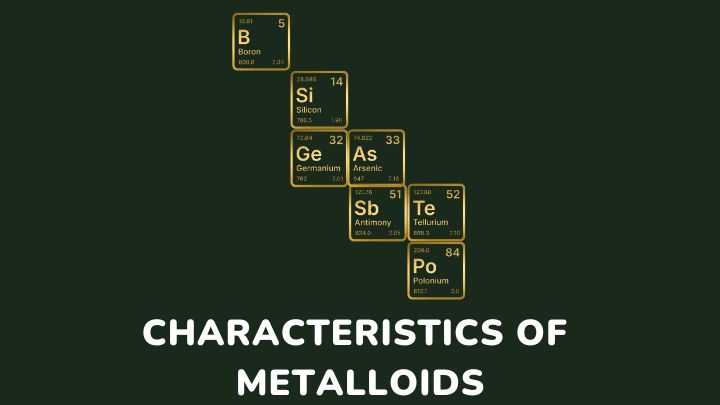
Which Properties Are Characteristics Of Metalloids
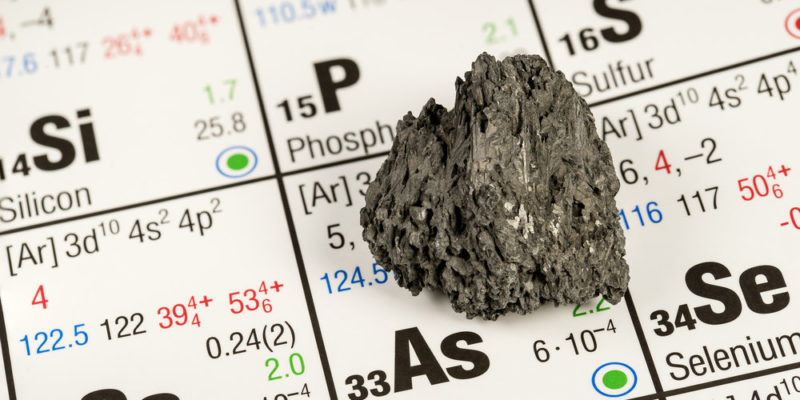
Ever felt like something doesn't quite fit neatly into a box? That's kind of the story with metalloids! We all learn about metals and nonmetals in science class – shiny conductors versus dull insulators. But what about those elements that seem to borrow traits from both sides? That's where the intriguing world of metalloids comes in. Understanding metalloids isn't just a fun science detour; it's crucial to understanding how many of our modern technologies function.
So, what exactly are metalloids, and what properties define them? Officially, metalloids are elements that have properties that are intermediate between those of metals and nonmetals. Think of them as the chameleons of the periodic table! This "in-between" nature is what makes them so incredibly useful.
The defining characteristic isn't one single property, but rather a combination. One key trait is their semiconductivity. Unlike metals which readily conduct electricity, and nonmetals which typically block it, metalloids conduct electricity under certain conditions. This is the heart of modern electronics. Imagine your phone or computer working with simple on/off switches provided by metals and nonmetals. The precise control and manipulation possible with semiconductors are what allow for complex processing and intricate circuitry.
Must Read
Other properties that help classify an element as a metalloid include their appearance and chemical behavior. They often have a metallic luster, but are more brittle than metals. Chemically, they tend to form oxides that are amphoteric, meaning they can react with both acids and bases. This dual reactivity is another example of their "both sides" nature.
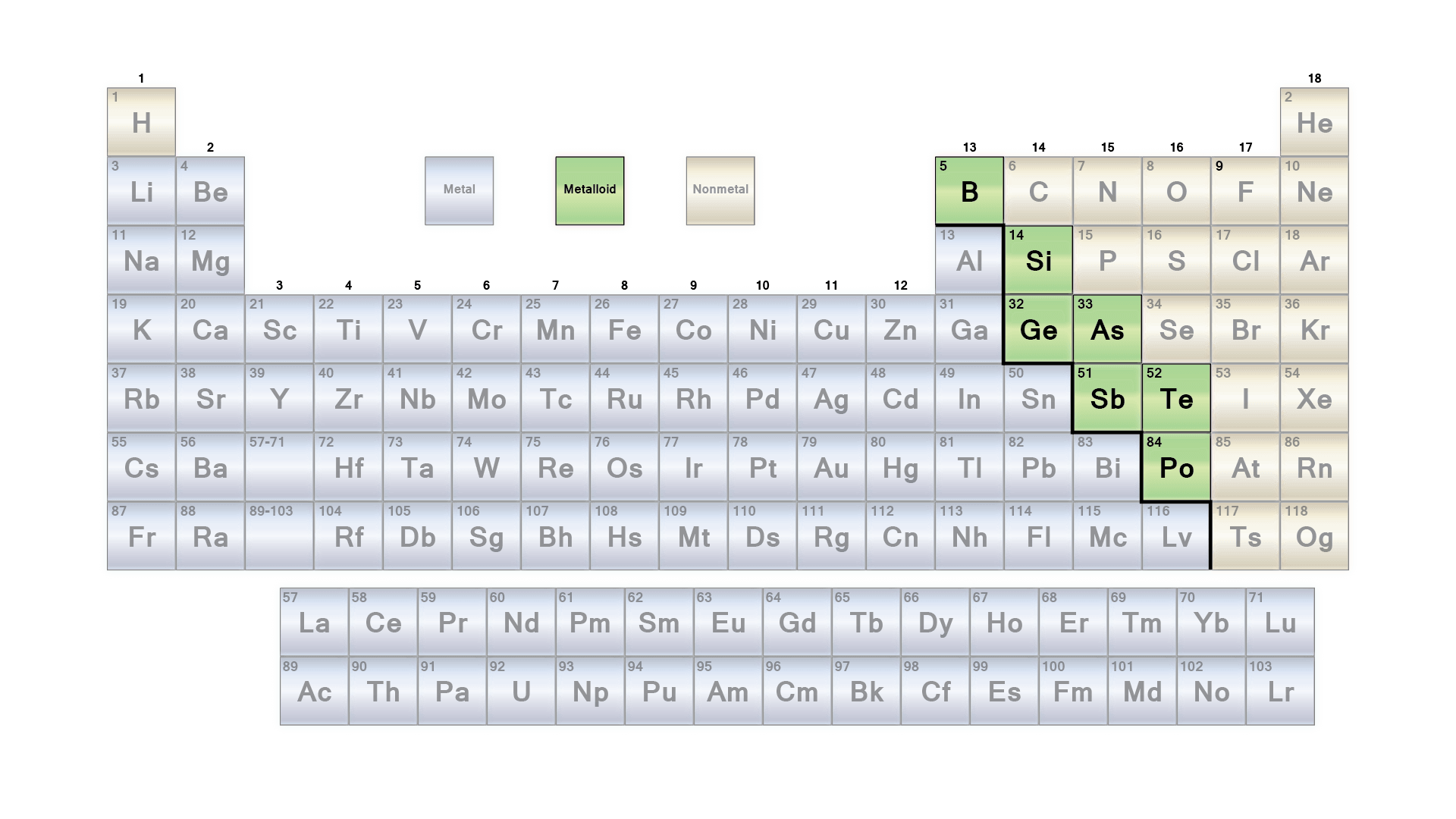
Let’s consider some examples. Silicon is probably the most famous metalloid. It's the backbone of the semiconductor industry, used in everything from computer chips to solar panels. Germanium was once widely used in early transistors. Arsenic, while toxic, has applications in certain alloys and semiconductors. Boron is used in strengthening materials, such as fiberglass. Antimony and Tellurium are also important metalloids, each with unique applications. The specific usage of each metalloid exploits its unique blend of metallic and nonmetallic properties.
In education, understanding metalloids helps students grasp the concept that the periodic table isn't just a list of elements, but a representation of trends and relationships. It reinforces the idea that properties aren't always black and white, encouraging critical thinking and a deeper understanding of chemistry.
In daily life, metalloids are everywhere, though often invisible. Your smartphone, computer, car, and even some household appliances rely heavily on semiconductors made from metalloids. Solar panels converting sunlight into electricity? Metalloids are at work there too!
Want to explore metalloids further? A simple experiment is to research different electronic devices and identify which metalloids are used in their construction. You could also investigate the history of the semiconductor industry and the pivotal role of silicon and germanium. Look at the ingredients of different materials at home; you might be surprised to find boron in certain cleaning products. The periodic table is available online, and many interactive versions allow you to explore element properties, including conductivity and reactivity, making it easy to identify and compare metalloids with metals and nonmetals. Embrace the curious in-between!