
Which Oxyacetylene Flame Has An Excess Of Fuel
Okay, let's talk oxyacetylene flames. We've all been there, right? Staring at that torch, wondering what's going on.
Specifically, which one is just too much? Which flame is rocking the extra fuel a little too hard?
The Usual Suspects: Flames 101
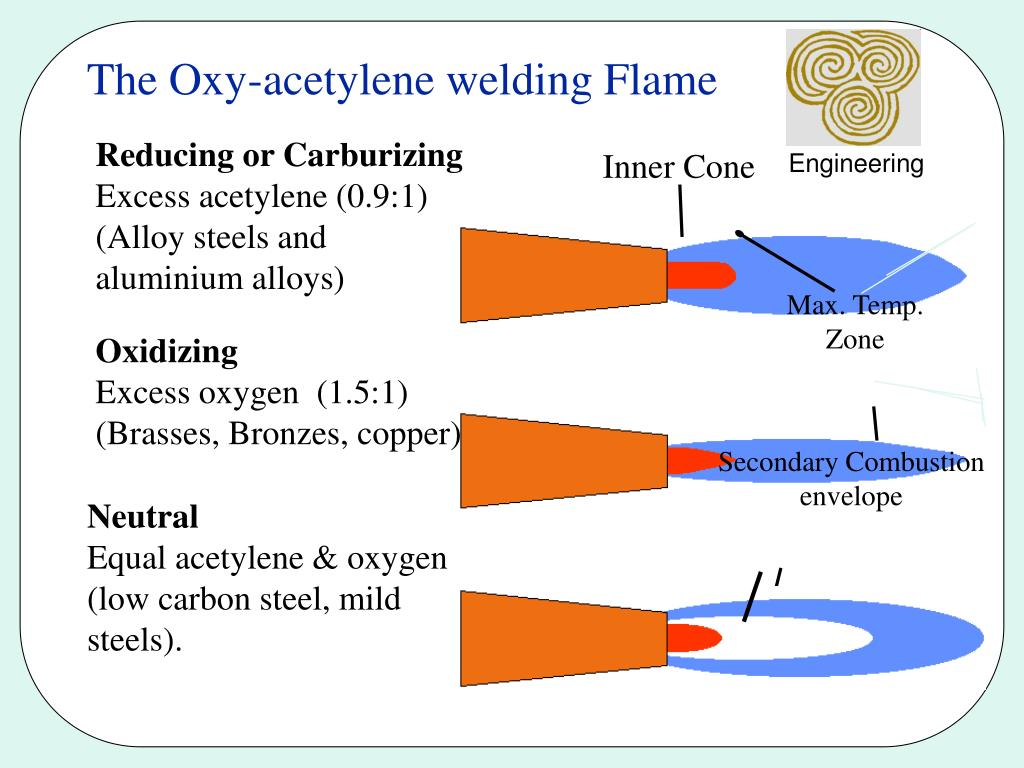
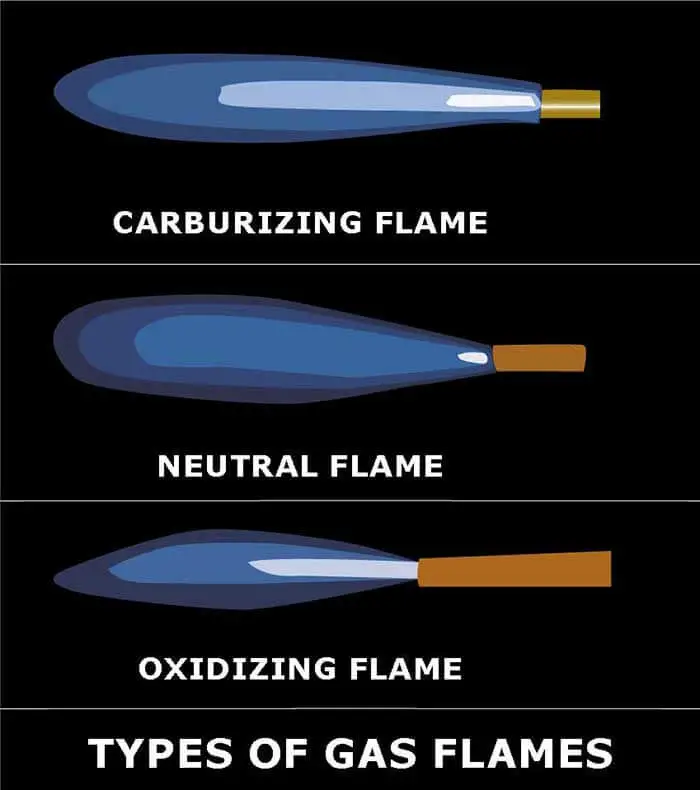
First, a quick recap. We've got our players: the neutral flame, the oxidizing flame, and the carburizing (or reducing) flame. Each has its own personality.
Must Read
The neutral flame? Mr. Balanced. Does everything reasonably well. Boring, maybe, but reliable.
The oxidizing flame? A bit intense, perhaps. Lean and mean. Sometimes too aggressive, if you ask me.
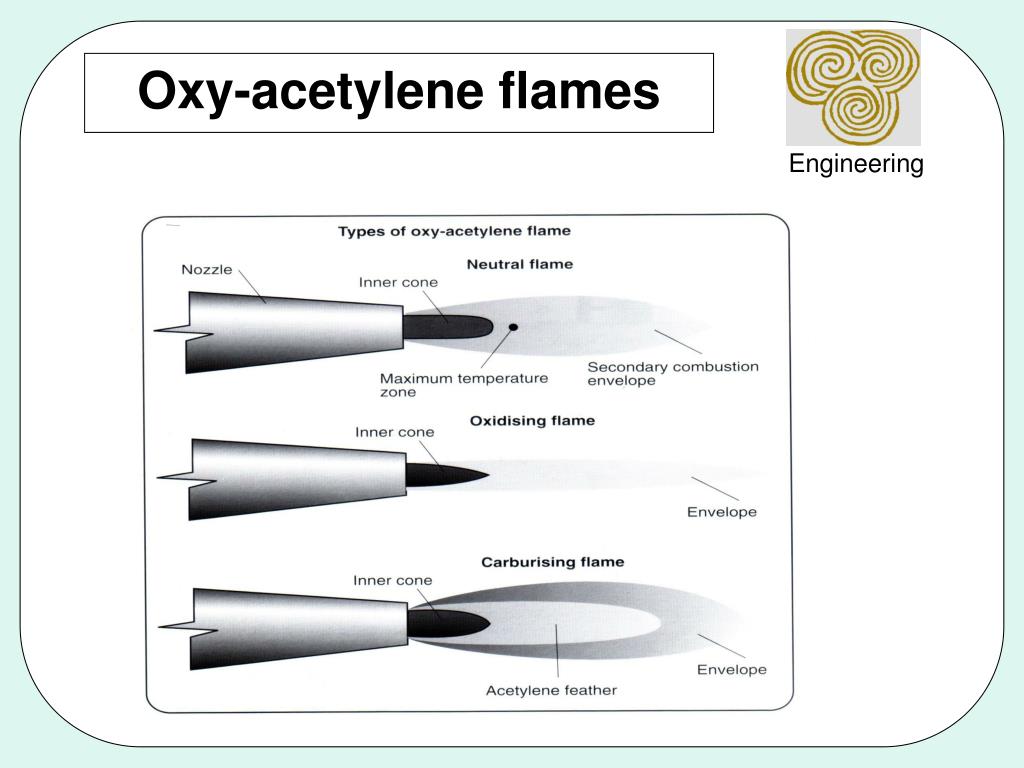
Then there's the carburizing flame. The one we're really here to discuss. It's got that extra feather, that acetylene flare.
Why I Think The Carburizing Flame Is… Overdoing It
Now, this might be controversial. People swear by the carburizing flame. But hear me out.
It's just… a bit much, isn't it? All that extra acetylene. Like wearing too much cologne. Or bringing a foghorn to a library.
Okay, okay, it has its uses. I get it. But personally? I find it excessive.
Think about it. That distinctive three-part flame. The bright cone, the acetylene feather, the outer envelope. Is it necessary? I'm not convinced.
The Feather: Friend or Foe?
That acetylene feather is the telltale sign. It screams, "Hey! I've got extra fuel!" But is that always a good thing?
Sometimes, yeah. For specific welding or heating applications where you need to add carbon to the metal. I concede that point.
But let's be real. For most of us, most of the time, it’s overkill.

The Sooty Smoke: Not a Good Look
And let's not forget the soot. Oh, the soot! A carburizing flame can be downright messy.
You're working hard, trying to create a clean weld, and suddenly you're battling a cloud of black smoke. Annoying, right?
It's like trying to bake a cake while a toddler throws flour everywhere. Possible, but definitely not ideal.
I prefer my welding projects a little less… volcanic.
But Wait! Someone Out There Loves the Carburizing Flame
Okay, I know, I know. There are dedicated users. And I respect that.
Some metals require a carburizing flame. For instance, welding high-carbon steels. It's essential for achieving a strong, quality weld.
For hardfacing, it can deposit a layer of hard, wear-resistant material on the surface of another metal.
And, of course, for specific heating applications where you want to introduce carbon into the metal's surface. Think of it like a specialized tool.
But even then, the fine line between "just right" and "way too much" seems pretty thin.
My Unpopular Opinion: The Neutral Flame Is King
Confession time: I'm a neutral flame enthusiast. Sue me.
It's just so… sensible. Clean, efficient, and versatile. It's the Swiss Army knife of oxyacetylene flames.
It works well with a wide range of metals, from mild steel to stainless steel. Minimal soot. Easy to control. What's not to love?
The neutral flame produces a clear, well-defined cone. It indicates a proper balance of oxygen and acetylene.
It's the workhorse. The reliable friend. The flame you can always count on.
Okay, Oxidizing Flame, You Can Hang Out Too
I won't completely dismiss the oxidizing flame. It has its place.
For brazing certain metals, it can be quite effective. And for some specialized welding applications.
However, it is very easy to burn the base metal. So, be extra careful when using it.
But honestly? It's a bit too aggressive for my taste. I prefer a gentler approach.
In Conclusion: It's All About Preference (and Application)
Ultimately, the best oxyacetylene flame is the one that works best for you. And for the specific task at hand.
There's no single "right" answer. It's all about understanding the characteristics of each flame and choosing the appropriate one.

But if you ask me, the carburizing flame is a bit… extra. Like wearing a tuxedo to a picnic.
Maybe I'm just a minimalist at heart. Or maybe I'm just afraid of soot.
Either way, I'm sticking with my neutral flame. Thanks for coming to my TED Talk. (Or, you know, my playful rant.)
A Few More Thoughts (Because Why Not?)
Let's think about real-world examples. Imagine you are cooking. Would you always use the hottest, most intense flame?
No! You'd adjust the heat based on what you're cooking. Similarly, you adjust your flame based on the metal.
So, maybe the carburizing flame isn't inherently "bad." It's just… highly specialized.
Like that fancy kitchen gadget you use once a year. Useful in specific situations, but not an everyday essential.
And remember, safety first! Always wear proper PPE (Personal Protective Equipment) when working with oxyacetylene torches.
Final, Final Thoughts
Maybe, just maybe, I'm wrong about the carburizing flame. Perhaps I haven't fully appreciated its nuances.
Perhaps I need to spend more time experimenting with it. Exploring its full potential.
But until then, I'll continue to champion the neutral flame. The unsung hero of the welding world.
What do you think? Am I completely off base? Let me know in the comments!
Now, if you'll excuse me, I have some welding to do. With my trusty neutral flame, of course.
And maybe, just maybe, I'll sneak in a little experiment with the carburizing flame. Just to keep an open mind.
But no promises. Especially if it gets too sooty.
One last thing. Never underestimate the power of a well-maintained torch. Clean tips are key!
Okay, now I'm done. Happy welding!
Or, you know, happy reading about welding. Whatever floats your boat.
Just remember to be safe, have fun, and don't be afraid to try new things. Even if they involve a carburizing flame.
And always, always, always wear your safety glasses. Your eyes will thank you.
Okay, seriously, I'm out. Thanks again for reading!