Which Of The Following Is True Of A Natural Monopoly
Jane Smith
Okay, let's talk about monopolies. Specifically, the "natural" kind. You know, the ones that pop up not because of evil scheming, but because… well, it just kinda makes sense? Think utilities, power grids, stuff like that.
What Makes a Monopoly "Natural"?
So, which of the following is true of a natural monopoly? I'm going to give you the tea. Get ready to smile.
High Startup Costs: The Ultimate Party Foul
Imagine trying to build another set of water pipes under your town. Sounds like a logistical nightmare, right? Natural monopolies are all about high startup costs. It's like throwing the biggest, most expensive party ever, just to get the plumbing working.
That’s why you usually only have one provider. Nobody wants to duplicate that expense.
Declining Average Costs: The More, The Merrier (and Cheaper!)
Here's where it gets interesting. As a natural monopoly serves more customers, the average cost decreases. Think about it: the electricity company already has the power plant and the lines.
Adding another house to the grid is relatively cheap. It's called economies of scale, and it's the secret sauce.
Duplication is Dumb (and Expensive!)
This is my unpopular opinion, but hear me out. Building two sets of train tracks to the same town? Seems kinda silly. We need to seriously consider if such duplication is really valuable.
It's wasteful and inefficient. Natural monopolies thrive where duplication is impractical or excessively expensive.
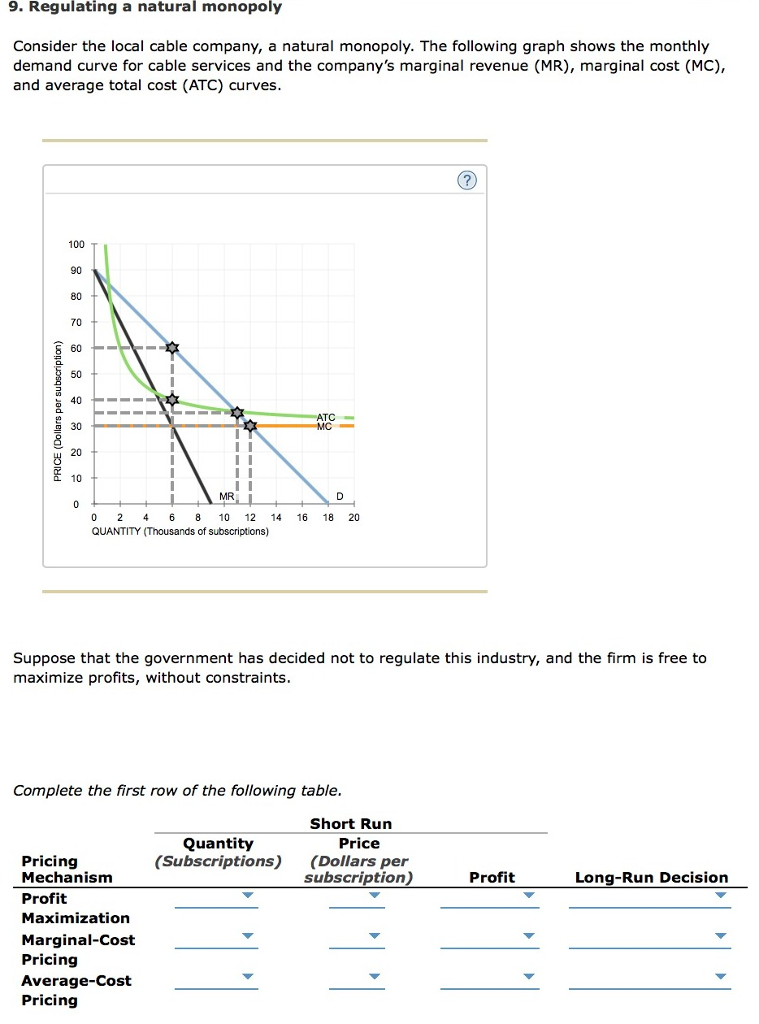
Solved 9. Regulating a natural monopoly Consider the local | Chegg.com
So, What's Actually True? Let's Play Detective
Now, let's put on our detective hats and figure out what's actually true about natural monopolies. It's not always as straightforward as the textbooks make it seem.
Government Regulation: The Uninvited Guest?
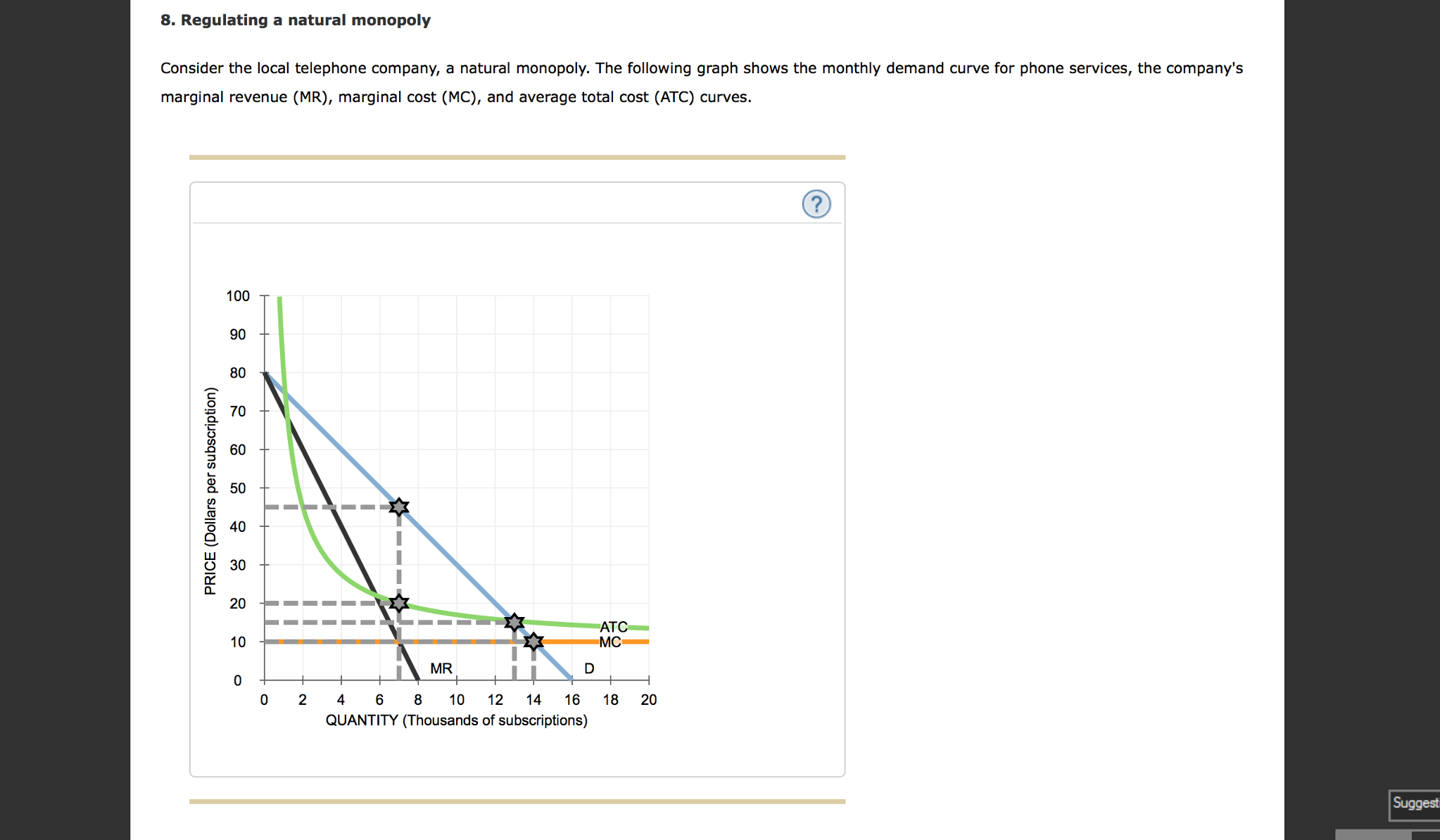
Here's where things get complicated. Natural monopolies often get tangled up with government regulation. The idea is to prevent them from exploiting their market power and charging exorbitant prices.
But sometimes, I wonder if the regulation actually helps or hinders efficiency. Food for thought.
Price Control: A Double-Edged Sword
Price control is a major tool for governments regulating natural monopolies. Price ceilings are put in place to protect consumers. However, sometimes price ceilings are so low that the natural monopoly can't even cover its costs!
This can lead to underinvestment and shoddy service. I guess price ceilings are only good if the price is right!
Not Always Forever: The Plot Twist
Here's a secret: natural monopolies aren't always set in stone. Technological advancements can shake things up!
Solved 8. Regulating a natural monopoly Consider the local | Chegg.com
Think about how satellite internet is challenging traditional cable companies. Innovation can disrupt even the most entrenched monopolies.
My Hot Takes on Natural Monopolies
Okay, time for some unfiltered opinions. Buckle up!
The "Natural" Part is Overrated
I think we use the word "natural" a little too loosely. Just because it's currently cheaper for one company to provide a service doesn't mean it always will be.
We need to be open to new technologies and business models that could challenge the status quo.
Competition Can Be Good… Even for Monopolies
Even if a market is dominated by a natural monopoly, some level of competition can be beneficial. Think about competing technologies or alternative service providers.
10 Natural Monopoly Examples (2025)
It keeps the monopoly on its toes and encourages innovation. A little healthy competition never hurt anyone (except maybe the monopoly's profit margin).
Customer Service Matters (Duh!)
This should be obvious, but it's often overlooked. Just because a company is a natural monopoly doesn't give it a free pass to provide terrible customer service!
Accountability is key. And maybe a little bit of fear of being replaced by a disruptive startup. Okay, maybe a lot of fear.
So, Which Is True? The Big Reveal!
Alright, drumroll please! Which of the following is true of a natural monopoly? The answer is… (spoiler alert!)… all of the above!
Well, kinda. It's complicated. High startup costs, declining average costs, government regulation, and the potential for disruption all play a role.
Here are a few points in summary:
A natural monopoly typically faces high fixed costs that create a barrier to entry for potential competitors.
What Is A Natural Monopoly? Meaning, Definition, Examples, 48% OFF
A key characteristic of a natural monopoly is that its average total cost curve is constantly declining, even when production is high.
Because of the high barriers to entry that a natural monopoly possesses, it is often heavily regulated by the government.
It's a messy, fascinating world. I am being playful, but I hope you agree!
The Takeaway: Keep Questioning Everything
The world of economics is never black and white. Especially when it comes to natural monopolies.
So, keep questioning assumptions. Stay curious. And don't be afraid to challenge the status quo. That's the true spirit of innovation!
And also, please be nice to your utility company representatives. They're just doing their jobs.