
Which Of The Following Is True About A Hot Site
Okay, so you've probably heard techy terms like "hot site" thrown around, maybe in a movie about hackers or during a meeting at work. But what is it, really? And why should you, a regular, awesome human being, even care?
Let's ditch the jargon and break it down. Imagine your favorite coffee shop. It's got the perfect ambiance, the barista knows your name, and most importantly, they have your caffeinated beverage of choice ready to go. Now, imagine a fire breaks out! Catastrophe, right?
A "hot site" is kind of like that coffee shop having a completely identical backup location ready to roll just down the street. Same furniture, same coffee beans, same friendly barista (maybe a twin?). As soon as the fire alarm goes off at the first location, you can just stroll over to the second and get your latte without missing a beat.
Must Read
So, back to the original question: Which of the following is true about a hot site? The key thing to remember is that a hot site is all about immediate availability. It's not a place to store old files, it's not a plan to maybe get things running again someday. It's live, active, and ready to take over instantly when the primary site goes down.
What Exactly Makes a Site "Hot"?
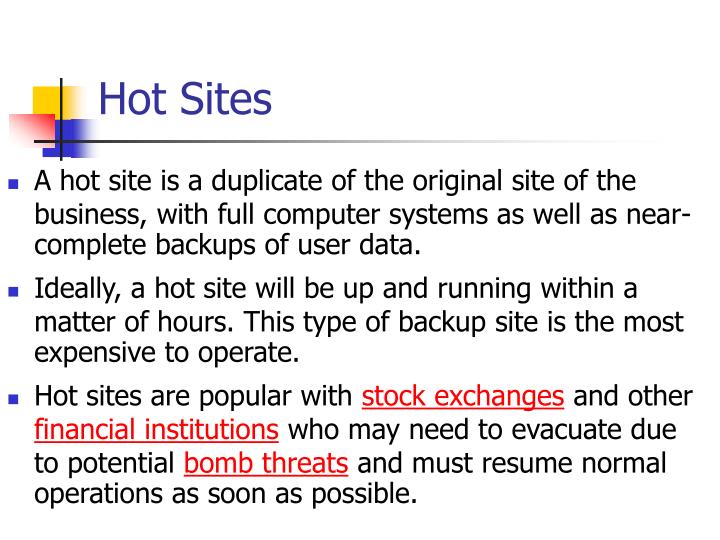
Here's the deal. A hot site isn't just a building with some computers in it. Think of it as a digital clone of the original. Here are some key features:

- Fully Equipped: It has all the hardware, software, and network infrastructure needed to run the business. We're talking servers, desktops, phone systems... the whole shebang.
- Up-to-Date Data: This is HUGE. A hot site constantly replicates data from the primary site. That means it has a near-real-time copy of everything, so no data is lost during a disaster. Imagine if your bank's hot site was a week behind – your money might mysteriously vanish!
- Ready to Go: It's not sitting there gathering dust. It's powered on, connected to the network, and regularly tested to make sure everything is working smoothly. Think of it as a fire drill for your data.
Essentially, a hot site aims for the shortest possible downtime. In tech terms, this is often measured as RTO (Recovery Time Objective), aiming for near-zero.
Why Should You Care?
Okay, you might be thinking, "This sounds expensive and complicated. Why should I, the person who just wants to stream Netflix and order pizza, care about any of this?"
Well, think about it this way. Have you ever tried to access a website that was down? Frustrating, right? Now imagine that website is your bank. Or your hospital. Or the online system that processes your paycheck. Suddenly, downtime becomes a much bigger deal. A hot site helps ensure these critical services stay online, even when disaster strikes.
Let's say you are buying concert tickets online. The main server crashes due to a power outage during peak hours, like when Taylor Swift's tickets are launched. Without a hot site, the ticket vendor goes down, and you might not be able to buy the tickets. With a hot site, the systems will be automatically routed to the hot site and you can buy the tickets.
Moreover, companies that invest in hot sites are often seen as more reliable and trustworthy. They're showing that they take data security and business continuity seriously. This can translate to better service, more secure transactions, and peace of mind for you.

So, What's NOT True About A Hot Site?
Here are a few common misconceptions. A hot site is not:
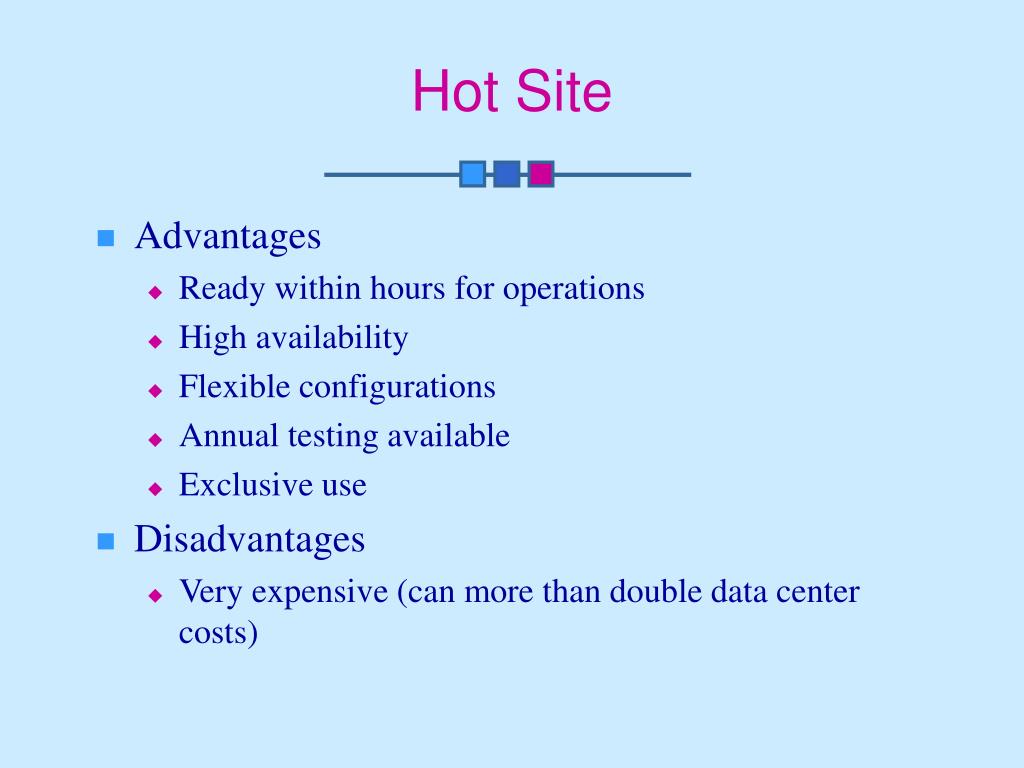
- A cheap solution: Maintaining a fully functional, up-to-date replica of your entire IT infrastructure is expensive. That's why hot sites are typically used for critical applications and data.
- A replacement for backups: Backups are still essential! They provide a longer-term archive of your data and can be used to recover from different types of disasters. A hot site is for immediate recovery, while backups are for broader restoration.
- A "set it and forget it" solution: Hot sites require regular testing and maintenance to ensure they're ready to go when needed. Systems change, data changes, and the hot site needs to keep pace.
In a Nutshell
A hot site is a fully functional backup facility designed to take over immediately in case of a primary site failure. It's all about minimizing downtime and ensuring business continuity. While it might seem like a niche topic, it has a surprisingly large impact on our daily lives, from banking to online shopping to healthcare. So next time you hear about a company investing in a hot site, remember that they're investing in reliability, security, and your peace of mind!
So, which of the following is true about a hot site? It's the one that says it's ready and waiting to take over instantly! Now go forth and impress your friends with your newfound knowledge of business continuity planning!
