Which Of The Following Is Not A Property Of Metalloids

Hey! So, you're wondering about metalloids, huh? Those quirky elements that just can't seem to make up their minds. Are they metals? Are they non-metals? Well, it's a bit of both, which makes them super interesting (or maybe just confusing, lol).
We're gonna dive into their properties and figure out what doesn't belong on their resume. Think of it like playing "One of these things is not like the other"… but with elements!
So, What ARE Metalloids?
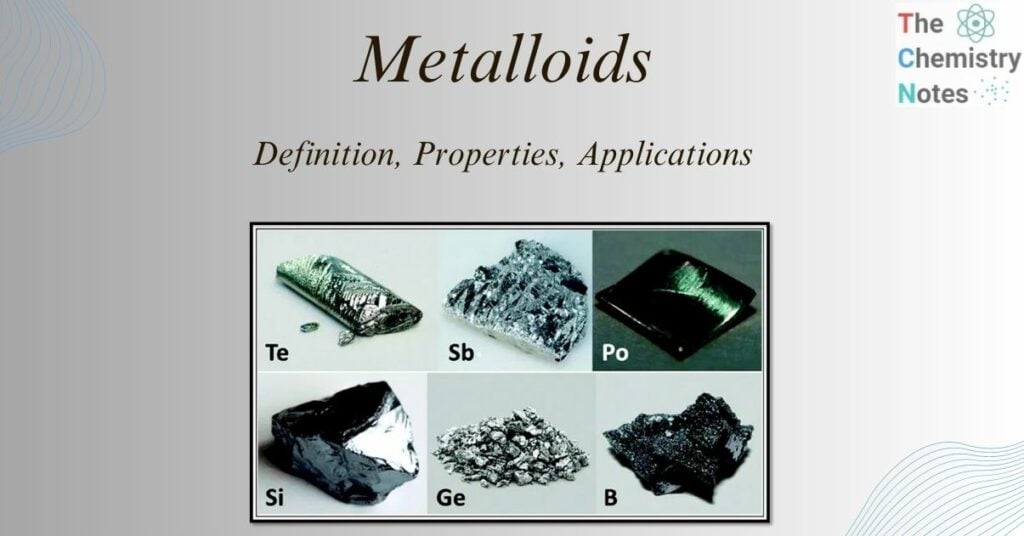
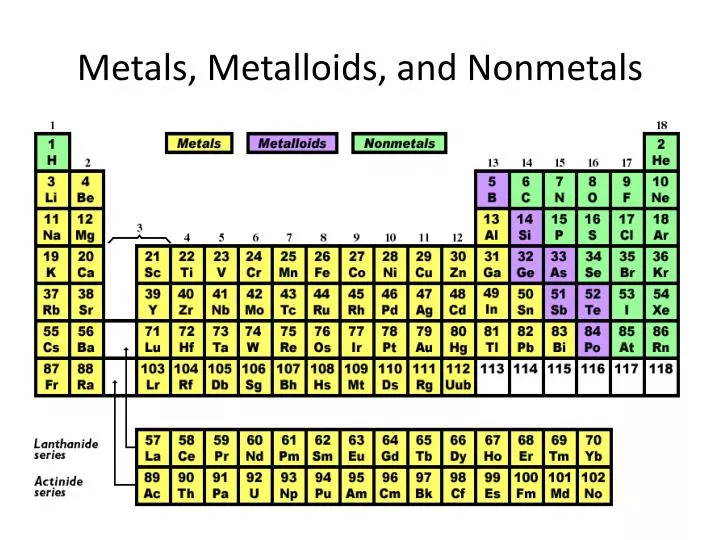
First, let's quickly recap. Metalloids (also called semimetals) are elements that have properties of both metals and non-metals. They're like the Switzerland of the periodic table: neutral and versatile. You'll find them chilling on the staircase dividing the metals from the non-metals – usually Boron (B), Silicon (Si), Germanium (Ge), Arsenic (As), Antimony (Sb), and Tellurium (Te). Though, some people argue about Polonium (Po) and Astatine (At), but who needs that kind of drama?
Must Read
They're the ultimate fence-sitters, and that’s what makes them so darn useful in technology! Think semiconductors! But we're getting ahead of ourselves. Let’s focus on the question at hand…
Let's Talk Properties: What's Not True?
Okay, so imagine you're given a list of properties, and you need to pick the one that metalloids don't typically have. Let’s explore some common misconceptions:

1. Are they all shiny and lustrous? Not all of them! Some metalloids have a metallic appearance (like antimony), while others look dull. Remember, they're semimetals, not super-metals! Don't expect them all to sparkle like gold.
2. Are they all great conductors of electricity? Nope! This is a big one. While metalloids can conduct electricity, they're not as good at it as metals. They're semiconductors. Get it? Semi! Their conductivity is somewhere in between a metal and a non-metal. You can even control how well they conduct, which is why they're vital for making computer chips. (Mind. Blown.)
3. Are they all malleable and ductile? Malleable means you can hammer them into sheets, and ductile means you can draw them into wires. Can you imagine stretching Boron into a wire? Probably not! Metalloids are generally brittle. Meaning, if you tried to bend them, they'd probably just snap. So, definitely not all malleable and ductile!
4. Do they all form acidic oxides? Some do, some don't! Metalloids can form oxides that are either acidic, basic, or even amphoteric (meaning they can act as both acid and base!). It really depends on the specific metalloid and the conditions. Aren't they just full of surprises?
So, Which One Is the Imposter?
If you saw a question like: "Which of the following is NOT a property of metalloids: A) Semiconductor, B) Brittle, C) Highly Malleable, D) Can form acidic oxides," the answer would be C) Highly Malleable. Metalloids are NOT typically malleable.
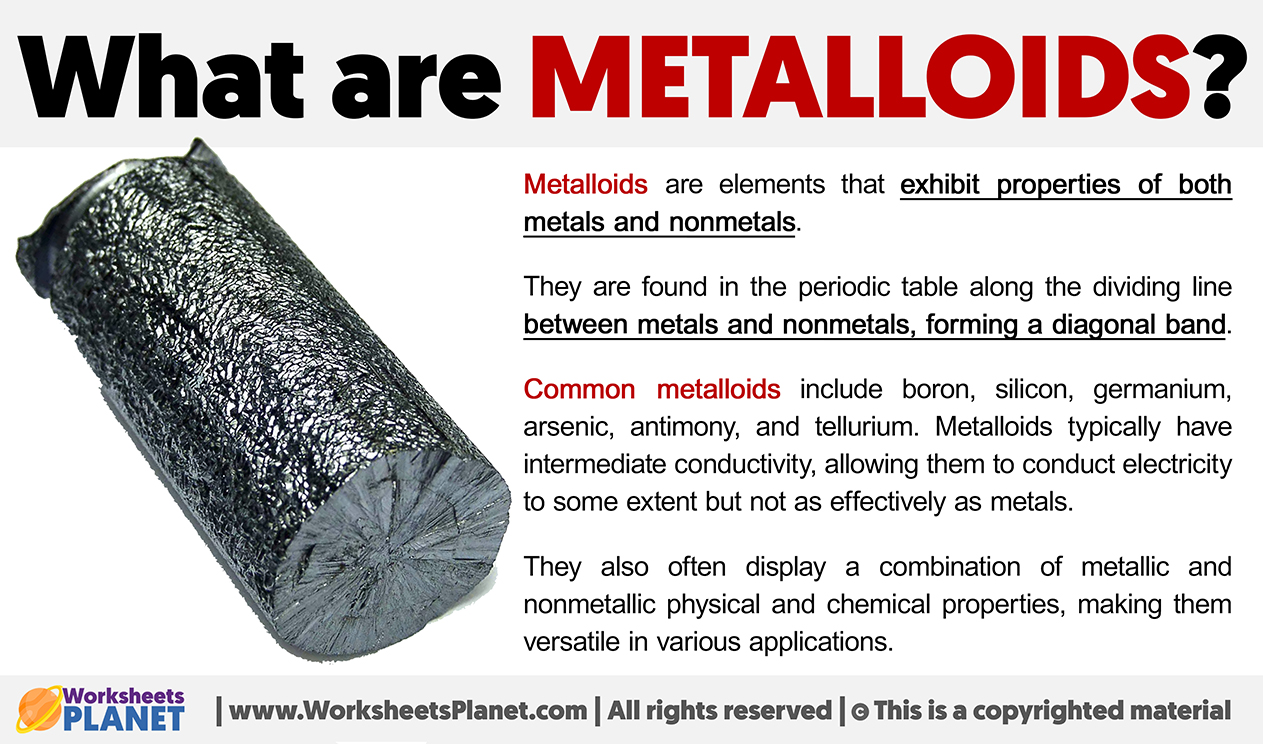
Here's the takeaway: Metalloids are all about moderation. They're not extreme in any way. Think of them as the well-balanced members of the element family. They conduct electricity okay-ish, they might have a little shine, and they can kinda, sorta form acidic oxides… sometimes. But being highly malleable? That’s just not their style.
So, next time someone asks you about metalloids, you can confidently say, "Ah yes, those fascinating elements that refuse to be pigeonholed! They're conductors... kinda. They're shiny... sometimes. But malleable? Definitely not!" You’ll sound like a total element expert. 😉
Now, go forth and impress your friends with your newfound knowledge of the periodic table’s rebels!