
Which Of The Following Is An Alkaline Earth Metal

Alright, friends, gather 'round! Today, we're diving headfirst into the wacky world of the periodic table. Don't worry, it's not going to be a boring lecture filled with confusing symbols. We're on a quest to find the elusive Alkaline Earth Metal!
Imagine the periodic table as a giant apartment building for elements. Each element has its own little room, and they're all arranged in a specific order based on their personality (atomic structure, of course!).
Think of the Alkaline Earth Metals as the slightly-less-hyper siblings of the Alkali Metals. The Alkali Metals are like the super-outgoing, always-ready-to-party family members. The Alkaline Earth Metals are still fun, but maybe a little more grounded. Let's figure out who they are!
Must Read
The Contenders!
We're presented with a few suspects, and it's our job to play detective and figure out which one is the right fit. Think of it like a mineralogical "whodunnit"!
Let's say the choices are: Sodium (Na), Calcium (Ca), Chlorine (Cl), and Iron (Fe). Time to put on our thinking caps.
Sodium (Na): The Salty Suspect
Ah, sodium! We all know and... well, sometimes love it. It's in our table salt, it helps transmit nerve signals, and it’s generally a very reactive element.
Sodium is indeed a metal, but hold your horses! It belongs to the Alkali Metals group. These guys are located in the first column of the periodic table and they are very eager to react with other elements. Think of it like a super-clingy friend.
Drop sodium in water, and it'll zoom around, creating a small explosion of hydrogen gas. Exciting, but a bit too wild for the Alkaline Earth Metal vibe. So, sodium is out!
Calcium (Ca): The Bone-Builder
Calcium! Now we're talking. This is the stuff that makes our bones strong and our teeth pearly white. Milk commercials have been hammering this into our brains since we were kids.
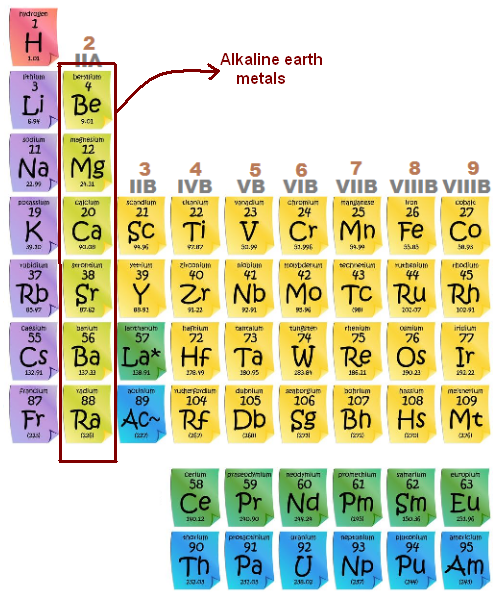
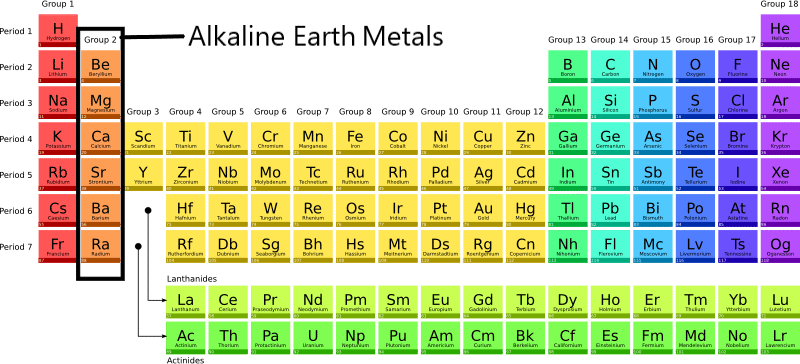
Calcium is a metal, it's found in the second column of the periodic table, and it forms ions with a +2 charge. This, my friends, is a classic Alkaline Earth Metal move!
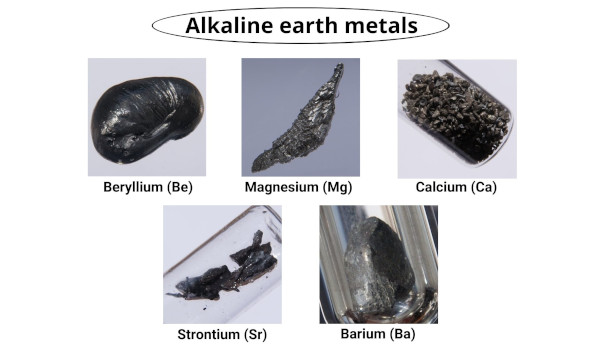
It's reactive, but not as explosively so as sodium. It's happy to form compounds with other elements, but it’s not quite as desperate for attention as those Alkali Metals. Sounds promising!
Chlorine (Cl): The Pool Cleaner
Chlorine. That smell! It either reminds you of sparkling clean swimming pools or slightly terrifying chemical experiments.
Here’s the thing: Chlorine isn't a metal at all. It's a nonmetal. And it is not an Alkaline Earth Metal.
Chlorine is part of the halogen group. These elements are famous for their ability to disinfect things. But they aren't metals, and they definitely don't belong in the Alkaline Earth Metal club. Sorry, Chlorine!
Iron (Fe): The Strong One
Iron. This is a strong, reliable metal found pretty much everywhere. It makes our skyscrapers stand tall, carries oxygen in our blood, and even helps spinach get Popeye-level buff.
Iron is a metal (obviously), but it's what we call a transition metal. Transition metals live in the middle block of the periodic table, a bustling neighborhood with lots of interesting properties.
Iron is essential, no doubt. However, it has very different characteristics than Alkaline Earth Metals, and does not belong in the same group. So Iron, sadly, has to sit this one out.
The Verdict!
After careful consideration, fingerprint analysis, and a few strategically placed mineralogical questionnaires, the evidence is irrefutable. The Alkaline Earth Metal among our suspects is... Calcium (Ca)!
Calcium perfectly fits the bill. It's a metal, it belongs to the second group of the periodic table, and it shares properties common to its alkaline earth metal siblings. High five, Calcium!
More About Alkaline Earth Metals
Since we're on a roll, let's learn a little more about these fantastic elements. The alkaline earth metals are a group of six elements that share some fascinating traits.
Besides Calcium, there is Beryllium (Be), Magnesium (Mg), Strontium (Sr), Barium (Ba), and Radium (Ra). Think of them as calcium's slightly more exotic relatives.
All of them are silvery-white, relatively reactive metals. However, that’s as far as they go with each other’s similarity. Their characteristics differentiate them, which make them very good elements to utilize for different industries.
Magnesium (Mg): The Lightweight Champion
Magnesium is known for being lightweight. It's found in everything from Epsom salts (for soothing sore muscles) to airplane parts. Imagine a whole plane made of Epsom salts, though. That would be a relaxing flight!
Magnesium is also crucial for plant life, being at the center of chlorophyll, the green pigment that allows plants to perform photosynthesis. It's like the tiny sun powering plant growth.
It's also used in flares and fireworks, producing a brilliant white light. Sparkly!

Strontium (Sr): The Red-Hot Performer
Strontium is the element that gives fireworks their brilliant red color. Think of it as the rock star of the pyrotechnics world.
It's also used in some older types of television screens, though it's mostly been replaced by other elements. Strontium had its 15 minutes of fame in the entertainment industry!
Certain isotopes of strontium are also used in dating rocks and fossils. Whoa!
Barium (Ba): The Gut Checker
Barium is often used in medical imaging, specifically in barium swallows or enemas. Before an X-ray, the patient drinks barium sulfate, which shows up clearly on X-rays.
This allows doctors to see the digestive tract more clearly. So, while you might not think about it often, barium is helping doctors diagnose all sorts of ailments.
It's also used in some kinds of rat poison. So, good for medical purposes, but not so great for rodents.
Beryllium (Be): The Light and Strong One
Beryllium is a relatively rare element, known for its lightness and strength. It's used in aerospace applications and in some high-performance alloys.
It's also found in emeralds and aquamarines, giving them their beautiful colors. Beryllium is like the hidden gem of the Alkaline Earth Metals, literally!
Unfortunately, beryllium can also be toxic, so it needs to be handled with care.
Radium (Ra): The Radioactive Relic
Radium is probably the most famous (or infamous) of the alkaline earth metals, thanks to its radioactivity. It was discovered by Marie Curie and her husband Pierre, and initially, it was hailed as a miracle cure for all sorts of ailments.
Early watch dials were painted with radium-containing paint to make them glow in the dark. Sadly, those who painted the dials suffered severe health consequences from the radiation exposure. This is where the term "radium girls" comes from.
Due to its radioactivity, radium is now mostly used for research purposes. It's a reminder of the importance of understanding and respecting the power of the elements.
Wrapping Up
So, there you have it! A whirlwind tour of the Alkaline Earth Metals, starring Calcium as our champion. These elements might not be as flashy as some of their periodic table neighbors, but they play essential roles in our bodies, our technology, and even our fireworks displays.
Remember, the next time you drink a glass of milk, admire a red firework, or marvel at the lightness of an airplane, give a little nod to the Alkaline Earth Metals working hard behind the scenes.
And remember, science doesn't have to be scary or boring. It can be an exciting adventure, filled with fascinating discoveries and a dash of playful exaggeration. Keep exploring, keep questioning, and keep having fun with the wonderful world of elements!