Which Is Correct Concerning A Parallel Circuit

Have you ever stopped to think about how your house lights stay on even when your toaster is blasting away making breakfast? Or why your Christmas tree doesn't go completely dark when a single bulb burns out? The answer, my friend, lies in the wonderfully efficient world of parallel circuits! We might not realize it, but these electrical pathways are working tirelessly behind the scenes to power our lives.
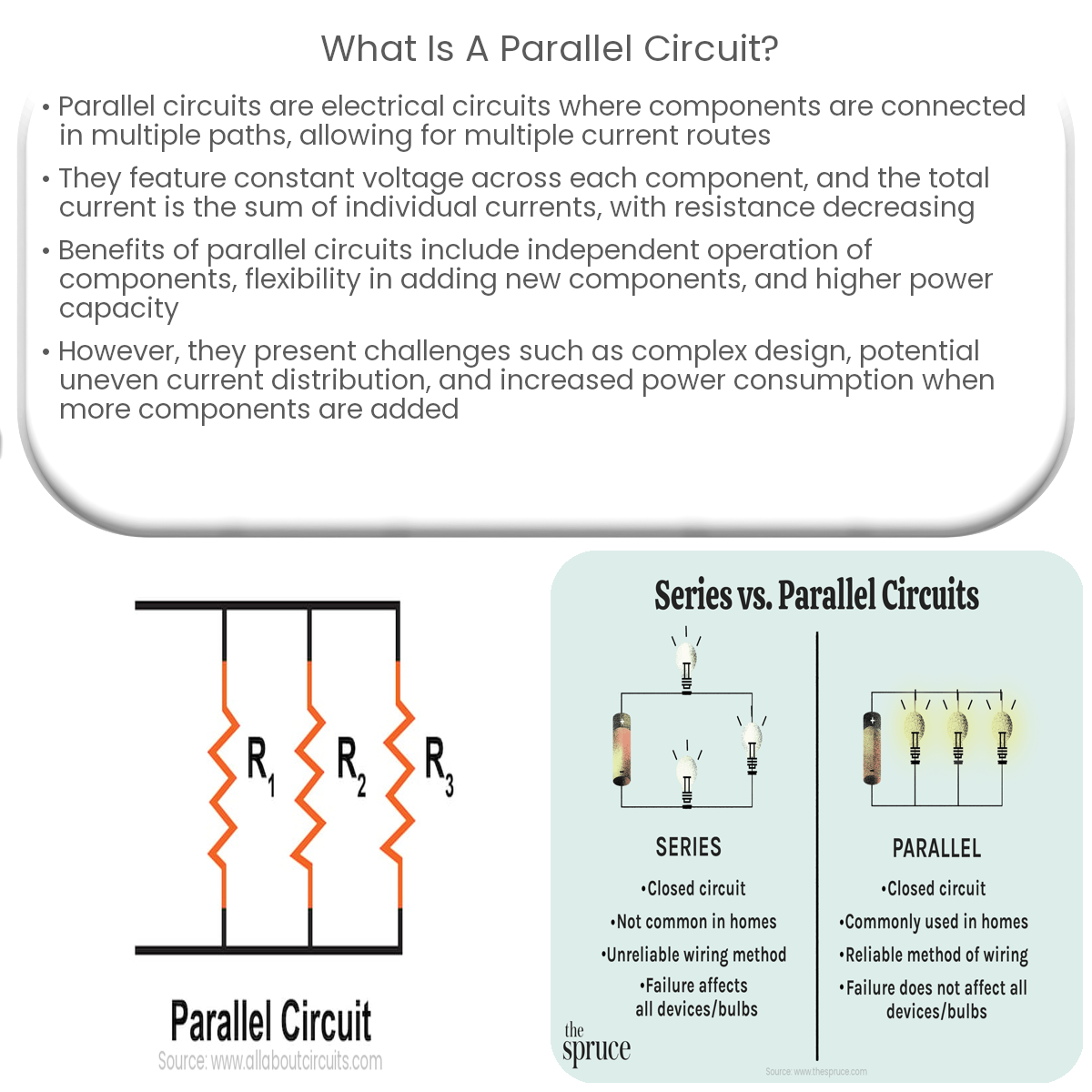
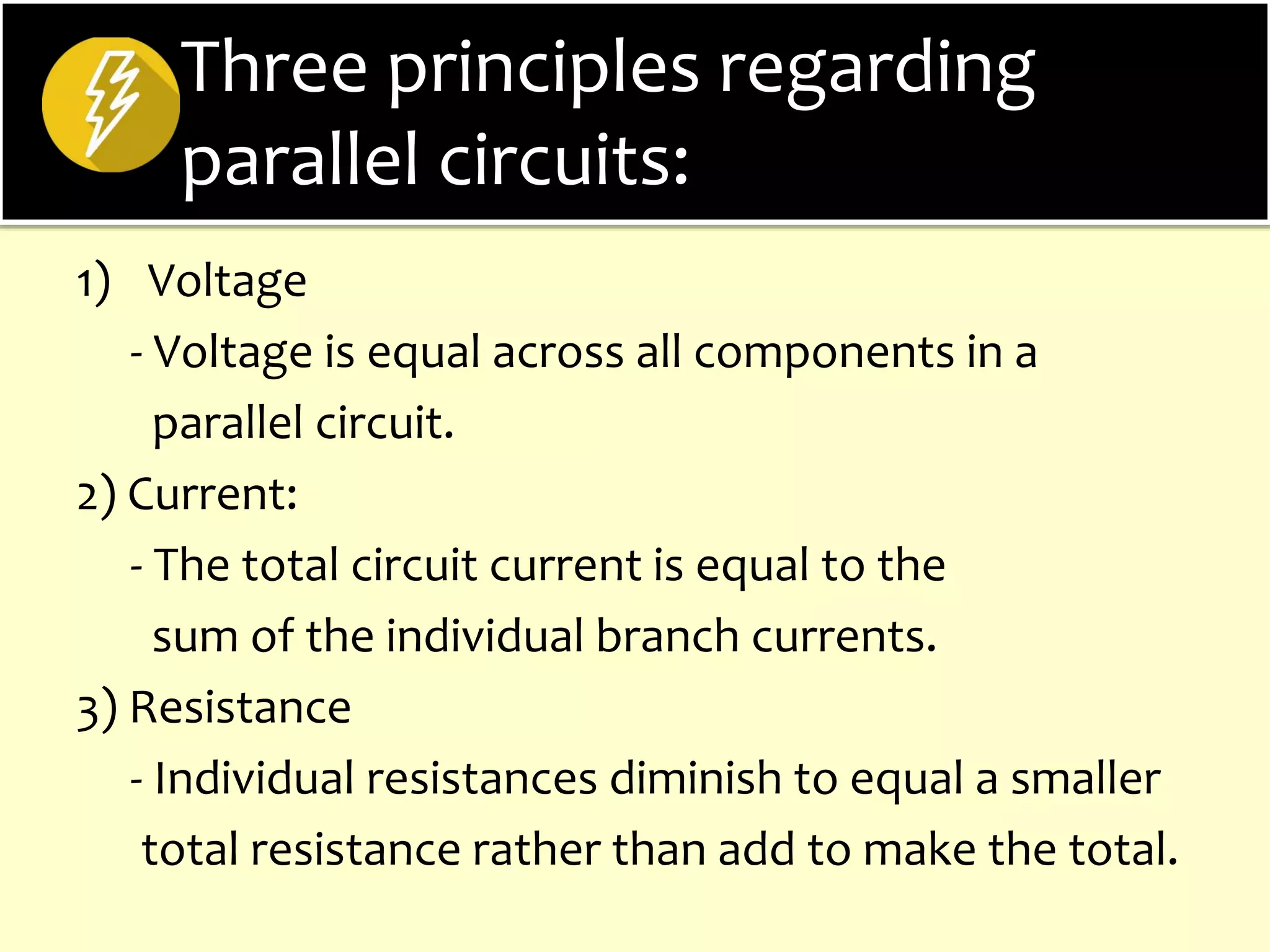
So, what exactly is correct concerning a parallel circuit? The key principle is this: in a parallel circuit, the voltage is the same across all components. But here's the juicy part: the current divides between the different branches, and the total current is the sum of the currents in each branch. Think of it like a river splitting into multiple streams – the water pressure (voltage) remains consistent, but the overall flow (current) is distributed.
Why is this beneficial? Imagine if everything in your house was wired in a series circuit. If one light bulb blew, the entire circuit would break, and everything would go dark! A parallel circuit provides redundancy and independence. Each device has its own path back to the power source, meaning that if one path is interrupted, the others remain unaffected. This is why we can use multiple appliances simultaneously without causing a complete power outage.
Must Read
The purpose of parallel circuits in everyday life is truly multifaceted. They ensure that appliances receive the correct voltage to operate efficiently. Different devices need different amounts of power, and parallel circuits allow them to draw what they need without affecting the voltage supplied to other devices. They also offer safety advantages. Circuit breakers and fuses, wired in series within a parallel circuit, are designed to protect against overloads by cutting off the current if it exceeds a safe level, preventing fires and damage to appliances.
Common examples abound! Your entire home wiring system is predominantly parallel. From the lighting fixtures and outlets to your washing machine and refrigerator, almost everything is connected in parallel. Even in your car, the headlights, radio, and other electrical components are wired in a parallel configuration.
So, how can you appreciate the elegance and effectiveness of parallel circuits even more? While you likely won't be rewiring your house anytime soon, understanding the basics can make you a more informed consumer and homeowner. For instance, pay attention to the wattage of your appliances and avoid overloading circuits. A power strip, while convenient, can quickly exceed the capacity of a single circuit, potentially tripping a breaker. Also, when replacing a light bulb, consider using energy-efficient LEDs. Because they draw less current, you can run more lights on a single circuit without exceeding its capacity. Finally, educate yourself! There are plenty of resources online that can explain parallel circuits in more detail, from simple diagrams to interactive simulations. The more you understand, the more you'll appreciate the unsung hero powering your daily life.