
Which Direction Should The Fan Spin In Summer
Hey there, friend! Ever stared up at your ceiling fan on a sweltering summer day and wondered... am I even using this thing right? We've all been there. It’s easy to take these whirly wonders for granted, but understanding which way your fan should spin in the summer can make a HUGE difference in your comfort (and your energy bill!). So, let's dive in, shall we?
The Lowdown on Downward Airflow
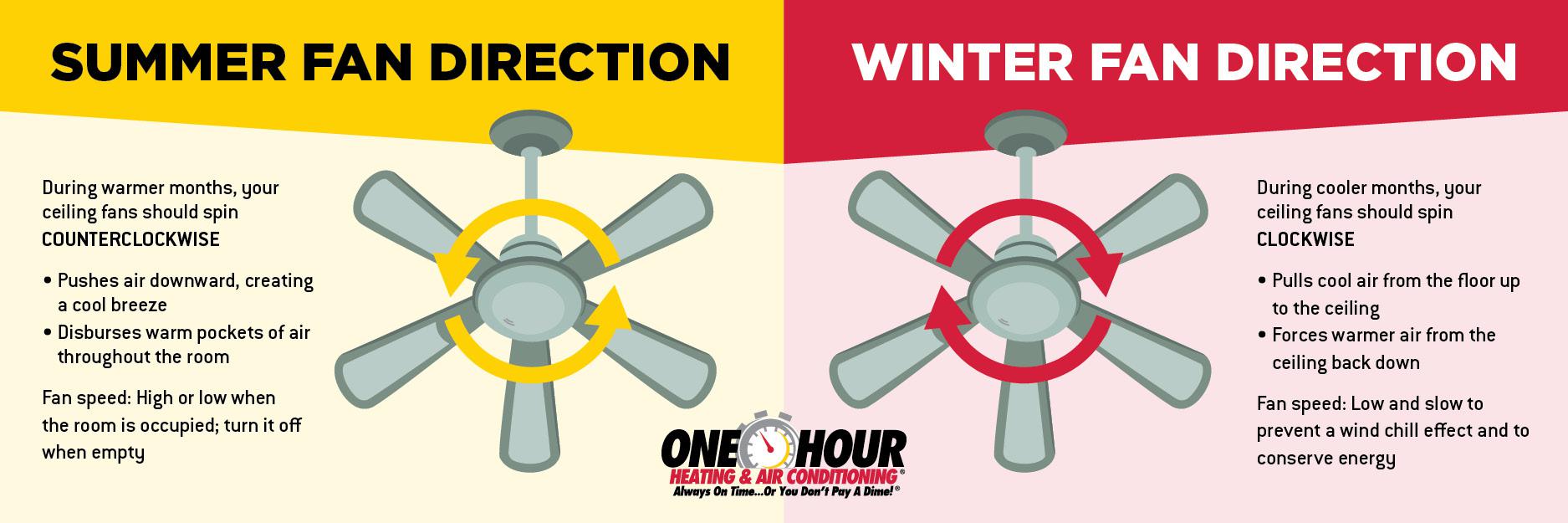
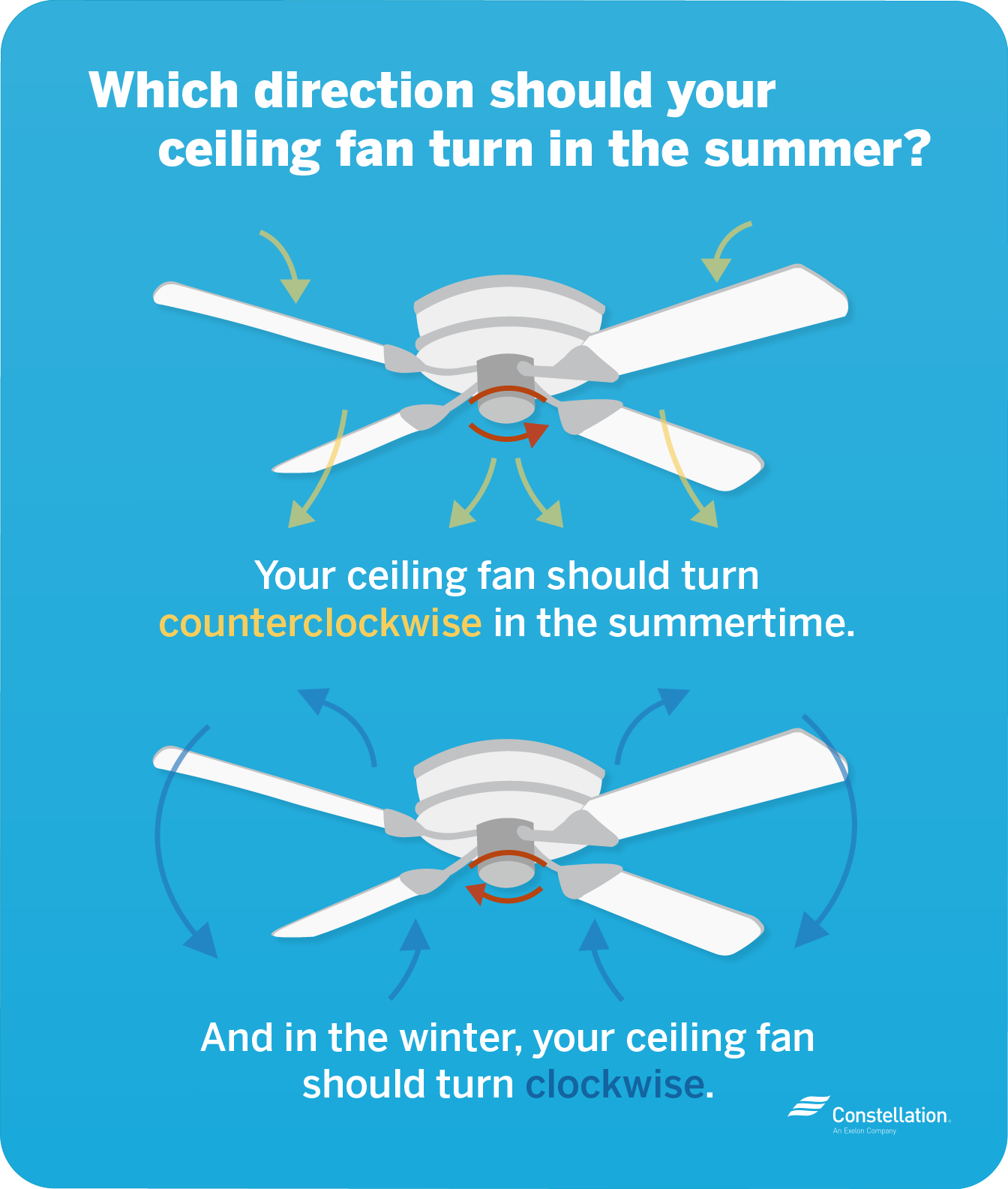
Okay, so here's the deal: in the summertime, you want your ceiling fan to spin counter-clockwise when you're looking up at it. Why, you ask? Because this creates a downward airflow. Think of it like this: your fan is trying to mimic a gentle breeze.
Imagine standing on a mountaintop feeling that refreshing gust – that’s what we’re aiming for! It's all about that wind chill effect. The moving air helps evaporate sweat from your skin, which in turn, cools you down. It’s not actually lowering the temperature of the room itself, but it feels like it is. And let’s be honest, that’s all that really matters when you're melting, right?
Must Read
Think of it like this: Imagine you're blowing on a spoonful of hot soup. What are you doing? You're creating airflow to cool it down! Your ceiling fan does the same thing for you.
How to Check (and Change!) Your Fan's Direction
Now, here's the practical part. How do you actually know which way your fan is spinning? Simple! Just stand under it and watch it for a few seconds. Is it pushing air down? Great! Is it just sort of… swirling the air around without any noticeable breeze? Then it's probably spinning the wrong way.

Most ceiling fans have a little switch, usually located on the motor housing. You might need a step stool to reach it safely. Flip that switch, and your fan should start spinning in the opposite direction. Give it a few minutes to get up to speed, then stand underneath it again to feel the difference. Ahhh, much better!
Pro Tip: Always turn the fan OFF before messing with that switch. Safety first, people!

Why Does This Even Matter? (The Energy Savings!)
Okay, so you're cooler, but is that all there is to it? Nope! By using your ceiling fan correctly, you can actually save money on your energy bill. Seriously!
Think about it: if you're comfortable with the fan running, you might be able to bump up your thermostat a few degrees. That means your air conditioner doesn't have to work as hard, which translates to lower energy consumption. It's a win-win!
Imagine this: Your AC is a marathon runner, and your ceiling fan is its trusty water bottle. The fan keeps the AC hydrated and performing at its best, preventing it from burning out too quickly (and costing you a fortune in the process!).
Beyond Cooling: A Little Air Circulation Goes a Long Way
Even if you're not using air conditioning, a ceiling fan can still be beneficial. It helps circulate the air in the room, preventing stagnant air pockets and creating a more comfortable environment. Stale air can feel stuffy and unpleasant, but a little bit of airflow can make all the difference.

It’s like this: Think of a stagnant pond versus a flowing river. Which one feels cleaner and more refreshing? The flowing river, of course! Your ceiling fan is helping your room feel more like a flowing river than a stagnant pond.
So, next time you're feeling the heat, don't just crank up the AC. Take a moment to check your ceiling fan's direction. A simple flip of a switch could make a world of difference in your comfort and your wallet. Stay cool, friends!
One Last Thought: Don't forget to dust your fan blades regularly! Dusty blades are less efficient and can even stir up allergens. A clean fan is a happy fan (and a happy you!).