
Which Direction Is A Ceiling Fan Supposed To Turn
Have you ever stared up at a ceiling fan, lost in thought, only to suddenly wonder if it's actually doing anything? We've all been there, haven’t we?
The Great Ceiling Fan Conspiracy
It's a question that's plagued homeowners and renters alike: Which way should the ceiling fan spin? Is it a clockwise conspiracy designed to lull us into a sweltering slumber? Or a counter-clockwise caper intended to freeze us in our tracks?
Let's face it, most of us just flip the switch until it feels right. But what if I told you there's actually a reason behind the spinning?
Must Read
Prepare to have your world, or at least your ceiling fan strategy, completely overturned!
Summer's Breezy Secret: Counter-Clockwise
Imagine yourself basking in the summer sun, ice cream melting faster than you can lick it. You retreat indoors, hoping for sweet relief.
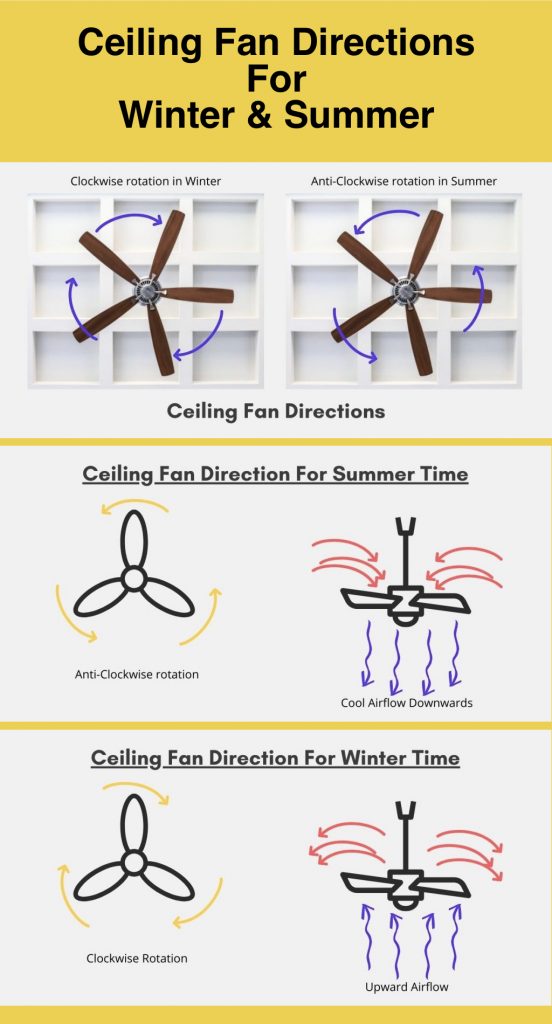
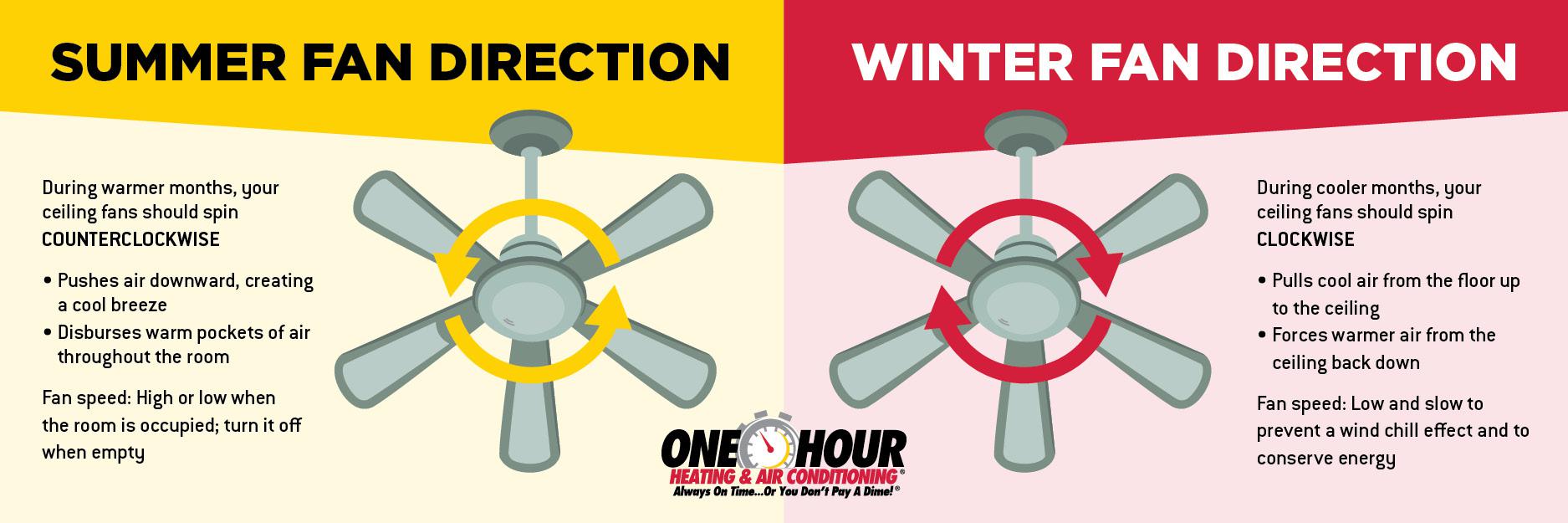
This is where the counter-clockwise direction comes to the rescue! When your ceiling fan spins counter-clockwise, it pushes air downward, creating a refreshing breeze.
Think of it like a gentle giant giving you a cool, airy hug. The feeling of the breeze helps to evaporate perspiration, making you feel cooler than you actually are.
It’s like a personal summer angel, silently battling the heat on your behalf.
"Counter-clockwise is the summer hero we all need," says Brenda, a self-proclaimed ceiling fan enthusiast. "It's saved me a fortune on my air conditioning bill!"
Brenda isn't alone. Millions rely on the counter-clockwise spin to keep cool in the summer months.
Winter's Warm Embrace: Clockwise
Now picture this: snow falling outside, a roaring fire in the fireplace (or a space heater bravely trying its best), and you're wrapped in a cozy blanket.
But something's still not quite right. The heat is all up near the ceiling, leaving your toes feeling like tiny ice cubes.
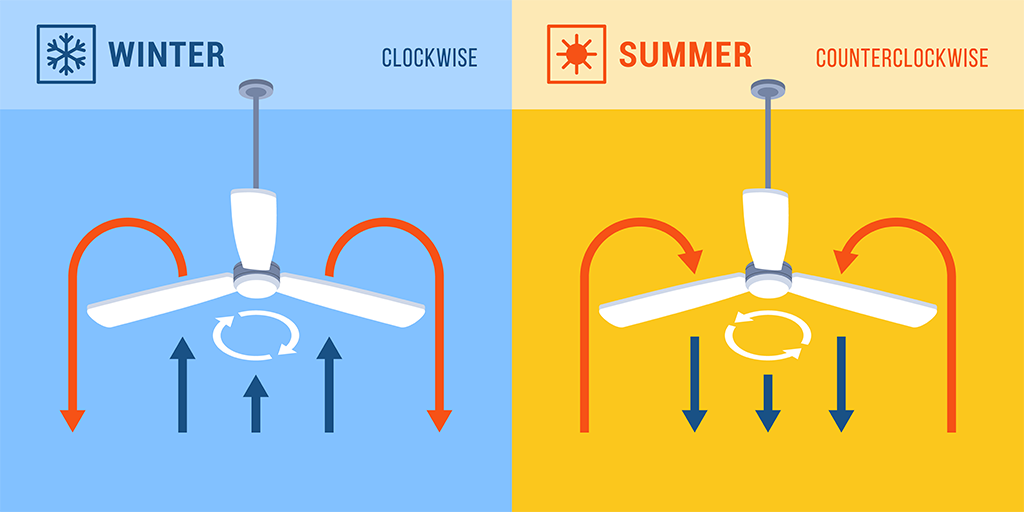
Enter the clockwise rotation! When your ceiling fan spins clockwise, it gently pulls air upward.
This forces the warm air trapped near the ceiling to circulate back down into the room, creating a more even temperature.
Think of it as a warm, gentle hand guiding the heat where it needs to go. No more cold toes!
It’s like having a personal winter wizard, conjuring warmth from the depths of the ceiling.
This might sound counterintuitive, but trust me, it works! You won't feel a direct breeze, but you will feel warmer.
It’s all about the subtle art of air circulation, folks.
The Directional Dilemma: How to Tell Which Way Is Which
Okay, so now you know why the direction matters. But how do you actually tell which way your fan is spinning?
This is where things can get a little tricky. Sometimes, it's obvious. But other times, you might need to channel your inner detective.
First, stand directly beneath the fan and look up. (Obviously, be careful not to get dizzy!)
Observe the direction of the blades. Are they moving to the left (counter-clockwise) or to the right (clockwise)?
If you're still unsure, try turning the fan off completely and waiting for it to stop. Then, turn it back on and watch closely to see which direction it starts spinning.
Many fans have a small switch on the motor housing that controls the direction. It's usually a simple up/down or left/right switch.
Consult your fan's manual (if you can find it!) for specific instructions. Or, you know, just wing it and see what happens.
The Remote Control Rebellion
And then there's the dreaded remote control. Sometimes, the buttons are labeled clearly.
Other times, they're just a series of cryptic symbols that would make an ancient Egyptian pharaoh scratch his head.
If your remote is particularly unhelpful, try pressing each button and seeing what happens. It’s a bit of a trial-and-error approach, but hey, sometimes that's the only way!
Just be prepared for anything. You might accidentally turn on the light, change the fan speed to warp drive, or even activate a hidden disco ball feature.
The possibilities are endless!
:max_bytes(150000):strip_icc()/ceiling-fan-rotate-direction-1907533-v4-5ba94e6346e0fb002576cebf.png)
The Benefits Beyond Temperature
So, we've covered the basics of clockwise vs. counter-clockwise. But did you know that using your ceiling fan correctly can actually save you money?
By circulating air more efficiently, you can reduce your reliance on your air conditioner and heater. This means lower energy bills!
Plus, a gently spinning ceiling fan can create a more comfortable and inviting atmosphere in your home.
It's like a silent, spinning hug that makes everyone feel a little bit more relaxed.
And let's not forget the aesthetic appeal. A stylish ceiling fan can be a beautiful addition to any room.
It’s a functional piece of art, silently working to keep you comfortable.
A Ceiling Fan Love Story
There once was a woman named Agnes who vehemently hated ceiling fans. She saw them as dusty, outdated relics of a bygone era.
But then, one sweltering summer day, her air conditioner broke down. Desperate for relief, she reluctantly turned on her ceiling fan.
To her surprise, she felt a cool breeze wash over her. It wasn't as powerful as the air conditioner, but it was enough to make a difference.
![Ceiling Fan Directions for Summer vs Winter [Infographic]](https://airflowacademy.com/wp-content/uploads/2021/06/Ceiling-fan-direction.jpg)
Agnes started experimenting with the fan's direction, discovering the magic of the clockwise and counter-clockwise settings.
She was amazed at how much more comfortable she felt. She even started to appreciate the fan's quiet hum.
From that day on, Agnes was a ceiling fan convert. She even gave her fan a name: Bartholomew.
Agnes and Bartholomew lived happily ever after, keeping each other cool in the summer and warm in the winter. The end.
The Ceiling Fan Whisperer: Tips and Tricks
Feeling like a ceiling fan expert yet? Here are a few extra tips to help you master the art of air circulation:
- Clean your fan blades regularly. Dust buildup can reduce efficiency.
- Consider the size of your room. Larger rooms may require larger fans.
- Adjust the fan speed to your liking. Sometimes, a gentle breeze is all you need.
- Don't be afraid to experiment. Find what works best for you and your home.
Most importantly, remember to have fun! Ceiling fans are a simple yet effective way to improve your comfort and save money.
The Final Spin
So, the next time you find yourself staring up at your ceiling fan, wondering which way it's supposed to turn, remember this: counter-clockwise for cool breezes in the summer, clockwise for warm air circulation in the winter.
And don't be afraid to experiment and find what works best for you.
Now go forth and conquer the world, one perfectly spinning ceiling fan at a time!