
Which Direction For Ceiling Fan To Cool Room
:max_bytes(150000):strip_icc()/ceiling-fan-rotate-direction-1907533-v4-5ba94e6346e0fb002576cebf.png)
Let's be honest, figuring out which way your ceiling fan should spin isn't exactly rocket science, but it can feel like a little victory when you finally get it right! Why? Because getting the direction right can make a real difference in how comfortable your home feels, and who doesn't want to save a few bucks on their energy bill while they're at it? So, let's dive into the surprisingly interesting world of ceiling fan direction!
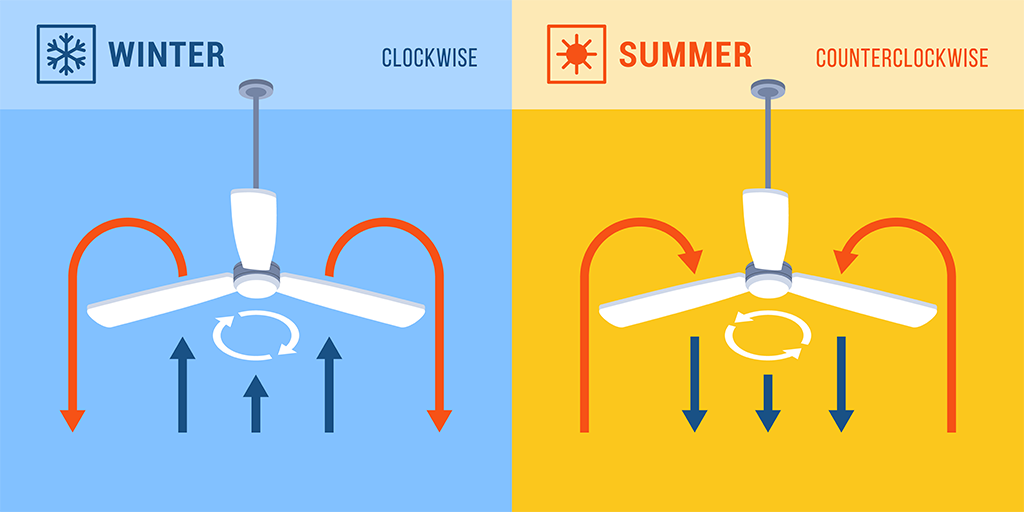
For beginners, this is all about understanding the basics. You just want a cool room, right? In the summer, your ceiling fan should spin counter-clockwise (when you're looking up at it). This creates a downward breeze that helps you feel cooler. Think of it like a gentle wind on a hot day. The movement of the air across your skin helps sweat evaporate, which cools you down. Forget about complex explanations – just remember counter-clockwise for cool!
For families, this is about keeping everyone comfortable and potentially saving some money. When it's warm, a correctly spinning fan means you might be able to nudge the thermostat up a degree or two, saving energy. It also helps circulate air, so everyone in the room benefits, not just the person directly under the fan. Plus, if you have little ones, a good breeze can make nap time that much more peaceful. Don't underestimate the power of a well-directed ceiling fan!
Must Read
For hobbyists and DIY enthusiasts, this is an opportunity to optimize your home's energy efficiency. You can even get a little geeky with it! Consider factors like the fan's blade pitch (the angle of the blades) and the height of your ceiling. A fan with a steeper blade pitch will move more air. And if you have particularly high ceilings, you might need a longer downrod (the pole that connects the fan to the ceiling) to ensure the breeze reaches you effectively. Experiment and see what works best for your specific situation. You could even track your energy usage to see the real-world impact of adjusting your fan's direction.

So, how do you actually change the direction? Most ceiling fans have a small switch located on the motor housing. This switch usually has two positions: one for summer (counter-clockwise) and one for winter (clockwise). Make sure the fan is completely off before you flip the switch – safety first! If you can't find the switch, consult your fan's manual. Once you've flipped the switch, turn the fan back on and observe the direction of the blades. If it's not spinning the way you want, flip the switch again.
Variations and examples: Some modern smart fans can even change direction automatically based on the temperature! And did you know that ceiling fans can also help distribute heat in the winter? By reversing the direction to clockwise, the fan gently pulls warm air from the ceiling down into the room. This can help even out the temperature and prevent cold spots. However, it's important to run the fan on a low speed in the winter to avoid creating a strong, uncomfortable draft.
Simple practical tips: Clean your fan blades regularly. Dust and grime can weigh down the blades and reduce their efficiency. Also, consider the size of your room when choosing a ceiling fan. A larger room will require a larger fan to effectively circulate air. Finally, don't forget to dust the motor housing – a clean fan is a happy fan!
Ultimately, knowing which direction your ceiling fan should spin is a small thing that can make a big difference in your comfort and energy bills. It's easy to do, and the payoff is a cooler, more comfortable home. So, go ahead and flip that switch! Enjoy the breeze and the satisfaction of knowing you've optimized your fan for maximum cooling power.
![Ceiling Fan Directions for Summer vs Winter [Infographic]](https://airflowacademy.com/wp-content/uploads/2021/06/Ceiling-fan-directions-infographic-768x1425.jpg)
