
Which Direction Does Ceiling Fan Turn In Winter
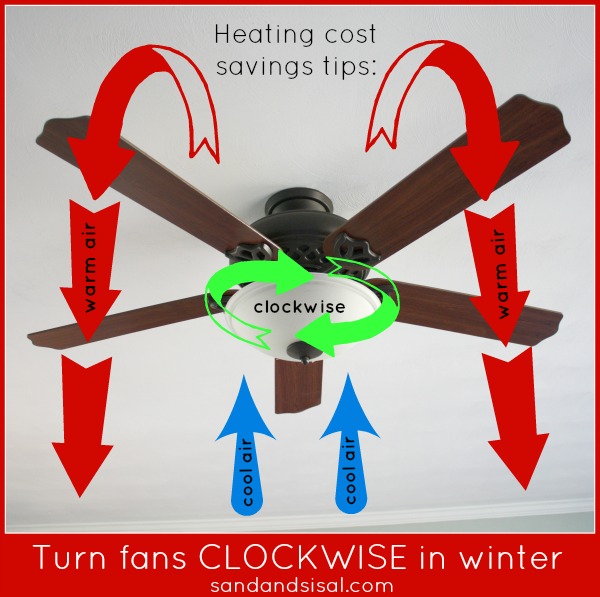
Let's be honest, there's something incredibly comforting about curling up under a blanket on a chilly winter day. But sometimes, even with the heat blasting, you still feel a bit of a chill. That's where our often-overlooked friend, the ceiling fan, can come to the rescue! We often associate ceiling fans with cooling us down in the summer, but did you know they can actually help keep you warmer in the winter?
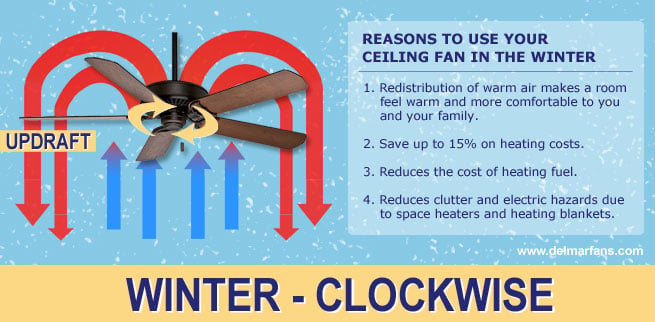
The secret lies in understanding how heat rises. Warm air, being less dense than cold air, naturally gravitates towards the ceiling. This leaves the floor area, where we spend most of our time, feeling noticeably cooler. The purpose of reversing your ceiling fan in the winter is to gently push that accumulated warm air back down towards the living space. This redistribution of warm air creates a more even temperature throughout the room, meaning you're less likely to experience cold feet and a stuffy, overheated head.
Think about it this way: you're essentially creating a gentle, invisible warm air current. This doesn't replace your heating system, of course. It's more of a supplementary tool that can help you get the most out of your heating efforts. By making your home more efficiently heated, you may even find you can lower your thermostat a degree or two, saving you money on your energy bill! Many homes already have ceiling fans installed in bedrooms, living rooms, and even kitchens, making this a readily accessible solution for many.
Must Read
So, which direction should your ceiling fan be turning in the winter? Here's the key: it should be turning in a clockwise direction when viewed from below. This is the opposite direction of the summertime setting. Most ceiling fans have a small switch, often located on the motor housing, that allows you to change the direction of rotation. Consult your fan's manual for specific instructions, but typically, you simply flip the switch.

Now, for some practical tips to enjoy the benefits of a reversed ceiling fan more effectively: first, use a low speed. You don't want a wind tunnel effect! The goal is to gently circulate the air, not create a breeze. Second, experiment with different speeds to find the setting that works best for your room and your comfort level. You should barely feel the air movement. Third, if you have high ceilings, the impact will be more noticeable than in rooms with lower ceilings. Fourth, remember to switch the fan back to its counter-clockwise rotation in the spring when you want to cool down.
Finally, if you're unsure which direction your fan is currently spinning, simply stand under it and observe the blades. If they are angled in a way that seems like they're pushing air down, it's likely in the summer setting. If they appear to be drawing air up, it's probably in the winter setting. Embrace this simple trick and enjoy a warmer, more comfortable winter without cranking up the heat!
![Ceiling Fan Directions for Summer vs Winter [Infographic]](https://airflowacademy.com/wp-content/uploads/2021/06/Ceiling-fan-directions-infographic-768x1425.jpg)
![Ceiling Fan Directions for Summer vs Winter [Infographic]](https://airflowacademy.com/wp-content/uploads/2021/06/Ceiling-fan-direction.jpg)