
Which Direction Does Ceiling Fan Go In Summer

Okay, picture this: it's July, the sun is angry, and your AC is staging a dramatic strike. You’re sweating more than a politician under oath. You glance up. Hope flickers. There it is, your trusty ceiling fan, ready to spin you to salvation… but wait! Is it spinning the right way?
Because, and this is crucial, a ceiling fan spinning the wrong way in summer is like offering someone a lukewarm lemonade on a day like that. It's just… cruel. So, let's tackle this burning question (pun intended): which direction does your ceiling fan need to be twirling to actually, you know, cool you down?
The Great Summer Spin: Counter-Clockwise is Key!
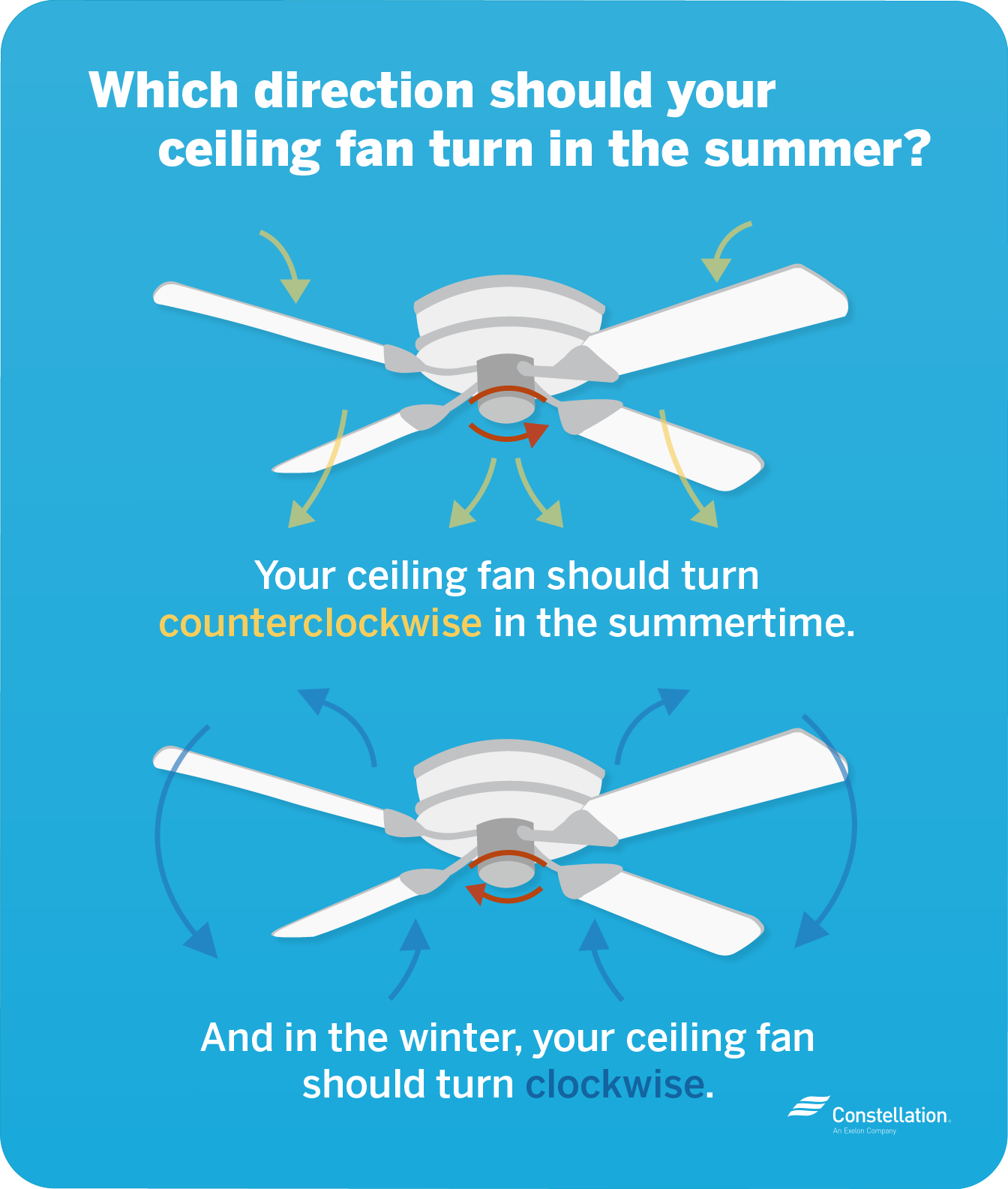
Here's the simple, non-negotiable truth: for maximum summer chill, your ceiling fan needs to be spinning counter-clockwise. Imagine you're lying on the floor staring up at it (don’t actually do that, unless you enjoy a mild case of dizziness and a crick in your neck). The blades should be moving from right to left.
Must Read
Think of it like this: the fan is mimicking a tiny, indoor tornado… a benevolent tornado of cool air. Instead of ripping your house apart, it's pushing air straight down, creating a delightful breeze that evaporates sweat and makes you feel less like a melting popsicle. It’s basically personal weather control!
Why counter-clockwise? Because the angled blades are designed to scoop up the air and force it downwards. This creates that glorious, life-affirming breeze. Clockwise? That's a whole different ballgame, a game best left for those brisk autumn evenings when you actually want the air to circulate without creating a gale-force wind in your living room.
How to Tell If Your Fan is a Summer Hero (or a Winter Villain)
Alright, Sherlock, time for some detective work. How do you know which way your fan is currently operating? Easy peasy!
:max_bytes(150000):strip_icc()/ceiling-fan-rotate-direction-1907533-v4-5ba94e6346e0fb002576cebf.png)
First, observe. Stand beneath the fan (safely!) and watch it for a bit. Which way are the blades moving? Right to left (counter-clockwise) is your summer friend. Left to right (clockwise) is a sign that it’s time to switch things up.
Second, the switch. Most ceiling fans have a small switch located on the motor housing, usually near the light fixture. This switch is your key to unlocking summer coolness. Flipping it reverses the direction of the fan. It’s like giving your fan a personality transplant! Be warned: sometimes this switch is surprisingly stubborn. You might need to jiggle it a bit. Channel your inner mechanic!
Pro Tip: Make sure the fan is completely stopped before you flip that switch. Otherwise, you might hear some concerning grinding noises, and no one wants that. Think of it like shifting gears in a car – you wouldn't do it while you're flooring it, right? (Okay, maybe you would, but your mechanic wouldn't be happy).

Ceiling Fan Myths and Misconceptions (Debunked!)
Now, let's address some common ceiling fan folklore. There are more urban legends about ceiling fans than there are dust bunnies lurking beneath your sofa.
Myth #1: A ceiling fan cools the room. Nope! Ceiling fans don't actually lower the temperature of the room. They cool you by creating a breeze that evaporates sweat. It's a personal cooling system, not a room-wide AC replacement.
Myth #2: Leaving a ceiling fan on when you're not in the room saves energy. False! A ceiling fan only cools people, not empty space. If no one's there to enjoy the breeze, you're just wasting electricity. It's like throwing a party and inviting only the furniture.
Myth #3: All ceiling fans are created equal. Oh, sweet summer child. Ceiling fans come in all shapes, sizes, and levels of effectiveness. A tiny, decorative fan isn't going to move nearly as much air as a larger, more powerful model. Think of it like comparing a chihuahua to a St. Bernard. Both are dogs, but only one is going to keep you warm on a cold night (or, in this case, cool on a hot day).
The Unexpected Benefits of a Properly Spinning Fan
So, you've got your fan spinning counter-clockwise. Congratulations! You're on your way to a cooler, more comfortable summer. But the benefits don't stop there!
Lower energy bills: By using your ceiling fan in conjunction with your AC, you can often raise the thermostat a few degrees without sacrificing comfort. This can save you a surprising amount of money on your energy bill. Think of it as a secret weapon against the electric company!
![Ceiling Fan Directions for Summer vs Winter [Infographic]](https://airflowacademy.com/wp-content/uploads/2021/06/Ceiling-fan-directions-infographic-768x1425.jpg)
Improved air circulation: Even when you're not trying to cool down, a ceiling fan can help to circulate the air in your home, preventing stuffiness and stale odors. It's like giving your house a breath of fresh air (literally).
A more stylish home: Let's be honest, some ceiling fans are downright gorgeous. They can add a touch of elegance and sophistication to any room. Plus, they can hide those unsightly ceiling blemishes… a win-win!
So there you have it! Everything you ever wanted to know (and probably more) about ceiling fans and the all-important question of which way they should spin in the summer. Now, go forth and conquer the heat! And remember, counter-clockwise is your friend. Unless, of course, it's autumn. Then, flip that switch and embrace the warmth!