
Which Direction Does A Ceiling Fan Turn To Cool
:max_bytes(150000):strip_icc()/ceiling-fan-rotate-direction-1907533-v4-5ba94e6346e0fb002576cebf.png)
Okay, so we're sitting here, probably sweating a little (or maybe that's just me?), and the question is nagging at us: Which way does that ceiling fan actually need to spin to, you know, not make us feel like we're melting into the furniture?
It's a question for the ages, really. Right up there with "Where did I put my keys?" and "Is pineapple on pizza really a crime?" Deep stuff.
Summer Mode: Let's Get This Air Movin'!
Alright, let's cut to the chase. When you're battling the summer heat, you want your ceiling fan to spin counter-clockwise. Yeah, counter-clockwise, as in, opposite of a clock. Like it's running away from time itself! Dramatic, I know.
Must Read
Think of it this way: you want the fan blades to push the air down. This creates a nice, refreshing breeze that makes you feel like you're standing in front of a slightly less angry sun. The breeze evaporates sweat, which, trust me, is a major win.
How does it work? Well, the rotating blades push air downwards, creating a direct, cooling breeze. It's like the fan is giving you a personal high-five made of air. A very, very subtle high-five.
![Ceiling Fan Directions for Summer vs Winter [Infographic]](https://airflowacademy.com/wp-content/uploads/2021/06/Ceiling-fan-directions-infographic-828x1536.jpg)
Seriously, check it out. Stand directly under the fan. Feel that? That's the sweet, sweet relief of counter-clockwise action. If you don't feel anything, well, either the fan's broken (bummer!) or it's spinning the wrong way. Or maybe you're a superhero with immunity to breezes. In which case, awesome, but this article probably isn't for you.
Pro Tip: Most ceiling fans have a little switch on the motor housing that lets you change the direction. It might be a small slider, a button, or even a pull-chain (vintage!), but it's there. Hunt for it! You'll feel like Indiana Jones discovering the Ark of the Covenant, only instead of ancient treasure, you get slightly cooler air. Almost as exciting.
Winter Mode: Stirring Up Warmth (Not Trouble!)
Now, hold on a sec. Because here's the curveball: what about when the weather turns frosty and you're trying to conserve energy and avoid becoming an ice sculpture?

That's when you switch gears – literally! In the winter, you want your fan to spin clockwise.
Why? Because warm air rises. And if you're relying on your heater, all that lovely warm air is probably congregating near the ceiling, having a party that you're not invited to. Cruel, right?
By spinning clockwise, the fan gently pulls the warm air down, circulating it throughout the room. It's not about creating a direct breeze in this case; it's about redistributing the warmth. It's like the fan is a tiny, air-based Robin Hood, stealing warmth from the rich (the ceiling) and giving it to the poor (your freezing toes).
![Ceiling Fan Directions for Summer vs Winter [Infographic]](https://airflowacademy.com/wp-content/uploads/2021/06/Ceiling-fan-direction.jpg)
You might not feel a noticeable breeze in winter mode, and that's totally fine! The goal is to make the room's temperature more even, not to create a wind tunnel.
Important Note: Running your fan in winter mode can actually save you money on heating costs. Pretty cool, huh? (Pun intended, naturally.)
In Summary (Because Summaries are Always Helpful!)
So, let's recap, just to make sure we're all on the same page (and not shivering or sweating unnecessarily):
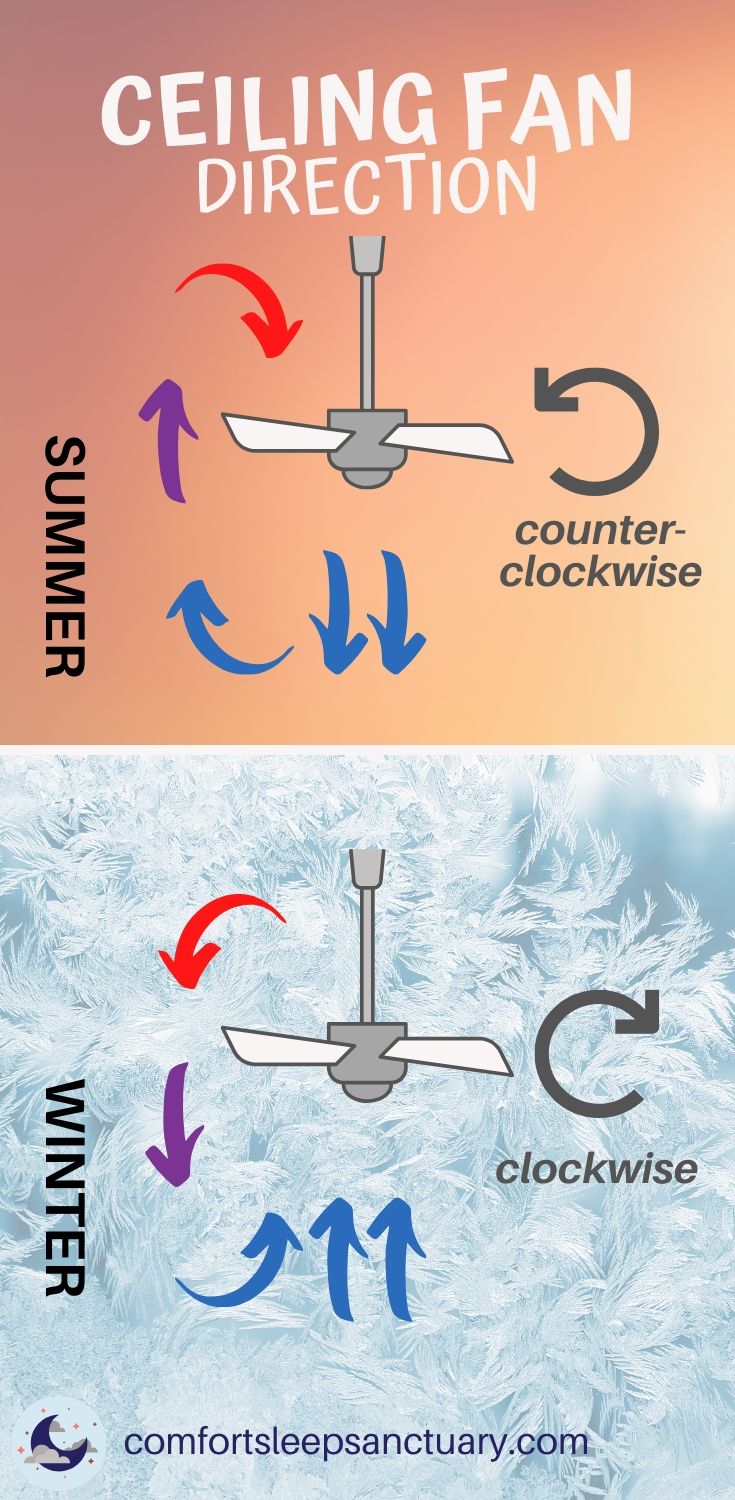
- Summer: Counter-clockwise = Cooling breeze
- Winter: Clockwise = Warm air circulation
There you have it! Ceiling fan direction demystified. Now you can confidently adjust your fan and bask in the perfect temperature. You're welcome! Now, where's my iced coffee?
Seriously, though, experiment a little! Every room is different, and you might find that a slightly faster or slower speed works best for you. It's all about finding that Goldilocks zone of air circulation. Not too breezy, not too still...just right.
And if all else fails, just blame the fan. It can't argue back. Just kidding! (Mostly.)