
Where Do You Find The Wattage On A Microwave
Okay, so you’re staring at your microwave, maybe contemplating a late-night snack (we’ve all been there!), and a recipe demands to know its wattage. Panic sets in. Do you need to call a microwave whisperer? Nope! Finding that magic number is usually way easier than you think. Let's ditch the detective work and get to the good stuff – warm, delicious food!
Why Does Wattage Even Matter?
First things first, why is wattage such a big deal anyway? Well, simply put, it's a measure of your microwave's power. The higher the wattage, the faster your food will cook. A recipe designed for a high-wattage microwave might leave your food a soggy, undercooked mess in a low-wattage one. (Trust me, I've learned this the hard way with questionable popcorn experiments.)
Imagine wattage like the gas pedal in a car. More wattage? You're zooming! Less wattage? You're taking the scenic route...to lukewarm leftovers.
Must Read
The Great Microwave Wattage Hunt: Where to Look
Alright, let's get down to business. Time to unleash your inner Sherlock Holmes (but with better snacks, hopefully).
1. The Obvious Suspect: The Front of the Microwave
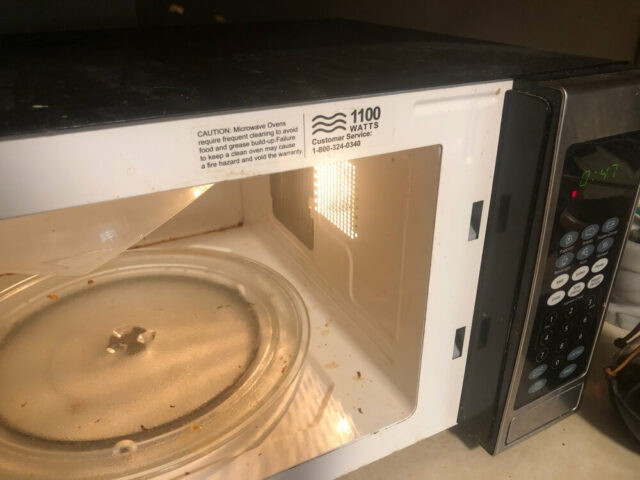
This is your best-case scenario. Some microwaves are kind enough to proudly display their wattage right on the front! Look for a sticker, a printed number, or even a raised label. It might say something like “1000 Watts” or simply “1000W.” If you see it, celebrate! You've just won the microwave wattage lottery! Now, go make some microwave mug cake, you deserve it!
2. The Back Panel: A Clue Worth Pursuing
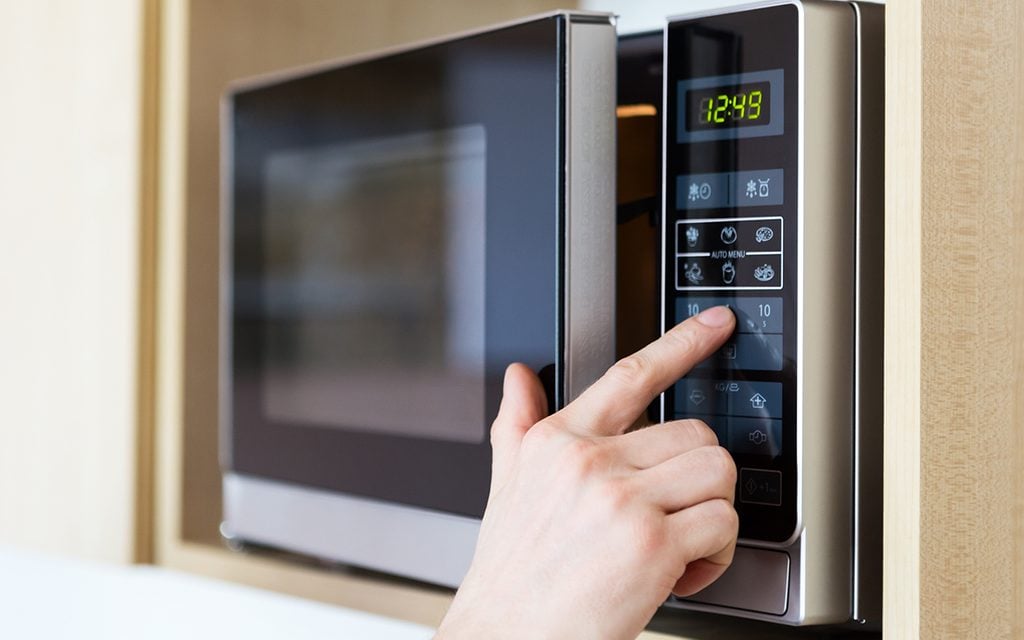
If the front is a no-go, don't despair. Head around to the back of the microwave. This is often where you’ll find a manufacturer's sticker or plate. This sticker usually contains all sorts of technical information, including (you guessed it!) the wattage. Look closely! It might be a bit small and hidden amongst other numbers and symbols, but keep your eyes peeled. You're hunting for that "Watts" or "W" abbreviation again.
Be careful when moving the microwave, especially if it's been a while since you last cleaned behind it...dust bunnies can be surprisingly aggressive.

3. Inside the Door Frame: A Secret Message?
Another spot to check is the inside of the door frame. Sometimes, manufacturers will sneak the wattage information onto a sticker or plate hidden near the door. Open the microwave and carefully inspect the area around the edges. It's like finding a secret message from the microwave gods!
4. The Owner's Manual: When All Else Fails
Okay, so you've checked the front, the back, and the door frame, and still nothing. Don't throw in the towel just yet! This is where that dusty owner's manual in the back of your junk drawer comes in. (Yes, the one you swore you'd never need.) Dig it out, flip through the pages, and look for the specifications section. The wattage should be listed there. If you've managed to hold onto it, that is. Kudos to you, organizational superstar!
If you've misplaced the physical manual (join the club!), try searching online for the model number of your microwave along with the words "owner's manual" or "specifications." You might be able to find a digital version.
5. The Model Number: Your Online Savior
Speaking of model numbers, even if you can't find the owner's manual, the model number itself can be a lifesaver. Locate the model number on the back or inside the door of the microwave. Then, type it into your favorite search engine, along with the word "wattage." Chances are, someone, somewhere, has already asked this very question and an answer awaits! The internet is your friend!
Still Stuck? Here's a (Slightly) Less Accurate Method
If you've exhausted all other options and are still wattage-less, there's one last resort. This isn't super precise, but it can give you a general idea. Microwaves are often categorized by size and wattage, so if you know the approximate size of your microwave (compact, mid-size, large), you can guesstimate. Compact microwaves tend to be lower wattage (around 600-800 watts), while larger ones are usually higher (900-1200 watts or more). However, this is just a guess, so use it with caution!
Remember, it's always better to err on the side of caution and start with shorter cooking times when you're unsure of the wattage.
Success! Now Go Microwave Something Delicious!
And there you have it! You've successfully navigated the mysterious world of microwave wattage. Armed with this knowledge, you can now confidently conquer any recipe and avoid those dreaded undercooked or overcooked disasters. Go forth and microwave with confidence! Your taste buds will thank you.
Seriously, though, isn't it a great feeling to solve a little mystery? Now, treat yourself to that late-night snack. You've earned it!