
Where Are The Noble Metals On The Periodic Table
Ever feel like some elements are just… fancier than others? Like they get all the red-carpet treatment while poor old sodium's stuck getting tossed into salt shakers? Well, you're not wrong! Let's talk about the "noble" elements – the rockstars of the periodic table!
Now, you might be picturing knights in shining armor, or maybe a bunch of elements wearing monocles and top hats. While that image is undeniably hilarious, the truth is a little less Monty Python and a lot more…chemistry.
The Royal Lineage: Noble Metals, Unveiled
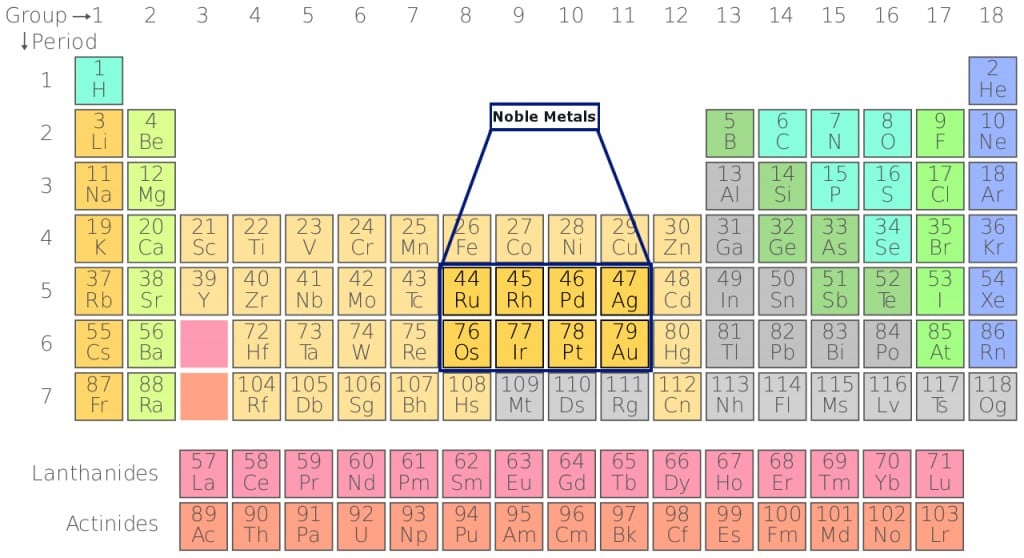
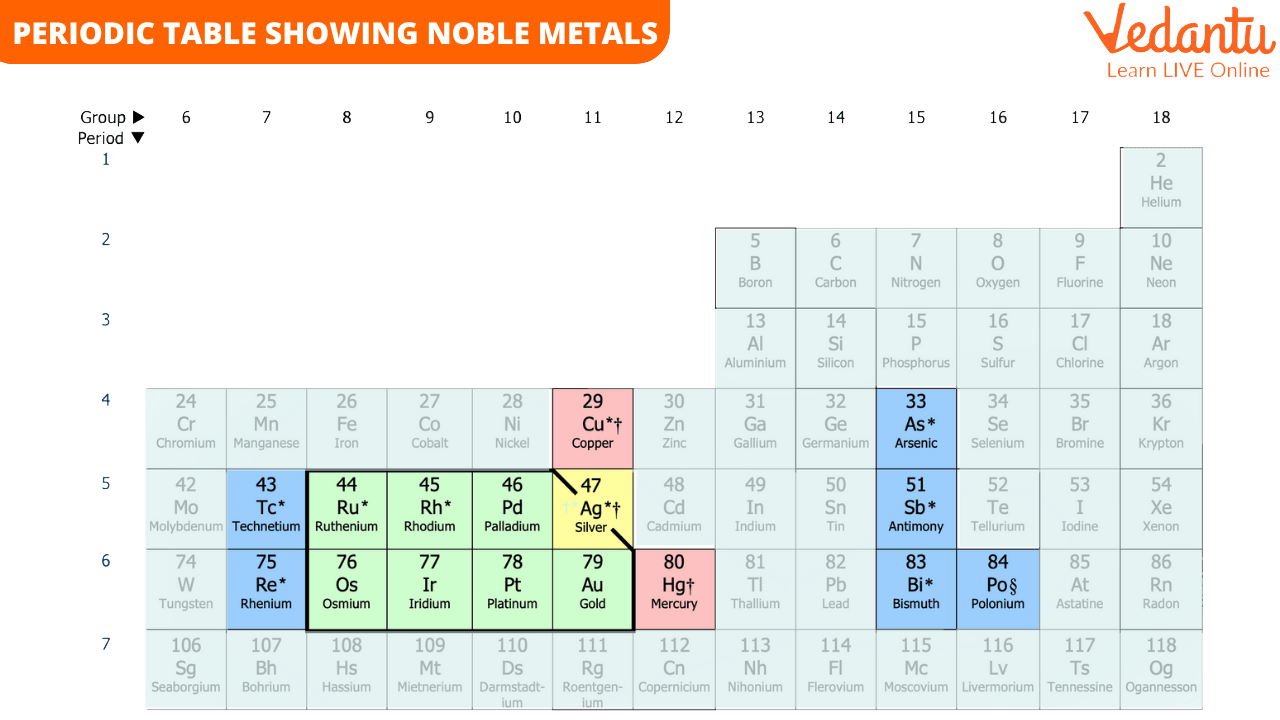
So, where do we find these noble dudes? They aren't scattered all over the place. Think of them as living in a few exclusive neighborhoods on the periodic table's swanky side of town.
Must Read
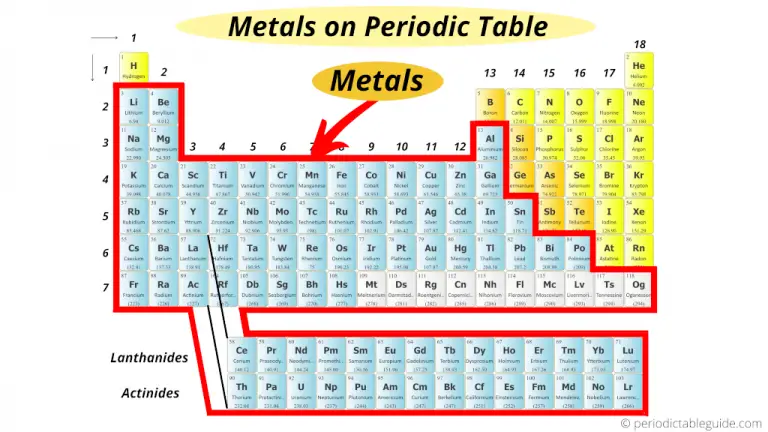
Most of them hang out in the d-block, also known as the transition metals. These guys are located in the center of the periodic table, the zone of the table that looks like it bulges out.
Specifically, we're talking about a cluster of elements like gold (Au), silver (Ag), platinum (Pt), palladium (Pd), rhodium (Rh), ruthenium (Ru), iridium (Ir), and osmium (Os). Notice a pattern? They're all incredibly valuable.
Think of it like this: if the periodic table were a high school, the noble metals would be the popular kids. They're in the best clubs and everyone wants to be around them, especially the jewelers and electronics manufacturers.
Gold (Au): The King of Cool
Let's start with the most famous noble metal: gold (Au)! Gold is the element equivalent of that celebrity who never seems to age and is always effortlessly stylish.
It's been prized for its beauty and rarity for literally thousands of years. From ancient Egyptian pharaohs to modern-day rappers, gold has always been a symbol of wealth and status.
And unlike some metals that tarnish and corrode at the drop of a hat (or a raindrop), gold just stays golden. It's so unreactive, it can practically laugh in the face of oxygen and most acids.
Silver (Ag): The Shiny Sidekick
Next up, we have silver (Ag), the trusty sidekick to gold. While it might not be quite as flashy as its golden counterpart, silver is still incredibly valuable and versatile.
Silver is super reflective, which is why it's used in mirrors. Silver also has fantastic electrical conductivity, making it essential in electronics, imagine your phone without silver circuits!
Plus, silver has antibacterial properties. This is why people once used silver utensils, you would be fighting germs whilst eating!
Platinum (Pt) and Palladium (Pd): The Catalytic Converters
Now let's talk about platinum (Pt) and palladium (Pd). These two noble metals are the workhorses of the automotive industry, acting as key components in catalytic converters.
Catalytic converters are essential in reducing harmful emissions from car exhaust. Platinum and palladium act as catalysts, speeding up chemical reactions that convert nasty pollutants into less harmful substances like carbon dioxide and water vapor.
So, the next time you're stuck in traffic, take a moment to appreciate platinum and palladium for helping to keep the air a little cleaner.
Rhodium (Rh) and Ruthenium (Ru): The Hardening Heroes
Let's not forget rhodium (Rh) and ruthenium (Ru), the lesser-known but equally important noble metals. These elements are incredibly hard and corrosion-resistant, making them ideal for hardening alloys.
Think of them as the bodyguards of the noble metal world, protecting their softer counterparts from wear and tear. Rhodium, in particular, is often used to plate jewelry, giving it a brilliant, durable finish.
Ruthenium is a key component in electrical contacts and is also used as a catalyst in various chemical processes. Without these guys, many technologies we rely on wouldn't be possible.
Iridium (Ir) and Osmium (Os): The Density Champions
Finally, we have iridium (Ir) and osmium (Os), the density champions of the noble metals. These elements are so dense, they're practically black holes in metal form.
Iridium and osmium are incredibly hard and resistant to corrosion. They're often used in high-wear applications, such as electrical contacts, fountain pen tips, and scientific instruments.
Osmium is so dense that, if you had a basketball made of pure osmium, it would weigh as much as a small car! Okay, maybe not a small car, but definitely heavier than you'd expect!
Why Are They So Noble, Anyway?
So, what makes these metals so "noble"? It all comes down to their electron configurations. Their outermost electron shells are filled or nearly filled, making them very stable and unreactive.
Think of it like this: they're so content with themselves, they don't feel the need to bond with other elements. It's like they're saying, "I'm good, I don't need your drama!"
This lack of reactivity is what makes them so valuable. They don't tarnish, corrode, or easily react with other elements, which means they maintain their beauty and integrity for a long time.

Beyond Jewelry and Catalytic Converters
While jewelry and catalytic converters might be the most well-known applications of noble metals, they're used in a wide range of other industries too. From electronics to medicine, noble metals play a vital role in modern technology.
They're used in everything from pacemakers to computer hard drives to fuel cells. And as technology continues to advance, the demand for noble metals is only going to increase.
So, the next time you see a piece of gold jewelry or drive a car, remember the noble metals and their unique properties that make them so essential to our world. They really are the cool kids of the periodic table!
The Noble Metals: A Summary
To recap, the noble metals are: gold, silver, platinum, palladium, rhodium, ruthenium, iridium, and osmium. They reside in the d-block (transition metals) section of the periodic table.
These elements are prized for their rarity, beauty, and resistance to corrosion. They are also unreactive and very stable.
From jewelry to electronics to catalytic converters, noble metals play a crucial role in our daily lives. They're not just pretty faces; they're also incredibly useful and essential elements. So appreciate these elements of prestige!