
Where Are The Metalloids Located On The Periodic Table

Ever stared at the Periodic Table and felt like you were deciphering an alien language? Don't worry, you're not alone! It looks intimidating, but it's actually a pretty organized map of all the known elements in the universe. Today, we're going on a treasure hunt to find the elusive metalloids.
Imagine the Periodic Table as a giant apartment building. Each element has its own little apartment (a square, obviously!). We're not looking for the shiny gold apartments (metals) or the drafty, gas-filled penthouses (nonmetals). Nope, we're looking for the ones right in between – the metalloids, the swing states of the element world!
The Zigzag Line: Your Metalloid Compass
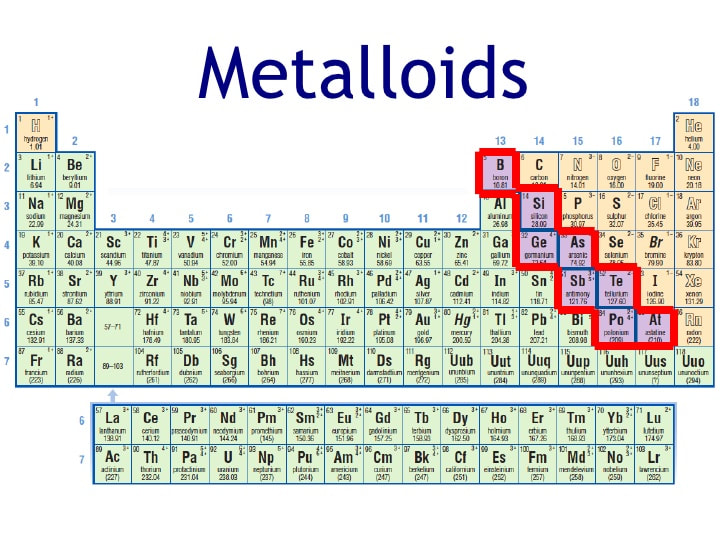
Here's the secret weapon in our hunt: the zigzag line! See that thick, stair-step line running diagonally down the right side of the Periodic Table? That’s your metalloid compass.
Must Read
It's like a magical barrier separating the metals (the cool kids on the left) from the nonmetals (the rebels on the right). The elements that are touching this line are generally considered the metalloids, and they act like the mediators in a high-school cafeteria, trying to keep everyone happy. They are the ones that straddle both worlds!
Think of it like this: metals are the rock stars with their shiny guitars and loud amps, and nonmetals are the poets with their introspective verses and quiet coffee shops. Metalloids are the sound engineers, figuring out how to make both sound good together. They're the bridge between two different worlds!
Meet the Usual Suspects: The Famous Metalloids
Let’s introduce you to some of the most common metalloids. These guys are like the A-list celebrities of the metalloid world. You've probably heard of some of them.
First up, we have Boron (B). Boron is a lightweight element known for its hardness and high melting point. It's essential for plant growth, so you can thank Boron for your beautiful garden! It's also used in some pretty tough materials, like certain types of glass and ceramics.
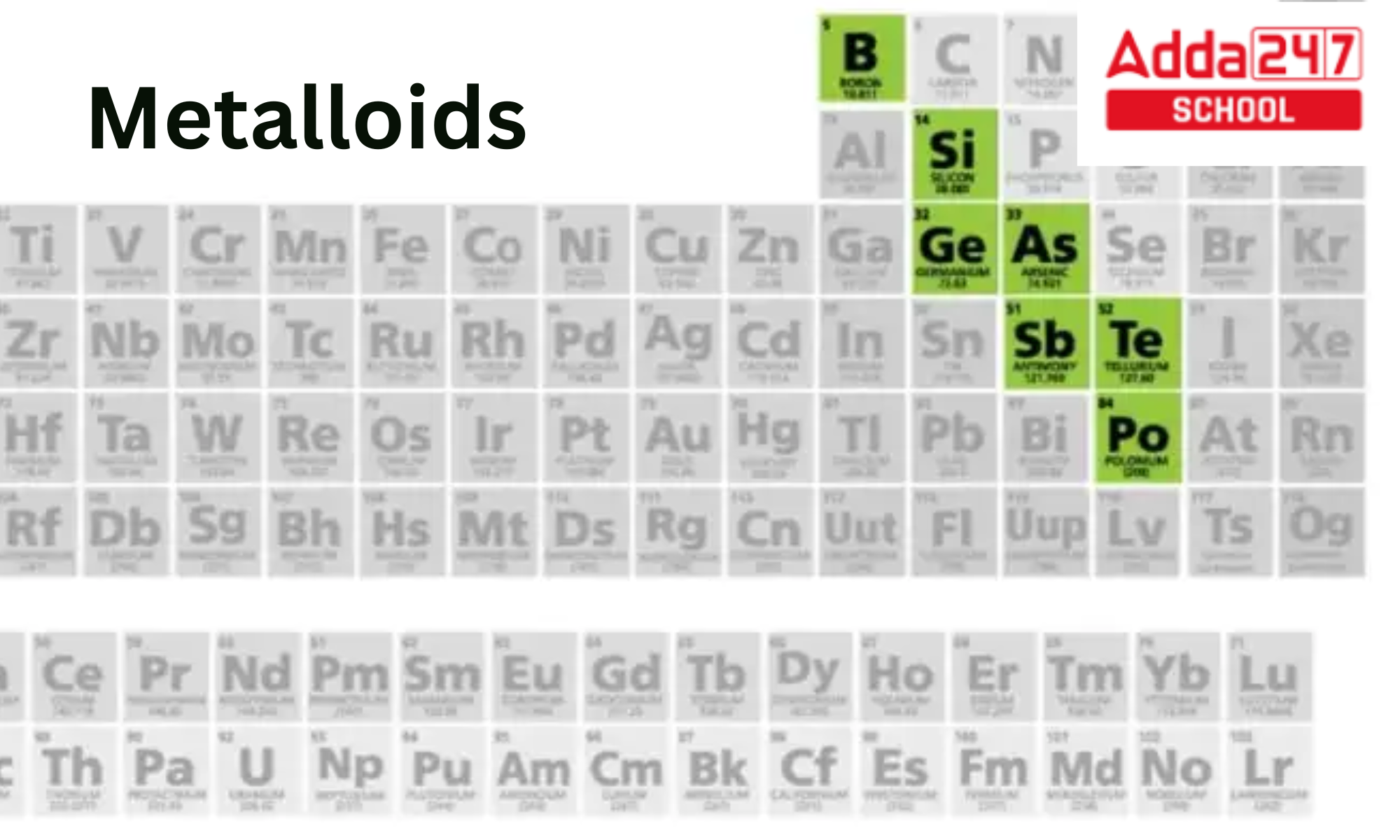
Next, there's Silicon (Si). Ah, Silicon, the king of the tech world! This is probably the most famous metalloid, the star of the show in our computers, smartphones, and pretty much every electronic device you use.
Seriously, if Silicon disappeared tomorrow, we'd be back in the Stone Age, communicating with carrier pigeons and writing on cave walls. Silicon is also a major component of sand, so next time you're at the beach, remember you're surrounded by the power of metalloids!
Then we have Germanium (Ge). Germanium was once a big deal in early transistors, but Silicon stole its thunder. Still, Germanium has its uses in infrared optics and some solar cells. Think of Germanium as the reliable, slightly overlooked sidekick to Silicon's superstar.
Don't forget Arsenic (As). Okay, Arsenic has a bit of a bad reputation, thanks to its history as a poison. But before you picture evil villains twirling their mustaches, know that Arsenic also has some legitimate uses, mainly in alloys and some specialized semiconductors. It's a metalloid with a dark past, but a potentially bright future!
And let’s not forget Antimony (Sb). Antimony is used to harden alloys, especially lead. It also finds its way into flame retardants, making things safer. Antimony is like the silent guardian, protecting us from fire with its metallic/non-metallic superpowers.

Finally, there's Tellurium (Te). Tellurium is a rare metalloid used in solar cells and some alloys. It helps improve the machinability of certain metals. It is a metal element that helps other metals to perform their work.
What Makes a Metalloid a Metalloid? The Balancing Act
So, what exactly is a metalloid? They're the chameleons of the element world, possessing properties of both metals and nonmetals. It's all about flexibility and adaptability, which is pretty cool!
For example, they can sometimes conduct electricity like metals, but not as well. It is like a dimmer switch. Sometimes they can form bonds like nonmetals, but not always. They're not entirely one thing or the other; they're a little bit of both. It makes the metalloids useful in the world of semiconductors.
Think of metalloids as the ultimate diplomats. They can talk to both the metal and nonmetal sides and find common ground. This makes them incredibly useful in various applications, especially in electronics and materials science.
Metalloids: The Unsung Heroes of Modern Technology
Without metalloids, our modern world would look very different. Remember Silicon? It's the backbone of the entire computer industry. From your smartphone to the supercomputer that predicts the weather, Silicon is hard at work.
Many metalloids, like Silicon and Germanium, are semiconductors. This means they can control the flow of electricity, which is essential for creating transistors and other electronic components. They are like tiny on/off switches that make all our gadgets work.
Solar panels also rely heavily on metalloids. These elements help convert sunlight into electricity, providing a clean and renewable energy source. They're like tiny solar-powered superheroes, saving the planet one electron at a time!
A Few Caveats: It's Not Always Black and White
Now, here's a little disclaimer: the definition of a metalloid isn't always crystal clear. Some elements are borderline cases, and scientists sometimes disagree about whether they truly qualify as metalloids. It's a bit like arguing about whether Pluto is a planet – things can get heated!
Also, the properties of an element can change depending on the conditions. For example, an element might act more like a metal under certain temperatures or pressures. Nature loves to keep us on our toes!

So, don't be surprised if you see slightly different lists of metalloids depending on where you look. The important thing is to understand the general concept: metalloids are the elements that bridge the gap between metals and nonmetals, and they play a vital role in our world.
The Metalloid Treasure Hunt: Concluded!
Congratulations, you've successfully navigated the Periodic Table and located the metalloids! You now know where to find these fascinating elements and why they're so important.
Next time you're using your smartphone, watching TV, or admiring a beautiful piece of glass, remember the metalloids. They're the unsung heroes of modern technology, quietly working behind the scenes to make our lives easier and more connected.
So go forth and impress your friends with your newfound knowledge of the Periodic Table! And remember, chemistry isn't just a subject in school; it's the science of everything around us, from the air we breathe to the devices we use every day.