Where Are Rare Earth Metals On The Periodic Table
Ever feel like you're surrounded by magic? From the glowing screen you're reading this on to the hum of your hybrid car, a little bit of wizardry is indeed at play – and it often comes down to some fascinating elements huddled together on the periodic table: the rare earth metals. We might not think about them often, but these elements are the unsung heroes powering much of our modern world. They're like the supporting cast in a blockbuster movie, quietly but essential ensuring everything runs smoothly.
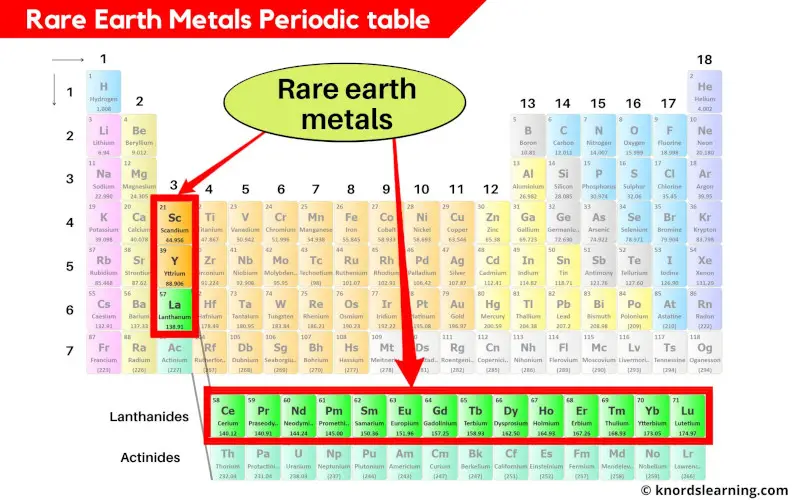
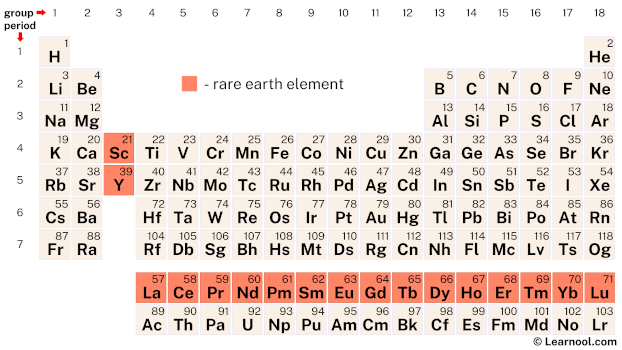
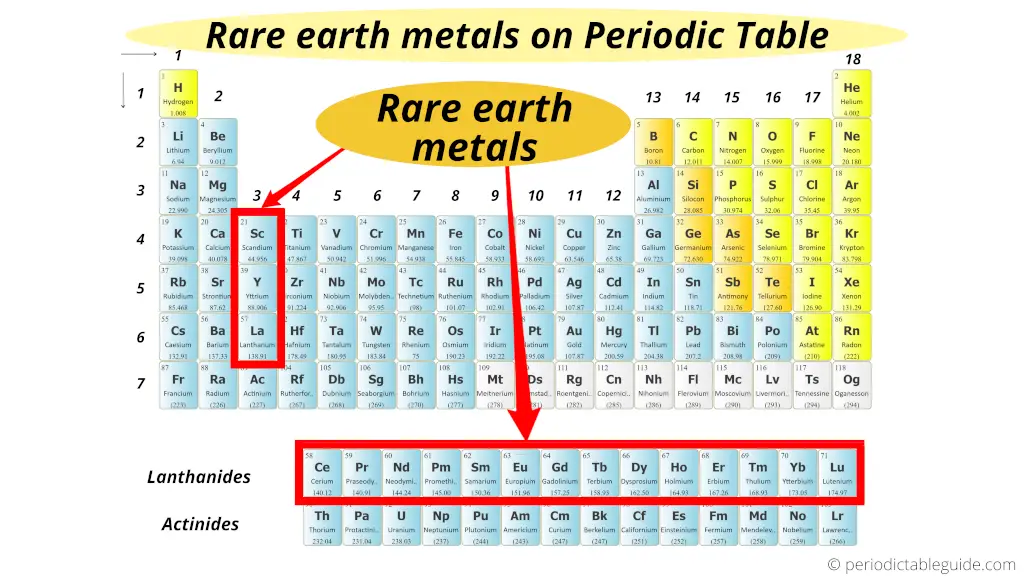
So, what exactly are rare earth metals, and where do we find them on that iconic chart? Well, first things first, the name is a bit misleading. They're not actually that rare! What makes them “rare” is that they are typically dispersed and not found in concentrated deposits like, say, gold. On the periodic table, they occupy two rows tucked away at the bottom. The first row, called the lanthanides, includes elements like lanthanum, cerium, and neodymium. The second row includes scandium and yttrium even though they're not technically lanthanides, but they share similar chemical properties and are often found in the same ore deposits. Think of it as a VIP section on the periodic table, full of elements with unique and powerful abilities.
But what are these abilities? The benefits are plentiful. Rare earth metals possess unique magnetic, luminescent, and catalytic properties. This makes them crucial components in a wide range of technologies that we rely on every day. Take your smartphone, for example. Neodymium is vital for the powerful magnets in the speakers and the vibration motor. The vibrant colors on the screen often depend on europium and terbium. And the glass in your phone, camera lenses, and other electronics might contain cerium for polishing.
Must Read
Beyond our pockets, rare earth metals are essential for green technologies. Hybrid and electric vehicles rely heavily on neodymium and dysprosium for their powerful magnets in the motors. Wind turbines also use these powerful magnets to generate electricity. These elements are also crucial in catalytic converters, which reduce harmful emissions from gasoline-powered cars. In essence, they are instrumental in driving the transition towards a more sustainable future.

So, how can you appreciate the power of rare earth metals more effectively? Start by becoming more aware of the technologies that depend on them. Next time you use your phone, consider the complex chemistry and physics behind its operation. Delve deeper into research about how they are extracted, refined, and used. The extraction process can have environmental consequences, so understanding the complexities involved makes you a more informed consumer and advocate for responsible sourcing and recycling of these valuable materials. Lastly, advocate for policies that encourage innovation in rare earth metal processing and recycling. As technology evolves, the demand for these elements will only continue to grow, making it essential to find sustainable solutions for their use and reuse.
The rare earth metals might seem like a niche topic, but they are deeply intertwined with our daily lives and the future of technology. By understanding their importance and promoting responsible practices, we can ensure that these "rare" elements continue to power our world in a sustainable way.