Where Are Lanthanides On The Periodic Table
Ever feel a strange sense of accomplishment when you finally nail that crossword clue, or perfectly arrange your spice rack alphabetically? There's a similar satisfaction in understanding the seemingly chaotic order of the periodic table. It's like unlocking a secret code to the universe! And one of the most intriguing sections of this chemical map is the realm of the lanthanides. But where exactly are these elusive elements hiding?
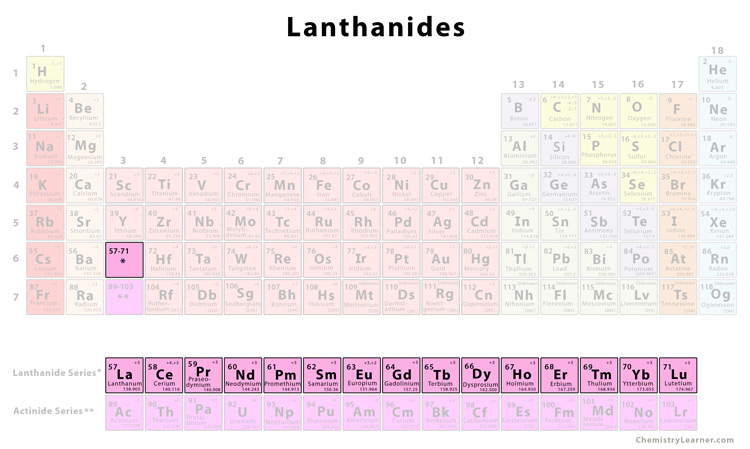
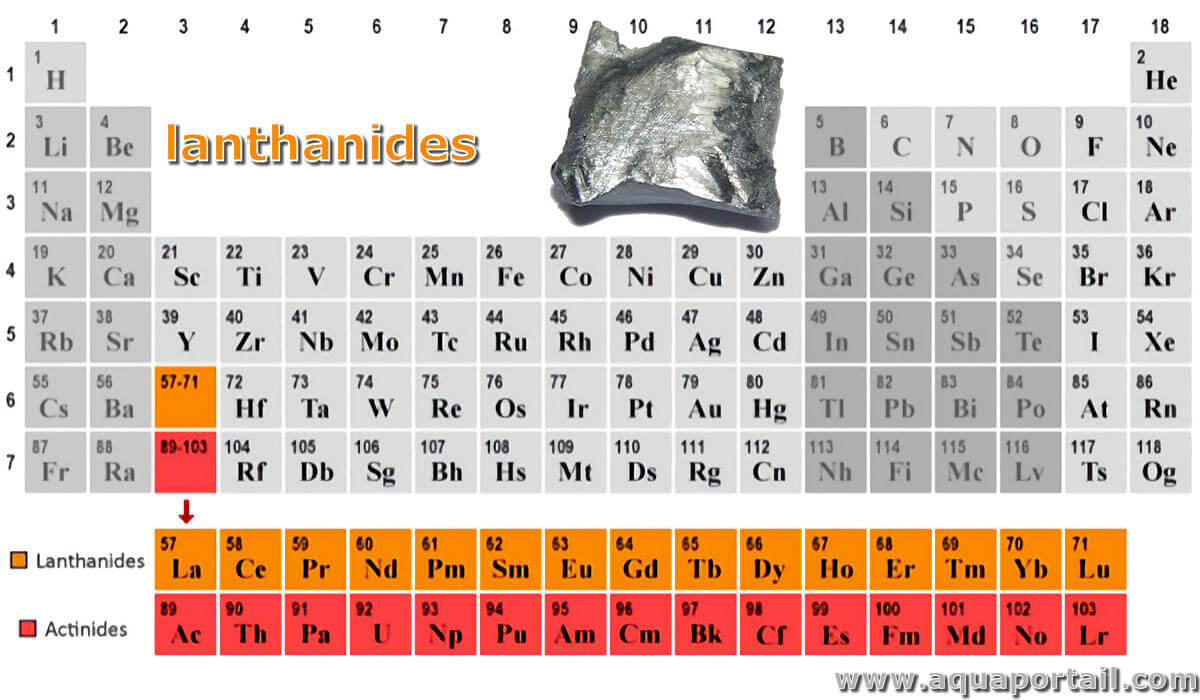
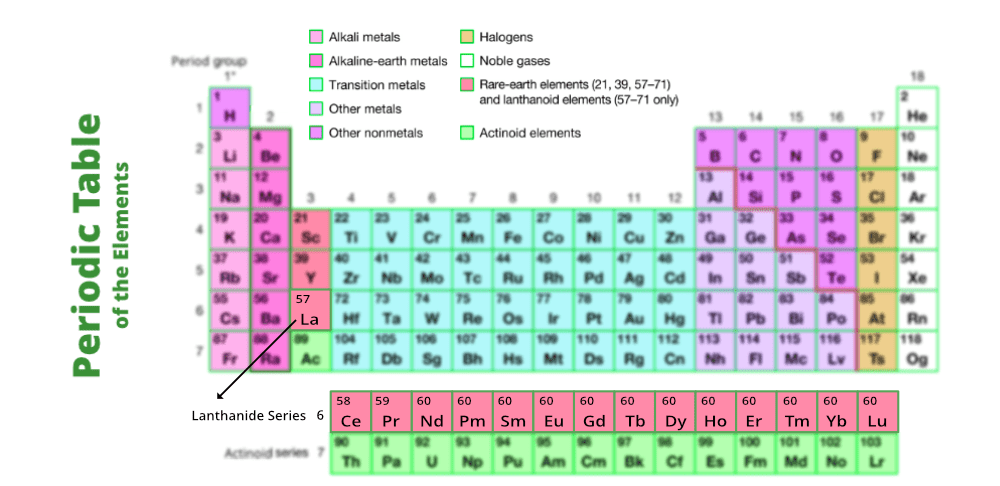
The lanthanides, sometimes called rare earth elements (though they aren't really that rare), are those 15 elements tucked away in a separate row at the bottom of the periodic table, along with the actinides. Specifically, they occupy atomic numbers 57 (lanthanum) through 71 (lutetium). Think of them as a chemical family with a bit of an identity crisis – they're officially part of Period 6, nestled between barium (Ba) and hafnium (Hf), but they're pulled out to keep the periodic table from becoming excessively wide. That little footnote, signified by the atomic numbers and the connecting line to the main table, points you directly to their secret lair!
Why should you care about these seemingly obscure elements? Well, the lanthanides are surprisingly important in our everyday lives. Their unique electronic structures and magnetic properties make them invaluable components in a wide array of technologies. Think of your smartphone: lanthanides are crucial in creating the bright, vibrant colors on the screen, as well as in the tiny, powerful magnets in the speakers and vibration motor. They're also essential for fiber optic cables, which power the internet and allow for lightning-fast data transmission. Without lanthanides, modern communication would be drastically different!
Must Read
But the applications don't stop there. Neodymium is a key ingredient in high-strength magnets used in electric vehicles and wind turbines, contributing to a greener future. Europium is used in energy-efficient lighting, helping to reduce our carbon footprint. Cerium is a common component in catalytic converters in cars, reducing harmful emissions. And even in medicine, gadolinium is used as a contrast agent in MRI scans, helping doctors diagnose and treat diseases.
So, how can you better appreciate and understand the lanthanides? First, spend some time exploring an interactive periodic table online. Many allow you to click on individual elements and learn about their properties, uses, and history. Look for resources that explain electron configurations, as this will give you a deeper understanding of why lanthanides behave the way they do. Also, consider exploring the applications of these elements in different technologies. Think about the devices you use every day – where might lanthanides be playing a role? Finally, remember that the periodic table is a story, not just a list. Each element has its own unique properties and role to play in the universe. By understanding where the lanthanides fit into this story, you gain a deeper appreciation for the beauty and complexity of chemistry.