
When Was The Welder Invented
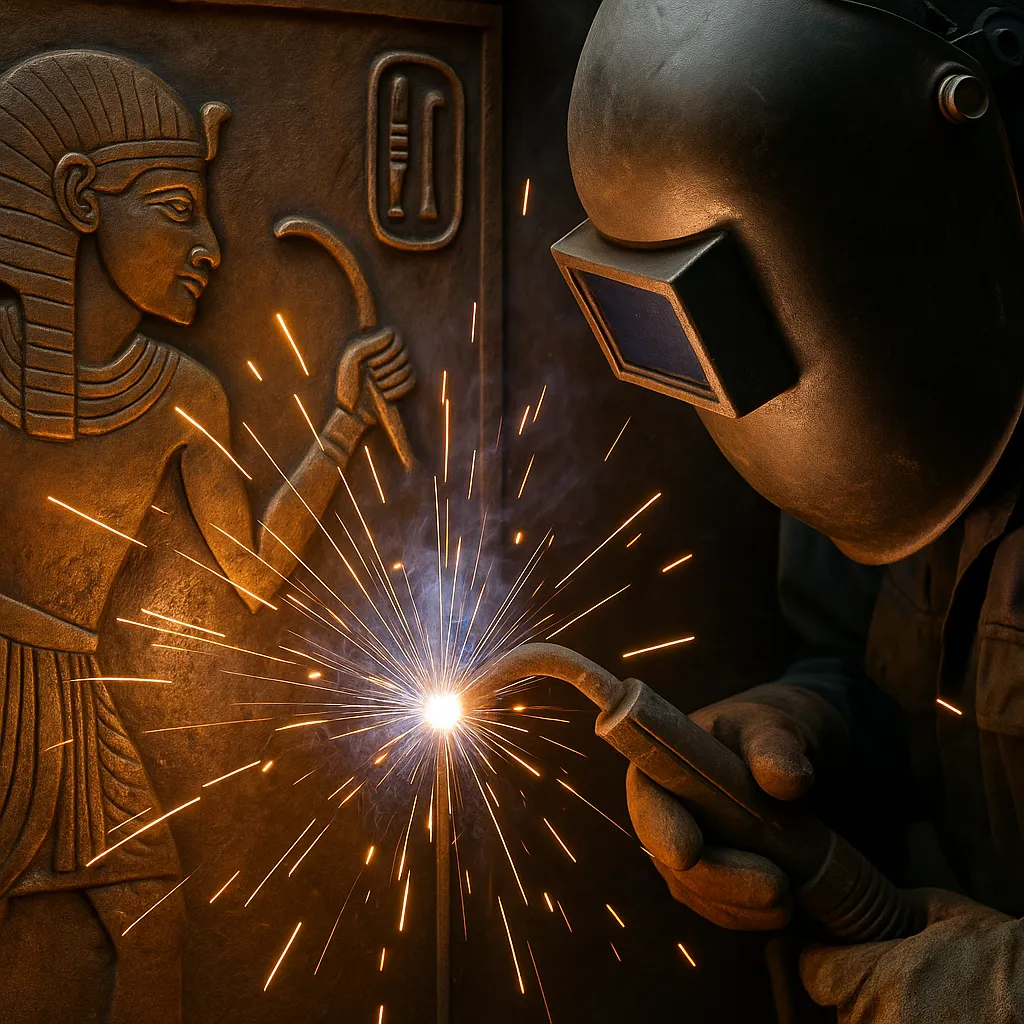
Ever gazed at a towering skyscraper, crossed a mighty bridge, or even just admired the sleek lines of a modern car, and wondered how on earth all those pieces of metal come together? It’s not magic, my friend, it’s welding! And trust me, the story of when the welder was invented is a fascinating journey through human ingenuity that’s way more exciting than you might imagine. Get ready to feel a little spark of inspiration!
Before the Welder: A Spark of an Idea
First things first: people have been joining metal together for millennia. Think ancient blacksmiths hammering red-hot iron, forging it into tools and weapons. That’s a form of welding, in a way! Or consider brazing and soldering, where a filler metal melts to join two pieces, a technique the Egyptians and Romans were masters of. So, the desire to permanently connect metal is as old as civilization itself.
But when we talk about "the welder" as a distinct machine, something capable of fusing metals with intense heat and often electricity, we’re looking at a much more recent — and frankly, mind-blowing — development. This isn't just about sticking two things together; it's about making them one seamless piece.
Must Read
The Great Eureka Moment: Electricity Enters the Scene!
Our story really kicks off in the early 19th century. Picture this: scientists are experimenting with electricity, fascinated by its power. In 1800, a brilliant British chemist named Humphry Davy discovered the electric arc. He wasn't welding, mind you; he was showing off a continuous spark between two carbon rods using a massive battery. Pretty cool party trick for 1800, right? Little did he know, he'd stumbled upon the very core principle that would power the modern welder!
Think about that for a second: a curious mind playing with new technology inadvertently lays the groundwork for something that would literally build the world around us. It makes you wonder what everyday discoveries today might lead to future marvels, doesn't it?
From Spark to Solution: The First Electric Welders
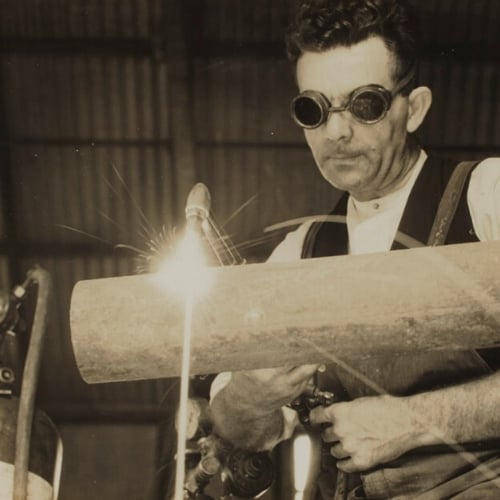
Fast forward a few decades. The world is buzzing with industrialization, and the need for stronger, more reliable ways to join metals is growing. Enter our true heroes of early welding! In 1881, two incredibly clever Russians, Nikolai Benardos and Stanislaus Olszewski, patented the first widely recognized electric arc welding method. They used a carbon electrode to create that intense heat, melting and fusing metal. This was a huge deal!
Suddenly, what blacksmiths painstakingly did with muscle and fire could now be done with electricity, offering more precision and control. It was like upgrading from a horse and buggy to a super-fast train – a fundamental shift in capability!
The Game Changer: Metal Electrodes Arrive!
While carbon arc welding was revolutionary, it wasn't perfect. The carbon could sometimes contaminate the weld. So, the innovators kept innovating! The next big leap came in the late 1880s and early 1890s, with a Russian named Nikolay Slavyanov and an American, Charles L. Coffin, independently developing the idea of using a metal electrode. Why was this such a game-changer?
Because with a metal electrode, the electrode itself could melt and become part of the weld! This meant stronger, cleaner, and more consistent welds. It was the birth of what we now call stick welding, or Shielded Metal Arc Welding (SMAW), a technique still widely used today. This was the moment the "welder" truly started to resemble the powerful, versatile tool we know.
Welding in Your World: Why This Matters Today
So, why is knowing all this ancient history fun? Because it connects you to the world around you in a whole new way! The next time you see a colossal bridge spanning a river, a sturdy park bench, or even the frame of your own car, you're looking at the direct descendants of those early sparks and clever ideas. Every piece of metal joined together by a welder is a testament to human curiosity and problem-solving.
From the industrial revolution to space exploration, welding has been an unsung hero, silently building the infrastructure of our modern lives. It’s not just about creating strong bonds; it’s about creating possibilities!
The Continuous Spark of Innovation
Of course, welding didn't stop there. The 20th century saw incredible advancements: flux-coated electrodes for better protection, then Inert Gas Welding (MIG and TIG) for even cleaner, more precise welds, and even robotic welding for automation. Each step forward built on the foundational discoveries of Davy, Benardos, Coffin, and countless others.
Isn't it amazing to think how a simple scientific observation can blossom into an entire industry, transforming our world in ways its discoverers could barely imagine? The story of the welder isn't just about a machine; it’s a vibrant narrative of human progress, showing us that with a little curiosity and a lot of ingenuity, we can truly build anything we set our minds to. So go ahead, feel inspired to look a little closer at the world – you might just discover the hidden brilliance in everyday things!
