
When Was Solar Energy First Used
Ever gazed up at the mighty sun and felt its warmth on your face? It's a feeling as old as humanity itself. For centuries, people have looked at that giant fiery orb in the sky and wondered, "How can we use that?"
Turns out, our ancestors were pretty clever. They were harnessing solar power in ways that might surprise you. Long before fancy solar panels, humans were already putting the sun's energy to work!
The Sun's Ancient Hug: Passive Solar Design
Picture ancient civilizations, thousands of years ago. They didn't have complicated heaters or air conditioners. But they did have smart architects and builders.
Must Read
They discovered something amazing: how to build homes that stayed warm in winter and cool in summer. This was done simply by observing the sun's path.
Imagine the philosopher Socrates in ancient Greece, around 400 BC. He wasn't just pondering big thoughts; he was also thinking about comfy homes!
He actually wrote about how houses should be built. They needed to face south to catch the winter sun, keeping interiors toasty.
In summer, overhanging roofs would block the high sun, keeping things cool. It was like giving your house a thoughtful, strategic hug from the sun.
This ingenious idea is called passive solar design. It uses the sun's natural patterns, without any gadgets, to make living spaces more comfortable.
People were essentially "designing in" solar energy. It was simple, effective, and completely free.
Burning Bright: Mirrors and Magnifying Glasses
But people weren't just passively soaking up rays. They wanted to actively direct the sun's immense power. This brings us to another fascinating chapter: solar concentration.
Imagine gathering many shiny mirrors, or a giant magnifying glass. What happens when you focus all that sunlight onto one tiny spot?
Heat! Lots of it! The ancients knew this trick, too. They used polished metal or glass to concentrate sunlight.
These early "solar furnaces" could light fires or even melt some materials. It was like having a super-powered fire starter powered by pure sunshine.
One of the most legendary tales involves Archimedes, the brilliant Greek mathematician. The story goes that in 212 BC, during the siege of Syracuse, he defended his city against Roman ships.
How? By supposedly using giant bronze mirrors! He focused the sun's rays onto the invading Roman fleet, setting their ships ablaze.
Now, historians debate if this really happened. But isn't it an incredibly entertaining thought? The idea of weaponizing sunshine is truly mind-blowing!
Even if it's a myth, it shows how long people have dreamed of manipulating the sun's incredible power. The very thought captured imaginations for centuries.
It's a testament to the sheer ingenuity of early thinkers. They saw the sun as more than just light; they saw it as a powerful tool.
The Kitchen Gets Sunny: Early Solar Cooking
Fast forward a bit, and we see the sun getting involved in dinner preparation. Cooking with sunlight might sound like a modern, eco-friendly trend, but it's not new at all.
In the late 1700s, a Swiss scientist named Horace-Bénédict de Saussure built one of the first known solar cookers. He was a curious fellow, always experimenting.
He created a device made of several insulated boxes, one inside the other, topped with glass. This contraption trapped the sun's heat beautifully.
He called it a hot box. And guess what? It could cook fruit! He even managed to boil water.
This was a huge step. It showed that the sun could provide enough heat for practical everyday tasks. Imagine the surprise and delight!
It was like discovering a hidden, free oven just waiting in the sky. People realized the sun could do more than just warm a room; it could cook a meal.
From Discovery to Spark: The Photovoltaic Effect
Okay, so far, we've talked about using the sun's heat. But what about converting sunlight directly into electricity? That's the real magic of modern solar panels, right?
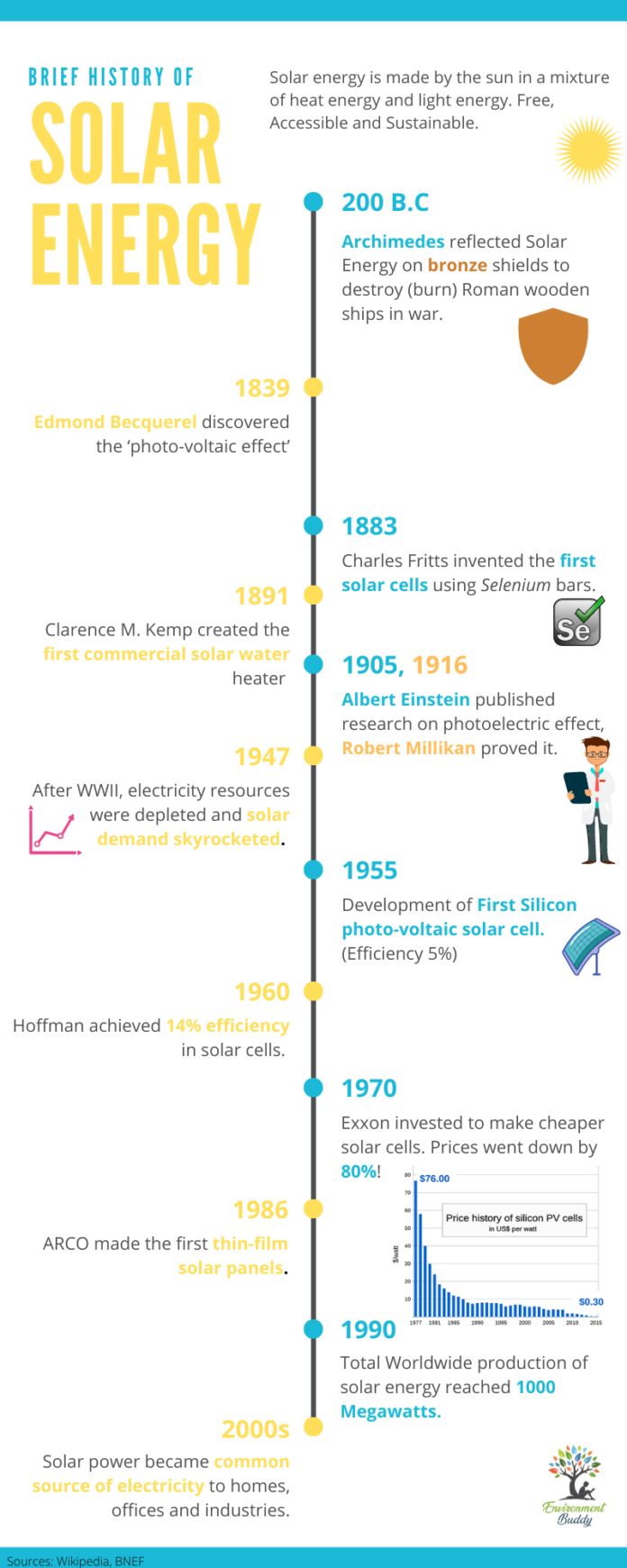
Well, the very first flicker of this magic happened way back in 1839. A young French physicist named Edmond Becquerel was experimenting in his father's lab.
He was working with electrodes (metal wires) submerged in an acidic solution. When he exposed this setup to sunlight, he noticed something incredible.
An electric current was generated! This was the discovery of the photovoltaic effect. It literally means "light-electricity effect."
Imagine stumbling upon something so groundbreaking by accident! It was a true "Aha!" moment in science. The sun, without generating heat, was directly creating electricity.
At the time, it was just a scientific curiosity, a small spark. But it laid the fundamental groundwork for everything we know about solar electricity today.
It proved that light itself had the power to kickstart an electric current. This tiny discovery would one day power homes, satellites, and even cars.
Sun Power Gets Practical
As the 19th century progressed, scientists and inventors kept tinkering. They weren't just making small sparks; they were looking for bigger, more useful applications.
They started building solar engines that could pump water or even run small machines. Imagine a world where factories could be powered by nothing but sunshine!

One notable pioneer was Augustin Mouchot, another French inventor, in the 1860s and 70s. He developed large solar concentrators.
These massive sun-tracking mirrors would focus light onto a boiler, creating steam. This steam then powered printing presses and even ice-making machines!
It was like watching a giant, shiny flower follow the sun, providing power. People were constantly amazed by the sun's versatility.
He even demonstrated a solar-powered engine at the 1878 Paris Exposition. It was a vision of a future fueled by the sun, even if it wasn't yet practical for everyone.
It was becoming clear that the sun wasn't just for light and warmth; it was an inexhaustible power source, ready to be unlocked.
From simply warming homes to boiling water and generating electricity, humans have been fascinated with solar energy for millennia. It's a story of constant curiosity and incredible innovation.
It makes you wonder what else we'll discover about harnessing the sun's amazing gifts. The sun's story is still being written, with every new solar panel and every new invention.
So next time you feel the sun's rays, remember that ancient fascination. Humans have always looked to the sun, not just for life, but for ingenious power.