When Does Deer Season Open In Washington State
Alright, settle in folks, grab your lattes (or maybe something a little stronger if you're already thinking about opening day), because we're about to tackle the burning question that plagues Washingtonians every autumn: When can I finally justify wearing all that camo and hanging out in the woods pretending I'm Bear Grylls, I mean, when does deer season open?!
Now, I'm not going to lie, figuring out Washington's deer season is about as straightforward as explaining the plot of "Inception" after a triple espresso. It's a complex web of Game Management Units (GMUs), weapon types, and dates that seems designed to confuse even the most seasoned hunter. But fear not, my intrepid outdoor enthusiasts, I'm here to guide you through the wilderness of regulations.
The Big Disclaimer (Because Lawyers!)
Before we dive in headfirst, let's get the boring but essential stuff out of the way. I'm just a guy with a keyboard and a mildly unhealthy obsession with the Pacific Northwest. Always, ALWAYS double-check the official Washington Department of Fish and Wildlife (WDFW) regulations pamphlet or website. Seriously. Their website is your bible for all things hunting in Washington. Trust me, you don't want to end up explaining to a very serious game warden that "some guy on the internet told me it was okay." That's a conversation best avoided.
Must Read
Okay, Let's Get to the Deer!
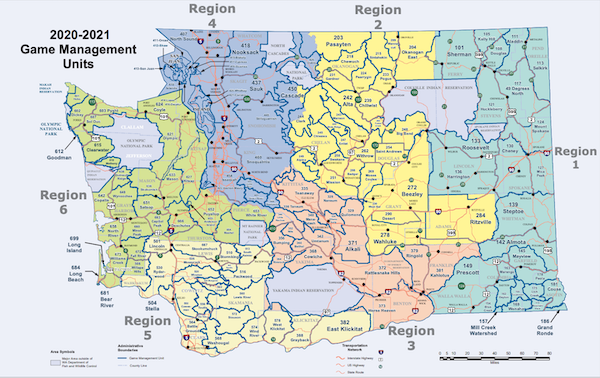
So, where do we even begin? Well, the first thing to understand is that there isn't just one magical date when all deer hunting simultaneously erupts across the state. It's more like a staggered, carefully orchestrated ballet of bullets and buck fever. Dates vary wildly depending on the GMU you're hunting in, and the weapon you're using. Think of GMUs as hunting zones, each with its own specific rules.
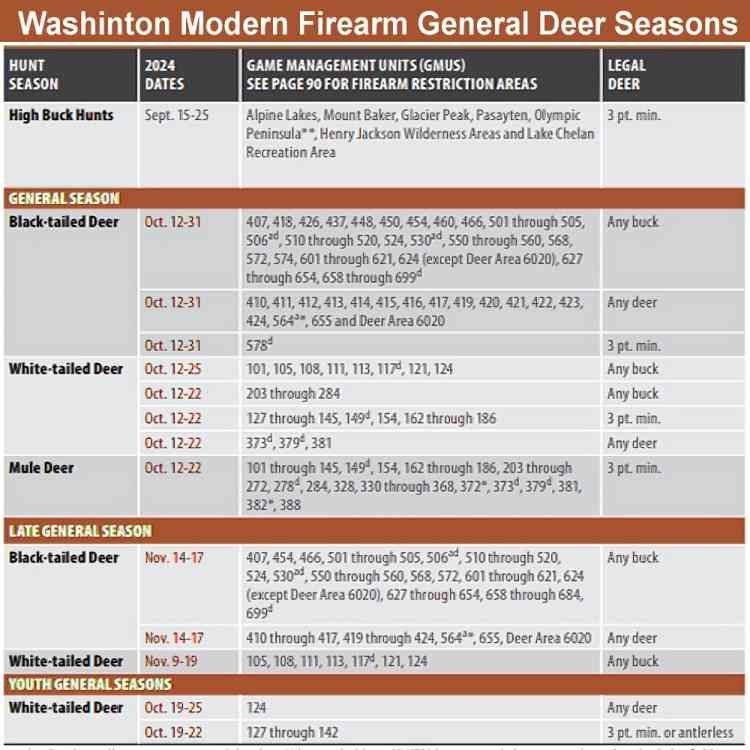
For example, GMU 101 might open for modern firearm deer hunting on October 14th (again, CHECK THE REGULATIONS!). But GMU 203 might not open until October 21st. And then there are archery and muzzleloader seasons, which often have their own distinct dates, sometimes even before the modern firearm season. It's like a hunting calendar designed by a committee of squirrels on caffeine.

Weapon of Choice: Are You a Peashooter or a Boomstick Bandit?
Speaking of weapons, that's another crucial factor. Are you a modern firearm enthusiast, wielding a rifle that could probably take down a small tank? Or are you a more traditional archer, channeling your inner Robin Hood with a bow and arrow? Perhaps you're a black powder purist, embracing the challenge (and the smoky haze) of a muzzleloader?
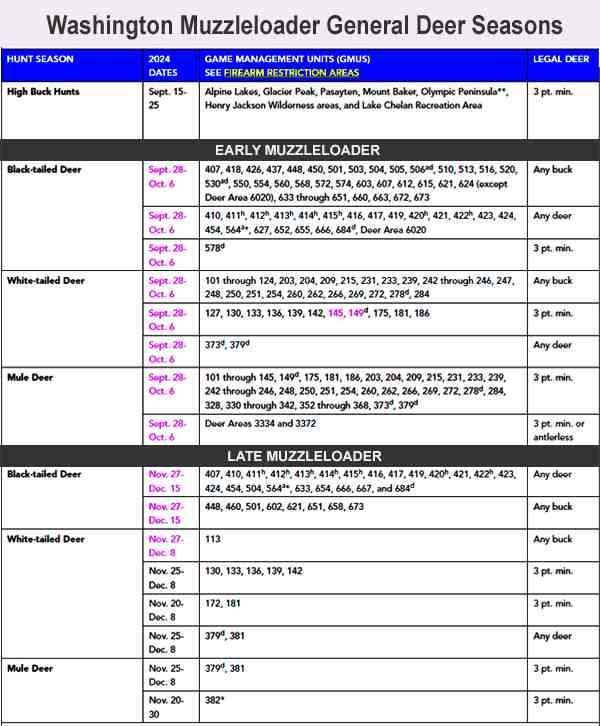
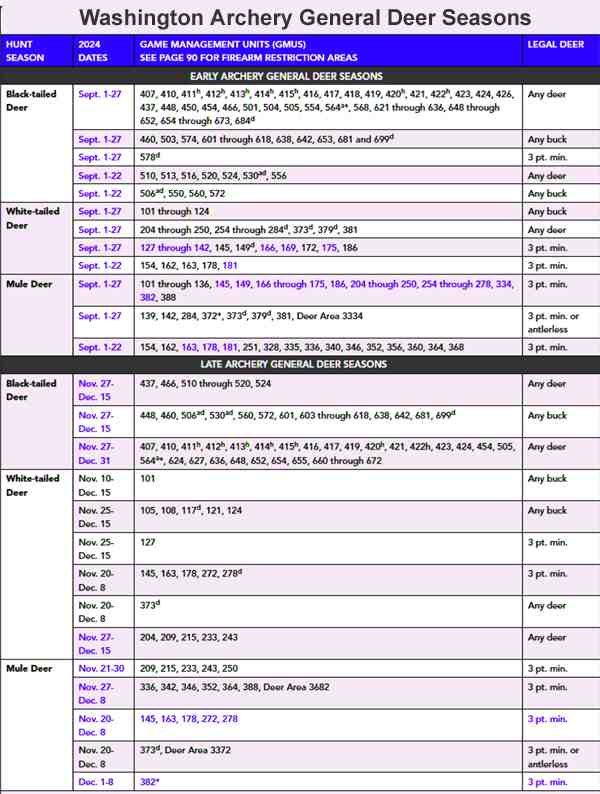
Each weapon type has its own designated season. Archery season often opens earlier than modern firearm season, giving those stealthy archers a head start. Muzzleloader season usually falls somewhere in between, offering a taste of the old west with a modern twist (and hopefully a bit more accuracy).
Spokane: An Example (Because We All Know Someone From Spokane)
Let's pick a random location... say, Spokane! (No offense, Spokanites, I'm just using you as an example). Now, depending on the GMU surrounding Spokane (and there are several!), the opening dates for different deer seasons can vary by weeks. You might have archery hunters stalking the woods in September, while modern firearm hunters are patiently waiting for mid-October. The key is to pinpoint the specific GMU you're interested in and consult the WDFW regulations. I cannot stress this enough.
The Rut: Nature's Deer Dating Game (With Guns!)
One interesting thing to keep in mind is the rut, which is basically deer mating season. Hunters often target the rut because bucks are more active and less cautious as they chase after does. The WDFW takes the rut into account when setting season dates, trying to balance hunting opportunities with the need to protect the deer population. It's a delicate balancing act, like trying to herd cats while juggling chainsaws.
General vs. Special Seasons: It's All Greek to Me!
You'll also encounter terms like "general season" and "special season." General seasons are open to anyone with a valid hunting license and appropriate tags. Special seasons, on the other hand, often require you to apply for a permit, which are usually awarded through a lottery system. These special seasons are typically used to manage deer populations in specific areas or to offer hunting opportunities for specific types of deer (like trophy bucks).
Don't Be "That Guy"
The most important takeaway here? Do your homework! Read the regulations, understand the GMU boundaries, and make sure you have the proper licenses and tags. Nobody wants to be "that guy" who gets busted by the game warden for hunting out of season or in the wrong area. It's embarrassing, expensive, and definitely not a good look for anyone. Plus, you'll have to explain to all your friends why you missed the entire season.
So, go forth, my hunting comrades! Armed with knowledge (and hopefully a well-aimed rifle or bow), venture into the Washington wilderness and experience the thrill of the hunt. Just remember to be safe, ethical, and always, always check those WDFW regulations. Good luck, and may the odds (and the deer) be ever in your favor!