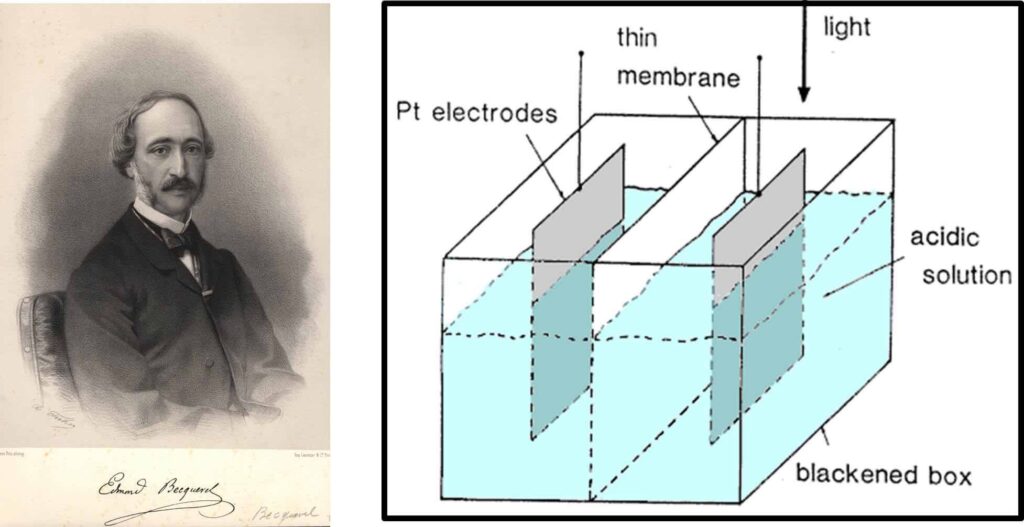
When Did Edmond Becquerel Discovered Solar Energy
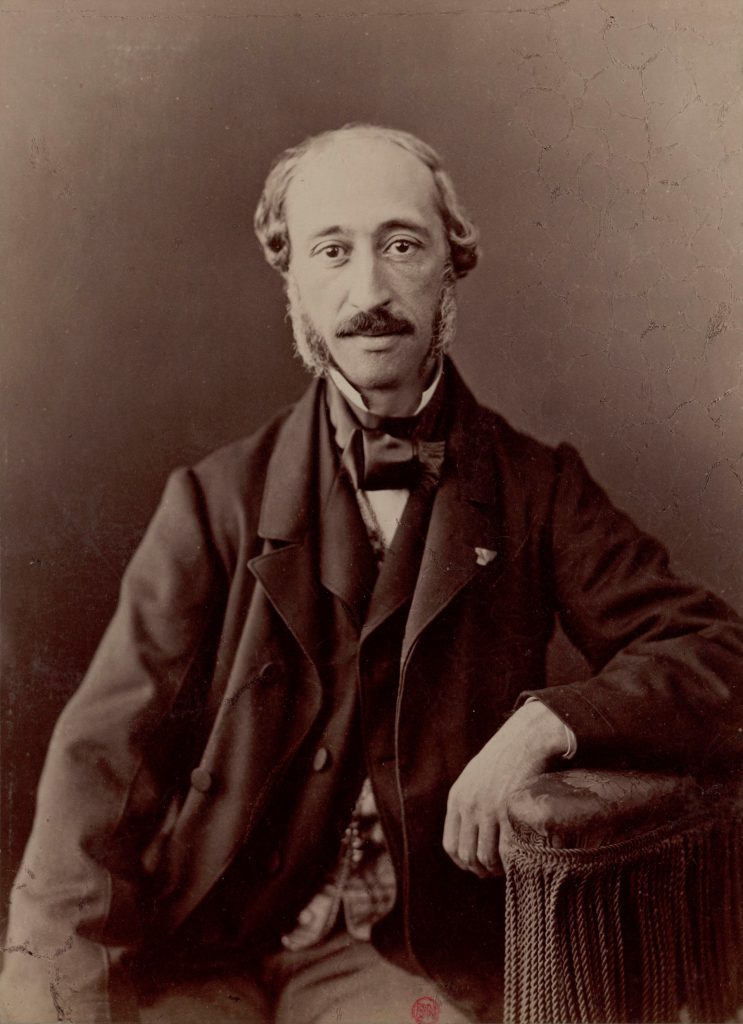
Ever stopped to marvel at the sheer brilliance of a sunflower, its face tracking the sun's journey across the sky? Or perhaps you've admired a piece of stained glass, its colors dancing and shifting with the changing light? We're all drawn to the sun's energy, but did you know the science behind capturing and harnessing that power has a surprisingly long history? The discovery of the photovoltaic effect, the foundation of solar energy, is often credited to Edmond Becquerel, but when exactly did this 'eureka!' moment occur?
The answer lies in the year 1839. While experimenting with an electrolytic cell, a young Becquerel observed that shining light onto the electrodes produced an increase in electric current. This groundbreaking observation, though initially on a small scale, laid the groundwork for the development of solar cells and, eventually, the renewable energy revolution we see today. But beyond its impact on global energy, understanding Becquerel's discovery and the power of light itself unlocks exciting possibilities for artists, hobbyists, and anyone with a curious mind.
For artists, solar energy can inspire entirely new creative avenues. Imagine sculptures that light up at night, powered by the sun's energy collected during the day. Or think about kinetic art pieces, set in motion by small solar panels driving tiny motors. Photographers can explore the nuances of light and shadow with a deeper understanding, manipulating light in ways that were previously unimaginable. Hobbyists can build miniature solar-powered robots or even create their own DIY solar chargers for phones and other devices. The possibilities are truly endless, limited only by your imagination.
Must Read
The styles and subjects are equally diverse. Think about the geometric precision of modern solar art, or the rustic charm of a handcrafted solar-powered birdhouse. Artists can draw inspiration from the natural world, creating pieces that mimic the sun's patterns in nature, or they can explore more abstract concepts, using solar energy to represent energy flow and interconnectedness. Consider the variations: using different types of solar cells, experimenting with different angles of light, or combining solar power with other forms of energy like wind or water. Each variation offers a unique aesthetic and functional opportunity.

Trying it at home is easier than you might think! Start small with a simple solar-powered garden light. Take it apart (carefully!) to see the basic components – a small solar panel, a rechargeable battery, and an LED. Experiment with different angles of light to see how the amount of electricity generated changes. You can also purchase small, inexpensive solar panels online and use them to power simple circuits. Websites like Instructables and YouTube are fantastic resources for finding step-by-step guides and project ideas.
Ultimately, exploring solar energy is enjoyable because it connects us to something fundamental: the power of the sun, the source of all life on Earth. It's a chance to learn about science, express your creativity, and contribute to a more sustainable future, all while having fun. So, channel your inner Edmond Becquerel, harness the power of the sun, and let your imagination shine!