
What's The Difference Between Volts And Amps
Alright, let’s talk volts and amps. Ever feel like electricity is just…wizardry? Don’t worry, you're not alone! It sounds complicated, but once you get the gist, it's actually pretty straightforward. Think of it like this, okay?
Volts: The Pressure Pushing the Electrons
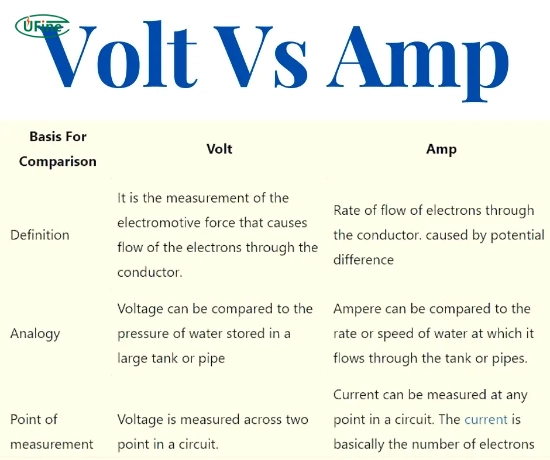
Volts (V) are basically the electrical pressure. Seriously. Imagine a water pipe. Voltage is how hard the water is being pushed through that pipe. More volts? More force! A tiny watch battery might have 1.5 volts, while that scary electric fence? Probably thousands! (Don't touch it! Seriously, don't.)
Think of it like this: a 9V battery and a AA battery both want to deliver power. But the 9V is like, “I’m really gonna make you power that thing!” It has more...oomph. More potential, you know?
Must Read
Without voltage, the electrons just kinda sit there. They're like, "Nah, I'm good." You need that push to get things moving!
Amps: The Amount of Electrons Flowing
Okay, so volts are the pressure. Amps (A), or amperes, are the amount of electrical current flowing. Back to our water pipe analogy: amps are how much water is actually flowing through the pipe. A trickle? Few amps. A raging torrent? Lots of amps!
It’s the volume of electrons, not how hard they're being pushed. A USB port might provide 0.5 amps, which is enough to charge your phone (eventually!). A microwave? Probably needs like, 10 amps or more. Big difference, right?
So, imagine you're filling a bathtub. The voltage is how hard the water is coming out of the faucet. The amps are how much water is coming out per second. Got it?
Why Do We Need Both? (The Relationship!)
Here's where it gets a little more interesting. You can’t have current (amps) without voltage! You need that pressure (volts) to get the electrons flowing in the first place. But voltage alone isn't enough. You also need enough electrons (amps) to do the work.

Think of it like trying to move a mountain. Voltage is like how hard you're pushing. Amps is like how many people are pushing with you. You can push really, really hard (high voltage), but if it's just you (low amps), you're not going anywhere. Conversely, you could have a million people (high amps), but if they're barely pushing (low voltage), the mountain still isn't budging!
Power (measured in Watts) is the real kicker. Watts (W) = Volts (V) x Amps (A). This is the actual amount of work being done. So, a device that uses high voltage and high amperage will consume a LOT of power! Which explains why your hairdryer eats up so much electricity.
So, What's the Danger?
Both volts and amps can be dangerous. High voltage can shock you even if the amperage is low (think static electricity – high voltage, tiny amps, just a little zap!). But high amperage is what really fries things. It's the amperage that causes the heat and damage.

That's why you shouldn’t mess with electrical wiring unless you really know what you're doing. It's not worth the risk! Leave it to the professionals, okay?
In a Nutshell... (Because We're Almost Out of Coffee)
Volts: The push (electrical pressure).
Amps: The flow (electrical current).

Watts: The work (power).
And remember, always be careful around electricity! Knowing the difference between volts and amps is a good start, but safety first, always!
Hopefully, that clears things up a bit! Now, refill that coffee, because my brain is starting to short-circuit... 😉