
What's The Difference Between Voltage And Current
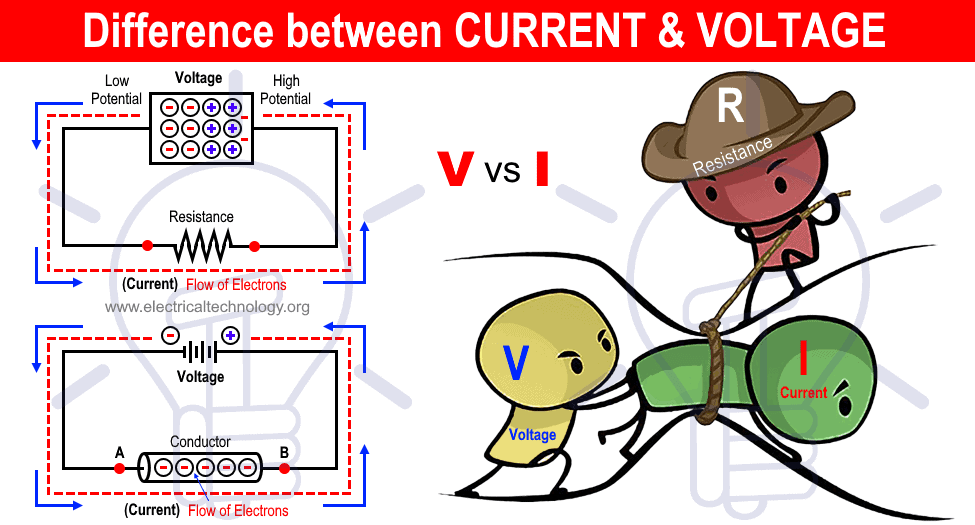
Hey there, sparky! Ever get confused about voltage and current? You're not alone! They're like the Batman and Robin of electricity – partners in crime-fighting (or, you know, powering your phone). But they're definitely not the same dude under different masks. Let's break it down in a way that won't make your brain short-circuit.
Voltage: The Pushy Guy
Think of voltage as the pressure behind electricity. It's the force that's trying to shove those little electrons (the guys carrying the electricity) down the wire. The higher the voltage, the harder it pushes. Imagine a water pipe: voltage is like how much pressure the water company is using. If the pressure's low, you get a dribble; if it's high, you get a jet!
We measure voltage in Volts (V). So, when you see a battery that says "1.5V," that's how much oomph it's got to push those electrons around. A taser might use thousands of volts – which is why you really, really don't want to get zapped by one.
Must Read
It's like the coach yelling at the football team to move their butts! Without that motivating (and sometimes terrifying) force, nothing's going anywhere. High voltage is the coach threatening extra laps; low voltage is the coach mumbling suggestions. Which one do you think gets the team moving faster?
Current: The Flowing Party
Okay, so voltage is the pressure... what's current then? It's the actual flow of electrons. It's the number of those tiny particles zipping through the wire per second. If voltage is the pressure in the water pipe, current is the amount of water flowing through it.
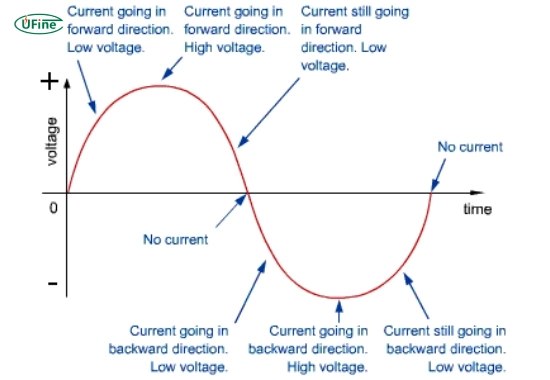
We measure current in Amperes (A), often shortened to "amps." A higher amperage means more electrons are flowing, which means more power. Think of it like cars on a highway. Voltage is the speed limit, current is the number of cars actually on the road. A low current might be a deserted country lane, while a high current is rush hour in the city. Yikes!
So, back to the football analogy, current is the number of players actually running down the field. The coach (voltage) is shouting, but if only a few players are actually moving (low current), you're not going to score many touchdowns!

Putting It All Together: The Ohm's Law Dance
These two aren't dancing solo! They're doing a complicated waltz with a third partner called resistance. Resistance is how much the wire (or whatever the electricity is flowing through) is fighting against the current. Think of it as the width of the water pipe. A narrow pipe has high resistance, and a wide pipe has low resistance.
The relationship between voltage (V), current (I), and resistance (R) is described by Ohm's Law: V = IR. This is electricity's version of E=mc². Okay, maybe not that important, but it's still pretty darn useful. This means:
- If you increase the voltage (more pressure), you increase the current (more flow).
- If you increase the resistance (narrower pipe), you decrease the current (less flow).
Imagine trying to push a bunch of people through a narrow doorway (high resistance). It's tough, right? But if the doorway is wide open (low resistance), people can flow through easily. Voltage is how hard you're pushing, current is how many people get through.
Why Does This Matter?
Understanding voltage and current is super important for a bunch of reasons. It helps you understand how electronics work, troubleshoot problems, and, most importantly, stay safe! Messing with electricity without knowing what you're doing is like juggling chainsaws – looks cool, but probably not the best idea.
Think about plugging your phone charger into the wall. The wall outlet has a specific voltage (usually 120V in the US). Your phone charger steps that voltage down to a lower level that's safe for your phone. It also regulates the current to prevent overcharging. Pretty neat, huh?

In a Nutshell (or a Battery Cell):
- Voltage is the electrical pressure (measured in Volts).
- Current is the flow of electrons (measured in Amperes).
- Resistance opposes the flow of current (measured in Ohms).
So next time someone mentions voltage and current, you can confidently nod and say, "Ah yes, the dynamic duo of electron motivation!" And maybe even explain Ohm's Law while you're at it. Your friends will be so impressed. (Or maybe just slightly annoyed. But hey, knowledge is power!).
Don't be afraid to experiment (safely!) with simple circuits. Build a flashlight, wire up a battery to a small motor, or just play with some LEDs. Hands-on experience is the best way to really understand this stuff. And remember, electricity is your friend... unless you treat it with disrespect. Then it's a shocking enemy!
Keep learning, keep exploring, and keep those circuits flowing! You've got this! Now go forth and conquer the world of electricity! (Safely, of course!).