
What's The Difference Between Cyclone And Tornado
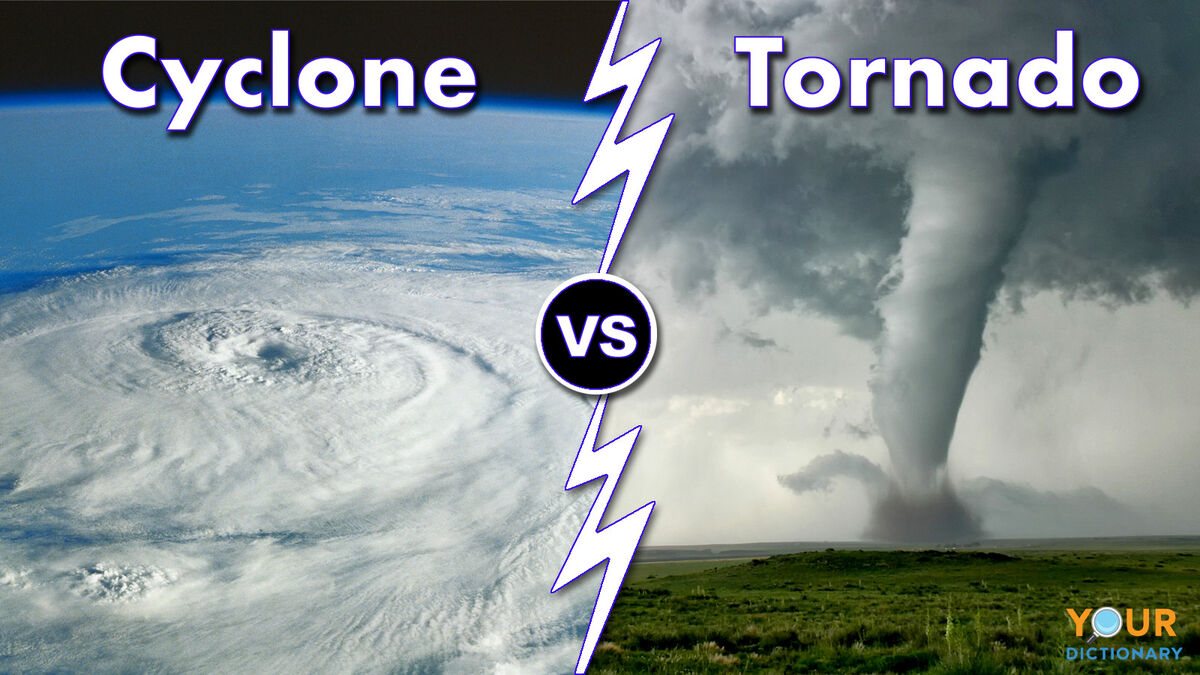
Okay, so you're wondering about the whole cyclone vs. tornado thing, huh? It's a fair question! They both involve crazy swirling winds and potential for chaos, but they're definitely not the same. Think of it like comparing a goldfish to a great white shark – both live in water, but that's pretty much where the similarities end!
Size Matters (and Where You Are!)
Let's get down to brass tacks. The biggest difference? Scale. Cyclones (also known as hurricanes or typhoons, depending on where you are in the world – more on that in a sec!) are massive. We're talking hundreds of miles across. A tornado, on the other hand, is a relatively compact beast. Usually, it's only a few hundred yards wide, maybe a mile at most. Imagine a pizza versus a single pepperoni. See the difference?
And speaking of location, location, location! That's another key factor. Cyclones form over warm ocean waters, generally near the equator. They need that warm water to fuel their swirling fury. Think of it as a giant, watery smoothie blender, only instead of fruit, it's sucking up all the heat and moisture it can find.
Must Read
Tornadoes, however, are more landlubbers. They typically form over land, especially in places like the central United States – famously known as "Tornado Alley." They're often spawned from supercell thunderstorms, which are, well, super powerful thunderstorms! It's like the weather is having a really, really bad day.
Name Game: Cyclone, Hurricane, Typhoon?
Now, about those different names. This can be a little confusing, but basically, cyclone, hurricane, and typhoon are all the same thing. The name just depends on where the storm occurs.
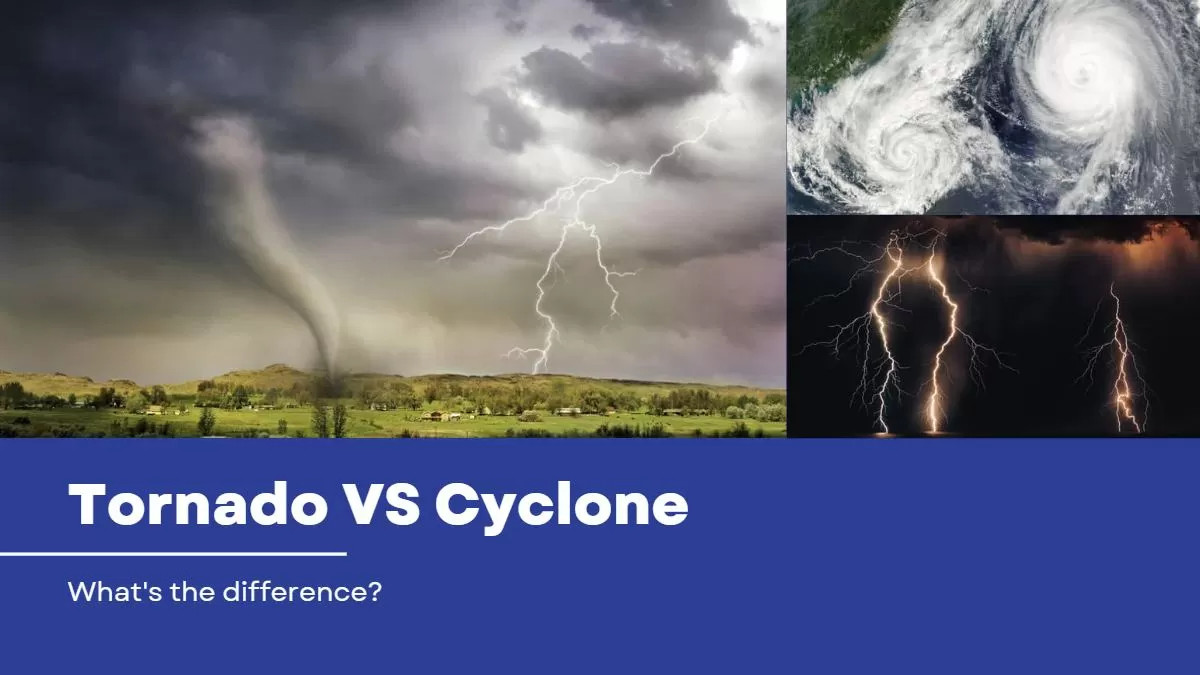
- Hurricane: Atlantic Ocean and Northeast Pacific Ocean
- Typhoon: Northwest Pacific Ocean
- Cyclone: South Pacific Ocean and Indian Ocean
Think of it like ordering a soda. Is it "pop," "soda," or "coke"? It's all the fizzy sweet stuff, just called something different depending on where you are! (Unless you're in the South, where everything is a Coke, regardless of flavor. Just kidding... mostly.)
Formation Frenzy: How They Get Started
Okay, let's peek under the hood and see how these weather wonders (or horrors, depending on your perspective) form.

Cyclones need warm ocean water (at least 80°F or 27°C), moist air, and converging winds near the surface. As the warm, moist air rises, it cools and condenses, forming clouds and releasing heat. This heat fuels the storm, causing it to strengthen and spin. The Earth's rotation (the Coriolis effect) is what gives these storms their distinctive swirl.
Tornadoes, on the other hand, are more about atmospheric instability. They need a mix of warm, moist air near the surface and cold, dry air aloft. When these air masses collide, it can create a rotating column of air called a mesocyclone within a supercell thunderstorm. If the mesocyclone intensifies and stretches down to the ground, BAM! You've got a tornado. Think of it as a really angry, spinning top that’s just decided to wreak havoc on everything below.
The Aftermath: What To Expect
Both cyclones and tornadoes can cause significant damage, but the type of damage can be different.
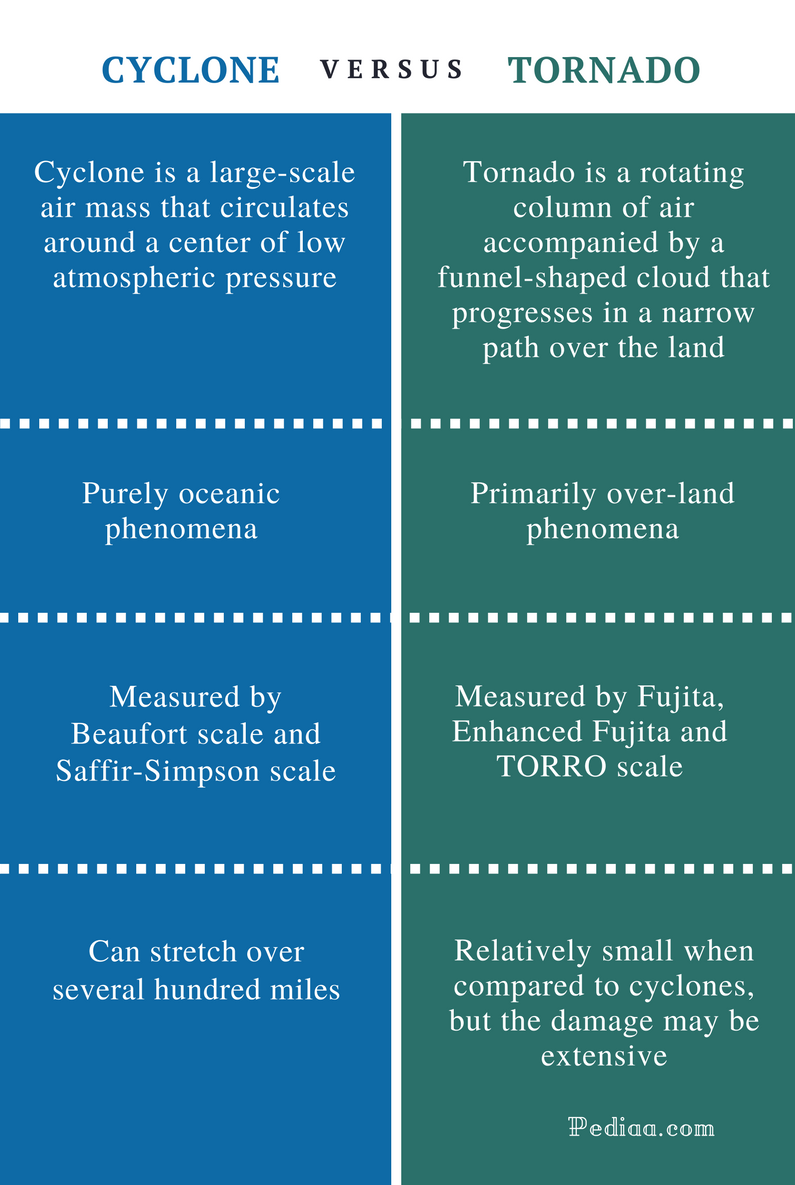
Cyclones bring widespread flooding, destructive winds that can flatten buildings, and storm surges that inundate coastal areas. They can also last for days, even weeks, causing devastation over a huge area.
Tornadoes, while smaller, can pack incredibly intense winds. They can level homes, fling cars through the air, and generally leave a path of destruction in their wake. Fortunately, they usually last only a few minutes, or at most, an hour, and their damage path is relatively narrow.

It's important to remember to always follow the advice of local emergency management when these storms occur. Stay safe and take any warnings seriously!
The Takeaway: Knowledge is Power (and Peace of Mind!)
So, there you have it! Cyclones and tornadoes: both powerful forces of nature, but vastly different in size, formation, and impact. Hopefully, this little chat has cleared up any confusion and maybe even made you smile a little (weather puns intended!).
Remember, being informed is the best way to stay safe and prepared. Now you can impress your friends with your newfound weather knowledge! Just try not to be too smug about it. After all, Mother Nature has a way of humbling us all. Stay safe, stay informed, and keep looking up (but maybe not during a thunderstorm!).