What's The Difference Between Amps Watts And Volts
Ever wondered about the magical dance of electricity powering your world? It's not just some invisible force; it's a trio of characters working together! Meet Amps, Volts, and Watts. They might sound intimidating, but trust me, understanding them is like unlocking a super cool secret code.
Volts: The Energetic Push
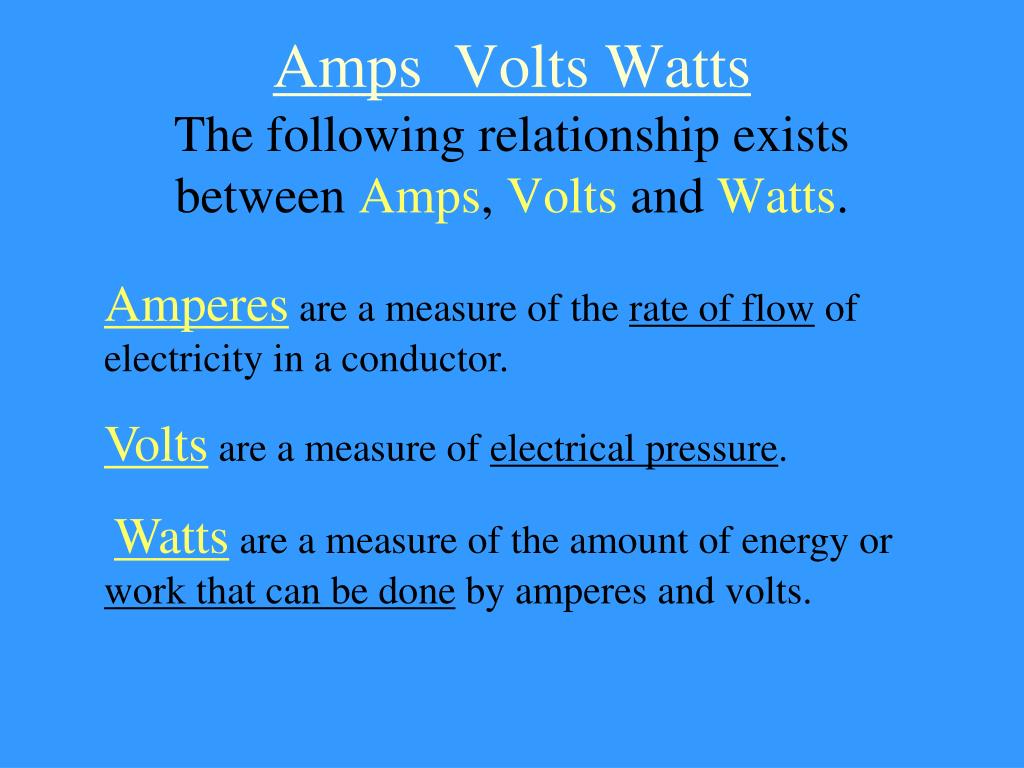
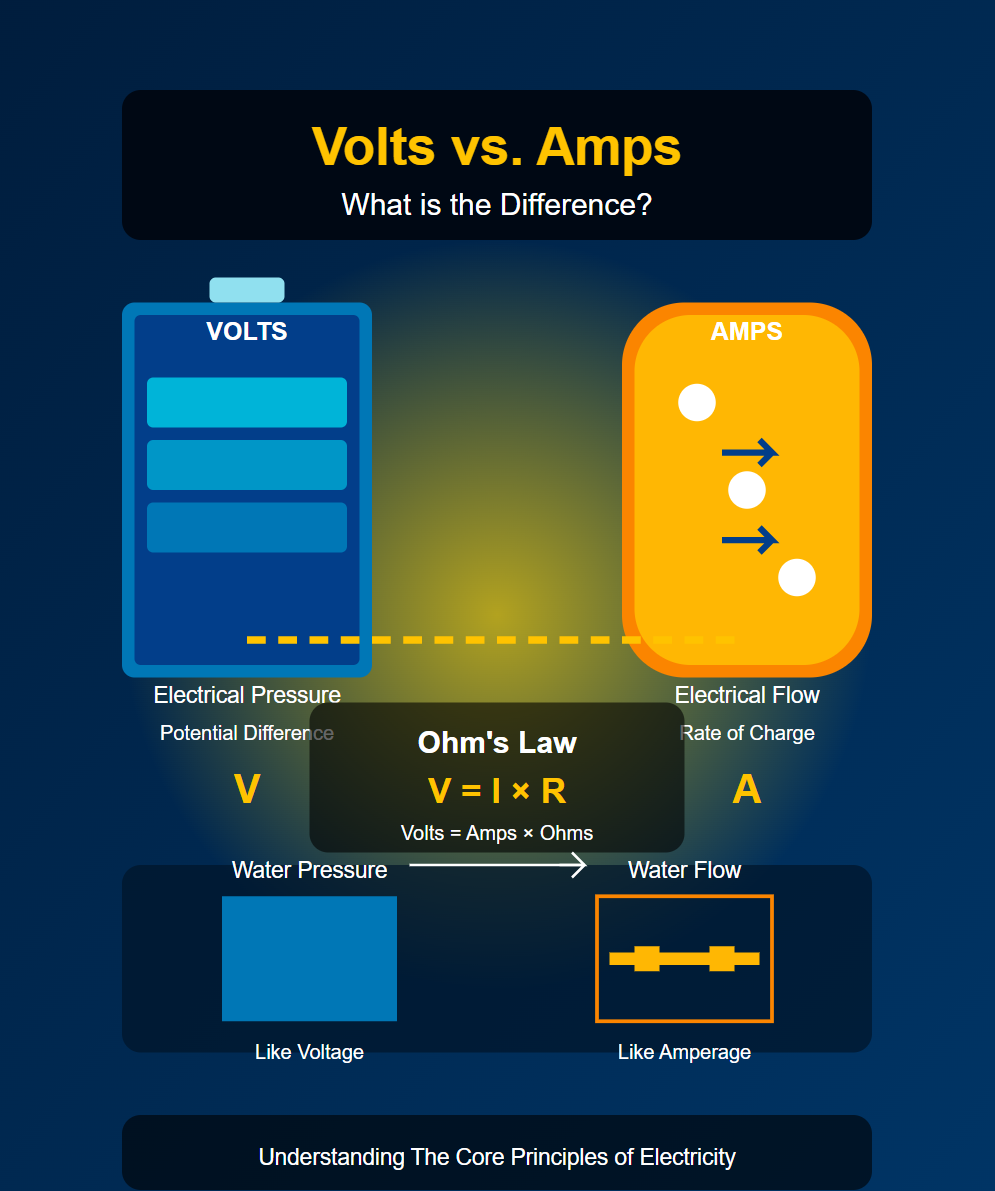
Think of Volts as the energetic push in a water hose. The higher the voltage, the stronger the push! It's the force that compels those tiny electrons to zoom through wires. Imagine a water slide; a steeper slide (higher voltage) sends you down with much more gusto! So, voltage is essentially the electrical pressure. Low voltage? Think of a gently trickling stream. High voltage? More like Niagara Falls!
Voltage is measured in, you guessed it, volts (V). Your standard wall outlet is usually around 120V in the US, providing enough oomph to power your lamps and toasters. Feeling a little voltage envy? Don’t! Understanding it is the first step to electrical enlightenment.
Must Read
Amps: The Flowing Crowd
Now, picture Amps as the number of water droplets flowing through that hose at any given moment. The more water flowing, the higher the amperage! It measures the electrical current, the quantity of electrons surging through a wire. Think of it like rush hour on the electron highway. Lots of electrons equals lots of amps!
Amps are measured in amperes (A). A device that uses a lot of power, like a hair dryer, will draw more amps than something small, like a phone charger. Too many amps flowing through a wire that can't handle it? That's when things can get a little heated (literally!), so safety is key. Think of a crowded dance floor. Too many people, and things get a little… intense!
Watts: The Power Punch
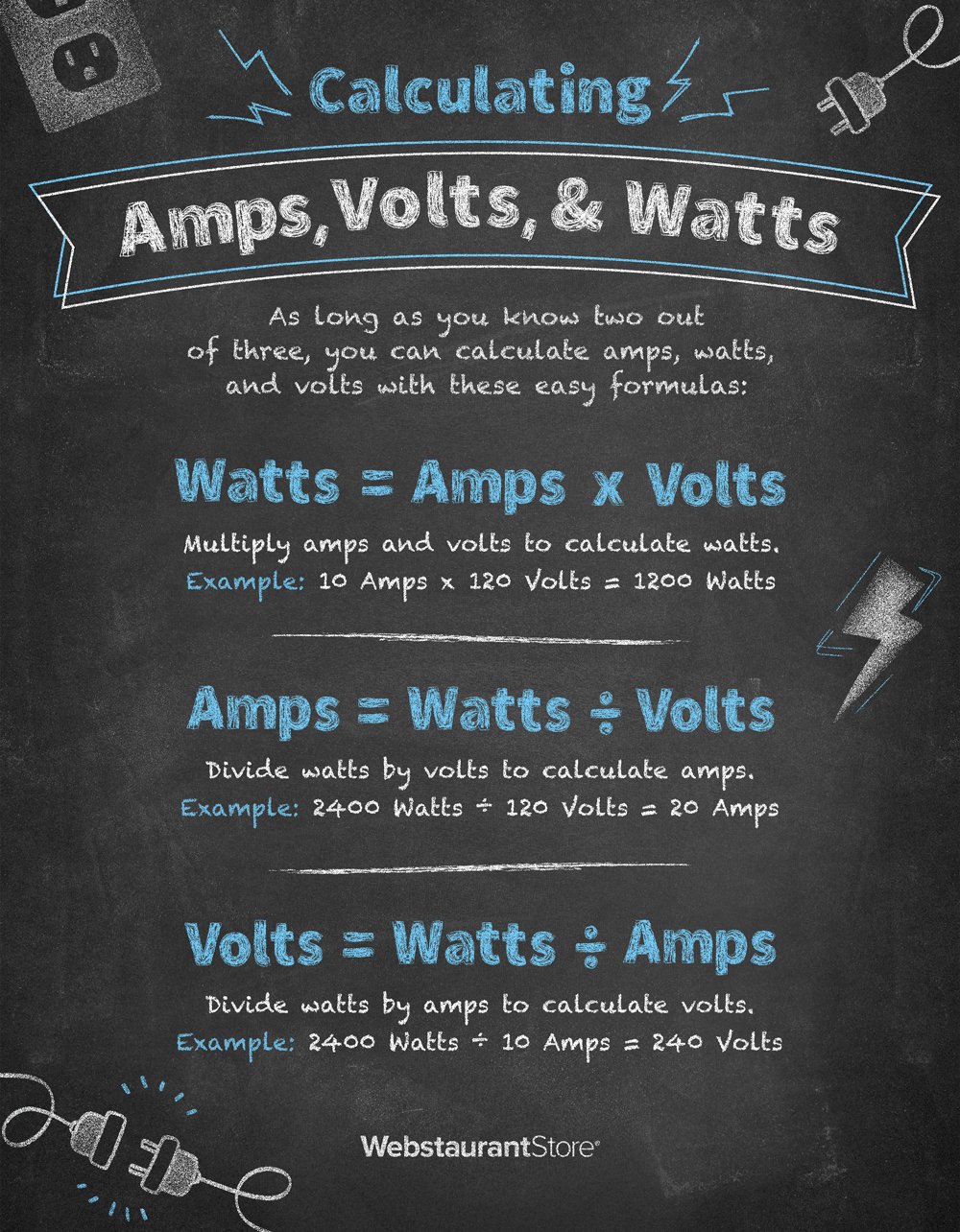
Okay, this is where it all comes together! Watts are the ultimate measure of electrical power. They tell you how much work is actually being done. It's the combination of the "push" (volts) and the "flow" (amps). Think of it like this: Watts = Volts x Amps. Boom! You've got the equation!
Imagine our water hose analogy again. Watts represent the total power of the water coming out of the hose. A high-powered hose (high watts) can fill a bucket much faster than a low-powered one. Light bulbs are often measured in watts, indicating how bright they are (or, more accurately, how much energy they use). A 100-watt bulb is brighter (and uses more energy) than a 40-watt bulb. Lower the watts, lower the cost!
Why Bother Learning This?
So why should you care about amps, volts, and watts? Because understanding them empowers you! Knowing the difference helps you choose the right appliances, troubleshoot electrical problems (safely!), and even save money on your electricity bill. It's like having a secret decoder ring for the electrical world.

Plus, it's just plain fascinating! Think of electricity as this invisible, powerful force that shapes our modern lives. Learning about it is like peering behind the curtain of a magic show. You start to see how things really work.
Next time you look at an appliance label, don't just glaze over the numbers. Take a moment to appreciate the dance of amps, volts, and watts! You might be surprised at what you discover.
Ready to Dive Deeper?
This is just the tip of the iceberg! The world of electricity is vast and endlessly fascinating. Want to learn more? There are tons of resources online, from simple explainers to in-depth tutorials. Understanding these concepts can even lead to exciting hobbies or career paths. Who knows, you might just become the next electrical wizard!
So go forth, explore, and unlock the secrets of the electrical universe. You might just find that it's more entertaining than you ever imagined! Remember that safety is paramount when dealing with electricity. Don't attempt any electrical work unless you are properly trained and qualified.