What's The Difference Between Amps Volts And Watts
Electricity. It's that invisible force powering our lives. But let's be honest, talking about amps, volts, and watts can feel like decoding a secret alien language. Don't worry! We'll crack this code together, with a healthy dose of laughter.
The Water Analogy: Friend or Foe?
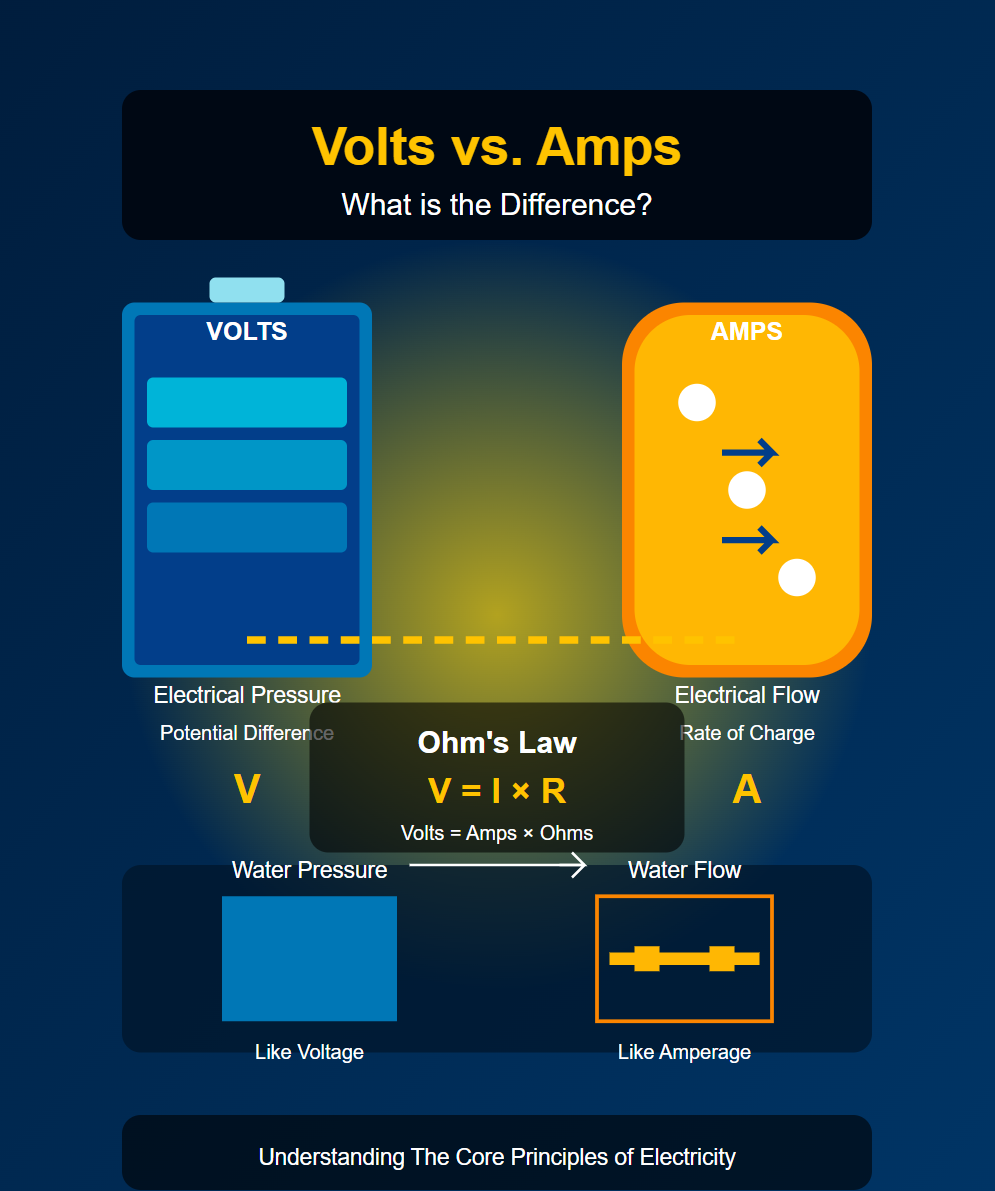
You've probably heard the water analogy. Volts are like water pressure. Amps are like the amount of water flowing. Watts are... well, the power of the water. Okay, it sort of works. But honestly? I think it mostly confuses people more. It's like saying pizza is like a car because they both have round parts. Technically true, but not exactly illuminating.
Unpopular opinion: The water analogy is overrated. There, I said it.
Must Read
Volts: The "Push" Factor
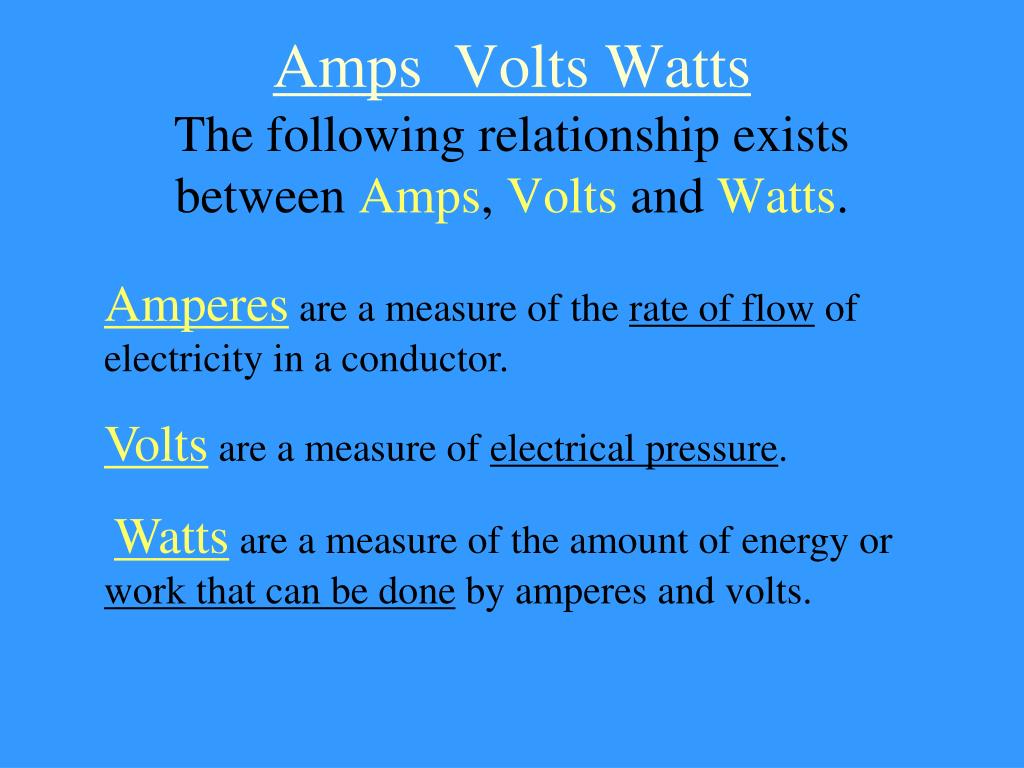
Think of volts as the electrical "push." It's the force that gets those electrons moving. A higher voltage? That's a bigger shove! Your standard wall outlet is usually around 120 volts in the US. That's enough of a push to power your toaster (and mildly shock you if you stick a fork in it. Don't do that!). Batteries are great examples. A AA battery is usually 1.5 volts. A car battery, a much more powerful 12 volts. The more volts, the more "oomph".
Amps: The Electron Traffic Jam
Amps, short for amperes, measure the amount of electrical current flowing. Think of it like a highway. Volts are the "push," but amps are the cars zooming down the road. More cars (more amps) mean more electricity being delivered. Devices "draw" amps. A tiny LED light might only draw a few milliamps (thousandths of an amp), while a power hungry gaming computer might gulp down several amps. If too many amps flow through a wire, it can overheat. This is why we have fuses and circuit breakers! They prevent electrical traffic jams from turning into electrical fires.

Watts: The Power Couple
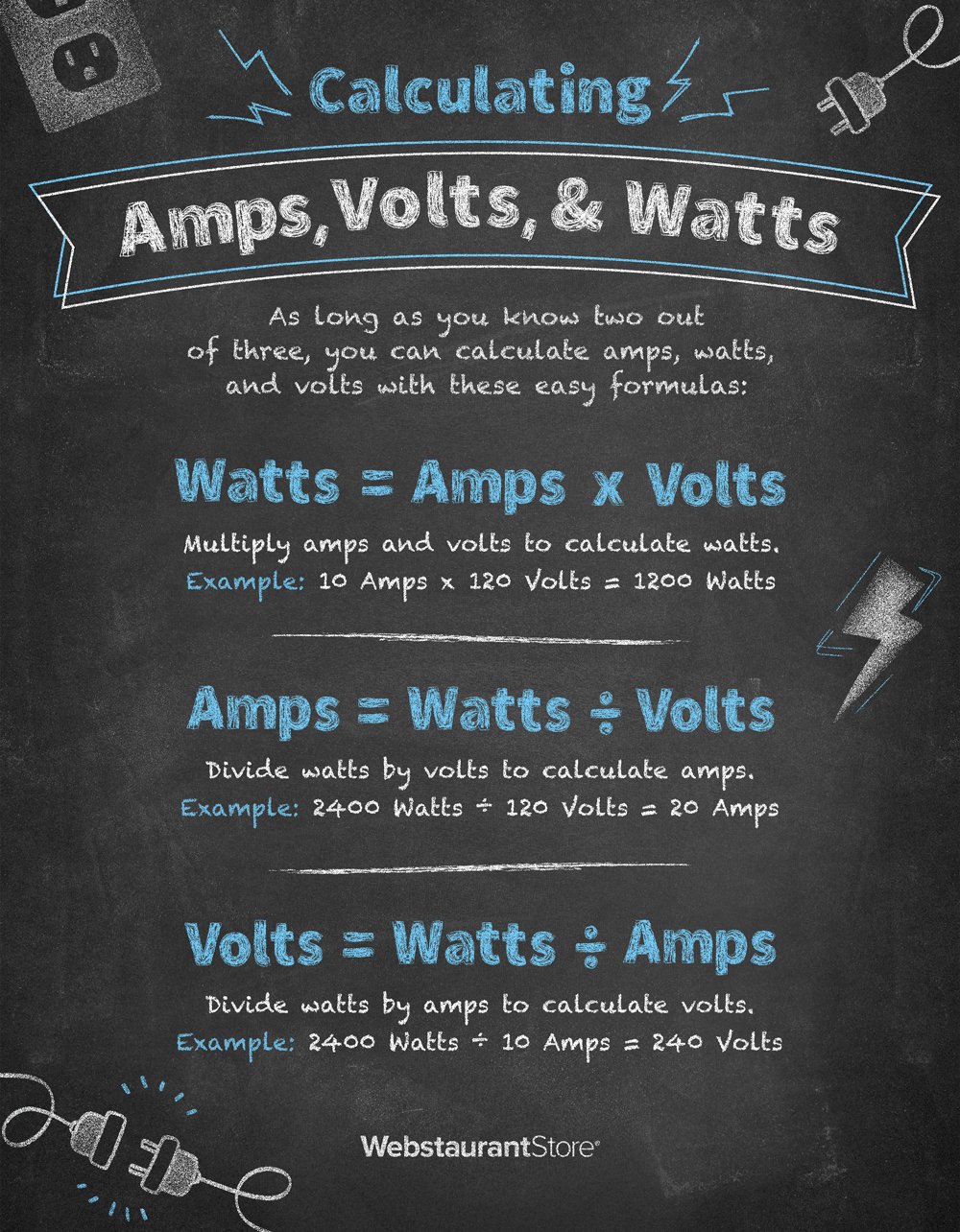
Here's where it all comes together. Watts measure the power being used. It's the result of voltage and amperage working together. The formula is simple: Watts = Volts x Amps. So, if your device is running on 120 volts and drawing 2 amps, it's using 240 watts. Think of it like this: Watts are the total effect that is happening, from the electrical activity.
Ever notice the wattage listed on light bulbs? A 60-watt bulb is brighter (uses more power) than a 40-watt bulb. Understanding watts helps you estimate your energy consumption and keep your electricity bill from giving you a heart attack.

Real-World Examples (Because Math is Scary)
Let's ditch the formulas and look at real stuff.
- Your phone charger: Low voltage (usually 5 volts) and low amperage (maybe 1-2 amps). Therefore, low wattage. It sips electricity.
- Your microwave: High voltage (120 volts) and relatively high amperage (around 10 amps). Therefore, high wattage. It gulps electricity.
- An electric car charger: High voltage (can be 240 volts or even higher for fast charging) and very high amperage (potentially 30 amps or more!). Therefore, massive wattage. It's practically drinking electricity from a firehose.
So, What's the Big Deal?
Knowing the difference between amps, volts, and watts isn't just for electrical engineers. It helps you understand:
- Why some devices use more energy than others.
- Why you can't plug too many high-wattage appliances into the same circuit.
- Which light bulbs are more energy-efficient.
- Whether your generator can handle running your air conditioner.
And, you know, impress your friends at parties with your newfound electrical prowess. ("Did you know my toaster oven draws 1200 watts? No? Well, now you do!").
Final Thought: Embrace the Confusion (Slightly)
Look, electricity can still be a bit of a mystery. And that's okay! Even Nikola Tesla probably had moments where he scratched his head and wondered what was going on. The important thing is to grasp the basic concepts. And maybe, just maybe, ditch that water analogy. I still think it's secretly plotting against us.