
What's The Difference Between Amps And Voltage
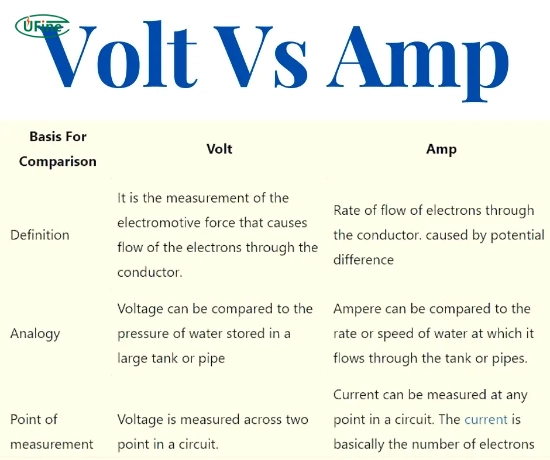
Electricity! It's the invisible force powering our lives, from that life-saving morning coffee to the endless scroll of funny cat videos. But have you ever stopped to think about what actually is electricity? And more specifically, what’s the difference between those confusing terms: Amps and Volts?
Don't worry, this isn't going to be a physics lecture. Think of it more like a water park analogy. We all love a good water park, right? Well, electricity is kind of like the water flowing through its slides and pools. And amps and volts are just different ways of describing that water flow.
Amps: The Crowd on the Slide
Imagine a giant water slide. Amps, or more formally, amperes, are like the number of people hurtling down that slide all at once. The more people, the higher the amperage. So, a high amp circuit is like a ridiculously crowded water slide at peak hours on a scorching summer day. You've got a lot of electrical "stuff" moving.
Must Read
Now, think about your phone charger versus a power drill. Your phone charger uses a tiny amount of amps because it only needs to charge a small battery. A power drill, on the other hand, needs a whole lot of amps to spin that drill bit with enough force to bore through wood. It's like comparing a kiddie slide to a super-fast, nearly vertical one designed for thrill-seekers. One needs a trickle of water (and people!), the other a massive torrent.
And here's the surprising part: too many amps flowing through a wire that's not built for it is like trying to cram too many people down a tiny slide. Things get messy. In the electrical world, "messy" often means a blown fuse or, even worse, a fire. That's why we have circuit breakers – they're the lifeguards of the electrical system, stopping the flow of amps before things get out of hand.

Volts: The Steepness of the Slide
Okay, back to the water park. Volts, or voltage, are like the steepness of the slide. A really steep slide means the water – and the people! – are going to be moving much faster and with more force. Voltage is the "push" that gets the electrical current (the amps) moving.
Think about a AA battery (1.5 volts) versus a car battery (12 volts). The car battery has a much higher voltage, meaning it can deliver a much stronger "push" to start the car's engine. The AA battery just doesn't have that kind of oomph. It's like the difference between a gentle, sloping toddler slide and a towering, terrifying water coaster. Both are slides, but one has a whole lot more voltage.

And yes, a high voltage can be dangerous. That powerful "push" can force a large number of amps through your body, which is definitely not a fun ride. That's why you should always be extremely careful around high-voltage sources, like power lines. Respect the voltage!
Putting It All Together: Finding the Perfect Splash
So, amps are the amount of electrical current, and volts are the force pushing that current. They work together, kind of like the amount of water flowing down a slide and the steepness of the slide itself. To get the perfect, electrifying splash, you need the right combination of both.

That's why appliances have wattage ratings (like a 100-watt light bulb). Watts (power) are calculated by multiplying volts and amps (Watts = Volts x Amps). It's the total amount of electrical "work" being done. Think of it as the overall thrill factor of the water slide experience – a combination of the crowd size and the steepness of the drop.
The next time you see those confusing terms – amps and volts – remember the water park. It's not just about the water, it's about how much water there is and how fast it's moving. And just like at a real water park, understanding the basics can help you stay safe and have a whole lot more fun. Now go forth and electrify your day (safely, of course!). You are now a (sort of) electrical engineer, congratulations!
